






“It’s quite an exciting piece of kit that’s just been here for 46 years,” says Steven Julien of the Roland TR-808. “It’s probably going to be here for another hundred, and that’s exciting.”
The West London producer, composer, DJ and founder of Apron Records, has good reason to bet on its longevity. He has used the 808 throughout a career, and now he’s gone one further: waking up one morning — “probably one afternoon”, he corrects himself — and declaring himself the 808 Prince. It is now the name of both the persona and his new full-length album.
Few instruments can lay claim to defining the soundtrack of a whole decade like the drum machine can to the 1980s. Roland released the TR-808 in 1980 as a programmable rhythm machine, loaded with synthetic approximations of kicks, snares, claps, hi-hats and a cowbell that would become unmistakable. You’ll know it when you hear it.
It wasn’t particularly good at sounding like a real drummer, but its artificial sound became the attraction.
The 808’s booming low end soon ran through electro and hip-hop, and found its way onto dancefloors as the lines between DJ and producer were being redrawn. In Chicago, Frankie Knuckles began incorporating a drum machine into his sets and playing unreleased music handed to him on tape. Across town, Ron Hardy’s Music Box became a testing ground for new rhythm tracks, demos and experiments from the producers who were building house music around him. A record did not necessarily have to be finished — or even be a record yet — before a DJ could put it in front of a crowd and find out whether it worked.
Steven Julien’s music works in the club.
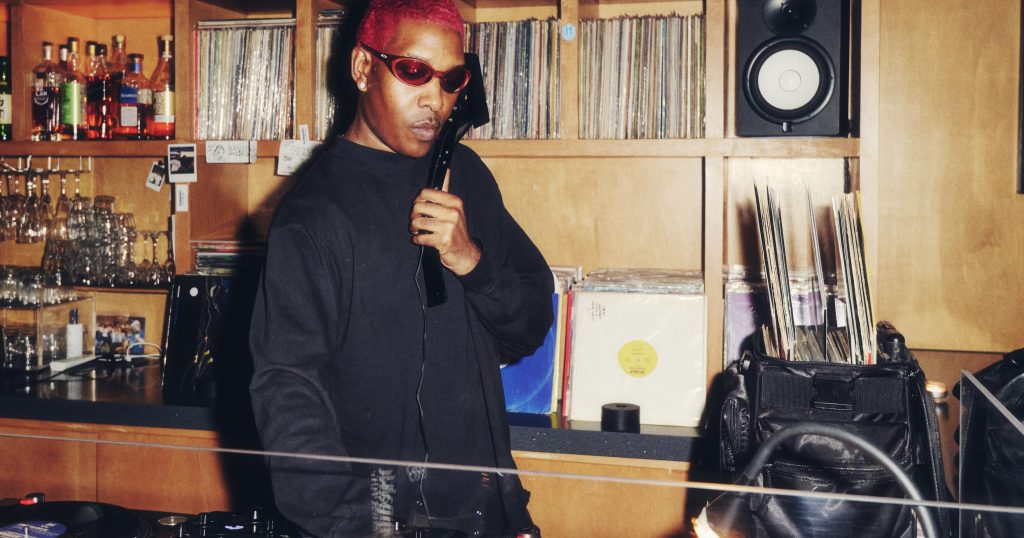
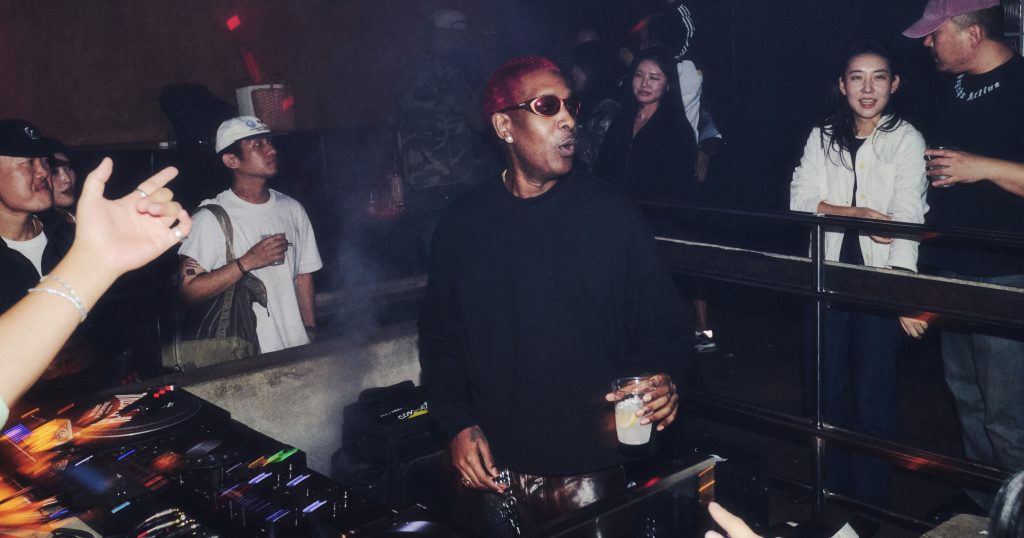
Whether he is standing tall over CDJs or bringing a drum machine into the setup, his productions burst with percussion and bend time, pulling the synthetic thump and snap of the ’80s into music that has been making club speakers pound for more than 15 years. His current hybrid approach combines DJing with live drum programming, leaving parts prepared while other patterns can change according to whatever is happening in the room. Something played at one show might never happen quite the same way again.
Or perhaps Julien isn’t there at all. A fellow DJ might have gone from Apron Records’ Bandcamp page to Rekordbox to the club in the space of an evening, sending one of his productions through a soundsystem thousands of miles away. Apron, the independent label Julien founded in 2011 and still largely runs himself, has developed what he calls a “real tribe around the world”, with friends, artists and listeners turning up across South America, Asia and Europe.
The new record came about with similarly little fuss. Most of its foundations were originally made for Babyxsosa, now signed to Roc Nation. She liked the music but wanted something closer to Julien’s earlier Fallen and Bloodline. Rather than trying to recreate his past, he kept the tracks, added voices including James Massiah, J. Caesar, Jarren, KIAH and Touch Sensitive, and 808 Prince found a second life as his own album.
Julien’s relationship with club culture goes back to family house parties, with his uncles bringing sound systems into the house while he ran around as a toddler. His catalogue since has included 2016’s Fallen, the more familial Bloodline in 2018 and the TIME EP in 2025. In 2024, he joined the long lineage of selectors invited to contribute to DJ-Kicks, one of dance music’s great mix series, moving from Ryuichi Sakamoto and DāM-FunK towards the dancefloor. He has hosted The Apron Show on NTS for more than a decade, toured extensively and, in 2025, pushed Apron beyond records through a Nike Air 180 collaboration.
He says he doesn’t consciously sit down to make music for the club. It has simply been around him for so long that he knows how a record might behave there before he needs to think about it too much.
Forty-six years into the 808’s life — and a few weeks into the 808 Prince release — the club still seems like one of the best places to find out.
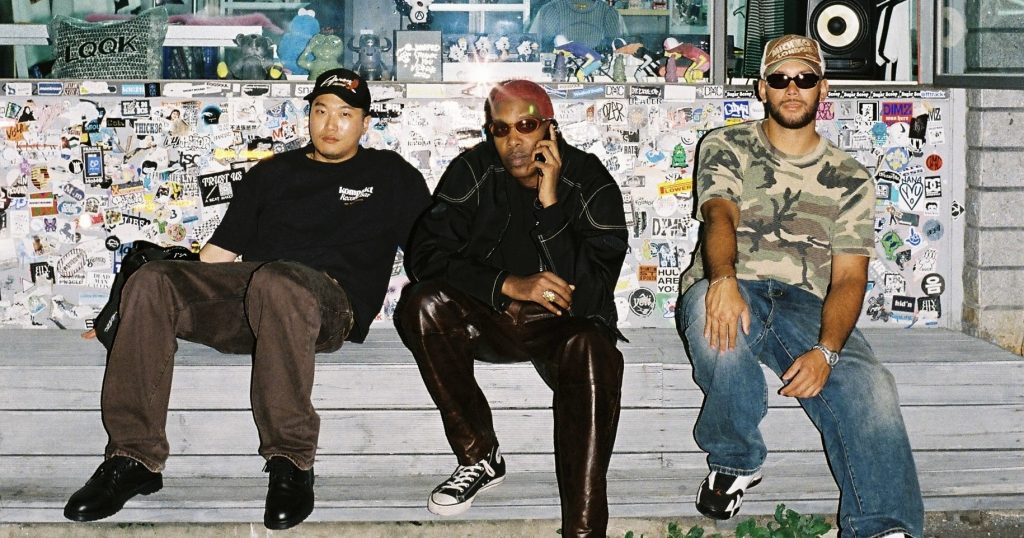
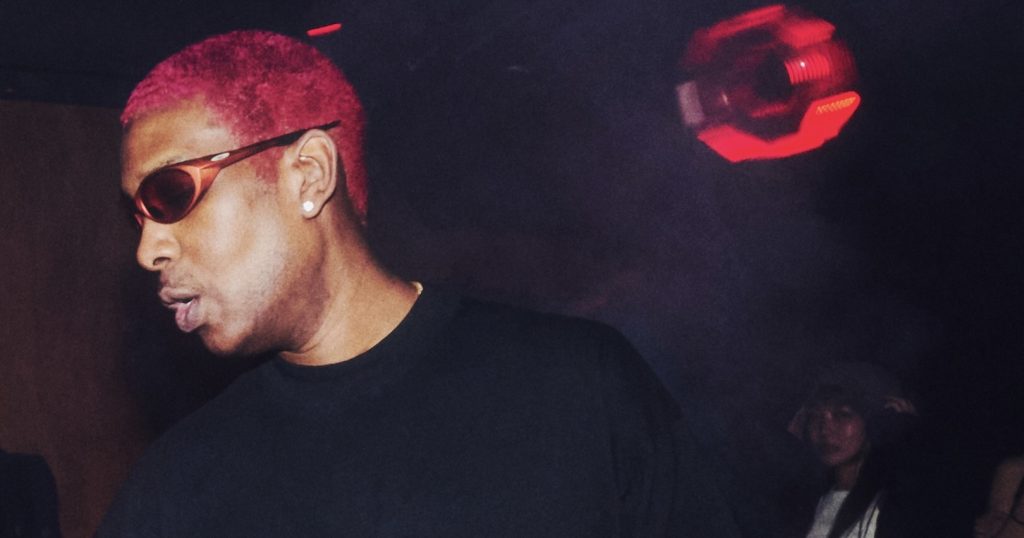
FOR SOMEBODY COMING ACROSS YOUR WORK FOR THE FIRST TIME, HOW WOULD YOU INTRODUCE YOURSELF AND WHAT YOU DO IN YOUR OWN WORDS?
My name is Steven Julien, aka 808 Prince. Born and raised in London. Music producer, composer first and foremost, but I dabble in everything else, and I run a record label called Apron Records.
LET’S START WITH THAT NAME THEN. WHO OR WHAT IS 808 PRINCE?
Basically, I woke up one morning — probably woke up one afternoon — and decided I was the 808 Prince. It comes from how much I use the 808 drum machine. Some of my favourite songs and productions I’ve made have used that machine, and it’s the one I resonate with most in my production and creative process.
I just named myself the prince of that and people were going crazy, like, “Yeah, you are. This is exciting.” Then we decided to release an album around it, using elements of the 808 throughout, if not the whole machine.
WHAT IS IT ABOUT THE 808 ITSELF THAT KEEPS PULLING YOU BACK?
It just sounds good. It cuts through a record. There are so many times I’ve used a drum pack or whatever and it doesn’t resonate or punch through in the same way an 808 does.
What’s mad is the evolution of it. It kind of rules the world in music and people don’t realise it — from trap to dance music, electronic music, whatever. The way trap producers use it now, pitching the boom, chopping through the sounds and claps, it’s morphed into this new thing and it just keeps going.
THE ALBUM ACTUALLY STARTED OUT AS MUSIC FOR SOMEBODY ELSE, RIGHT?
Yeah. Initially I wrote most of the songs for Babyxsosa. She was a huge fan of mine and I discovered her through her being a fan. Back in 2018 she made this mix CD with loads of my productions from Bloodline, and we always wanted to work together.
This was before she really blew up. Later she hit me up and said she wanted a song from me for her album, so I made the majority of what became 808 Prince off the back of that. I sent it to her and she was like, “This is really good, but could you make it more like your first album, Fallen, and Bloodline?”
I could, but that was that time and what I made then. It’s hard to go backwards. I’d rather just make songs and whatever you resonate with, you resonate with. So I thought, maybe I’ll keep these and make an album out of them.
I also had a distribution deal waiting for me to deliver an album. I’d given them EPs, bits and pieces and releases from other artists on the label, but not really an album from myself. So eventually I was just like, fuck it, put all of these tracks on one project and call it 808 Prince. Nothing was thought about too deeply.
The whole thing came together really quickly. I put the tracks into one project, brought in people I was feeling — James Massiah, J. Caesar, Jarren, Touch Sensitive, KIAH — and it just naturally became this record. I’m much more into letting something happen like that than trying to force it. I’d rather be a vessel and let whatever comes through, come through.
THE RECORD MOVES THROUGH HOUSE, TECHNO, ACID, ELECTRO AND OTHER SOUNDS, BUT NEVER REALLY SITS INSIDE ONE OF THEM. DO GENRE LABELS MEAN MUCH TO YOU WHILE YOU’RE MAKING MUSIC?
Not really. I wouldn’t say I’m anti-genre, but especially with the stuff I make in my world, it’s difficult to pinpoint exactly what it is. I guess what I do is almost its own subgenre in a way.
I’m not big on labelling something because it pinpoints one thing, when what I’m doing is wider than that. Putting music in a box is what I’m anti.
THERE ARE MORE VOICES ACROSS THIS RECORD TOO, INCLUDING YOUR OWN. WHAT TELLS YOU WHEN A TRACK NEEDS A VOCAL?
It’s just a feeling. You listen to something and know, this could do with a vocal, or this one is absolutely cool as an instrumental. It’s experience with production — you start to know what works.
It helps knowing artists too, because sometimes you hear a track and think, I need to send this to this person and see what they do with it. There are hints of my own vocals on the album as well. I did more of that at the beginning of my career, then went really instrumental, and now I want to bring it back in a new way.
YOU PUT ‘AFTERS’ OUT FIRST. WHAT MADE THAT THE RIGHT WAY INTO THE RECORD?
It’s straight to the point. There’s no intro, it just gets straight into it. I made it around New Year’s, and I played it at an afters. Everybody got up from their seats and started dancing straight away.
I can’t even remember if I called it “Afters” because of that, or if it was already called “Afters”, but either way I was like, yeah, that’s the first song. It felt like a good introduction to what the rest of the album is.
I’VE ALREADY HEARD PARTS OF THIS RECORD WORK IN A CLUB WITHOUT YOU THERE — WACHUWAN FROM OFFIE MAG DJS PLAYED ‘60SS’ AT A CLUBNIGHT IN BRIGHTON TO A DANCEFLOOR THAT RECEIVED IT REALLY WELL. WHEN YOU’RE MAKING MUSIC, ARE YOU ACTUALLY THINKING ABOUT WHAT IT WILL DO TO A ROOM?
Yes and no. I’ve been in clubs all my life, really. It runs deeper than me going out as an adult. My family used to have house parties, my uncles would bring sound systems into the house, and I’d be running around as a toddler.
So from the very beginning it’s influenced how I consume music and how I visualise it. When I make a song, I can visualise how it might go down and, from experience, I know what works and what doesn’t. But I’m not consciously sitting there making a song for the club.
It’s more that the club is built into my experience. It’s an inspiration rather than me thinking, “I’m going to make this because it needs to do this in a club.”
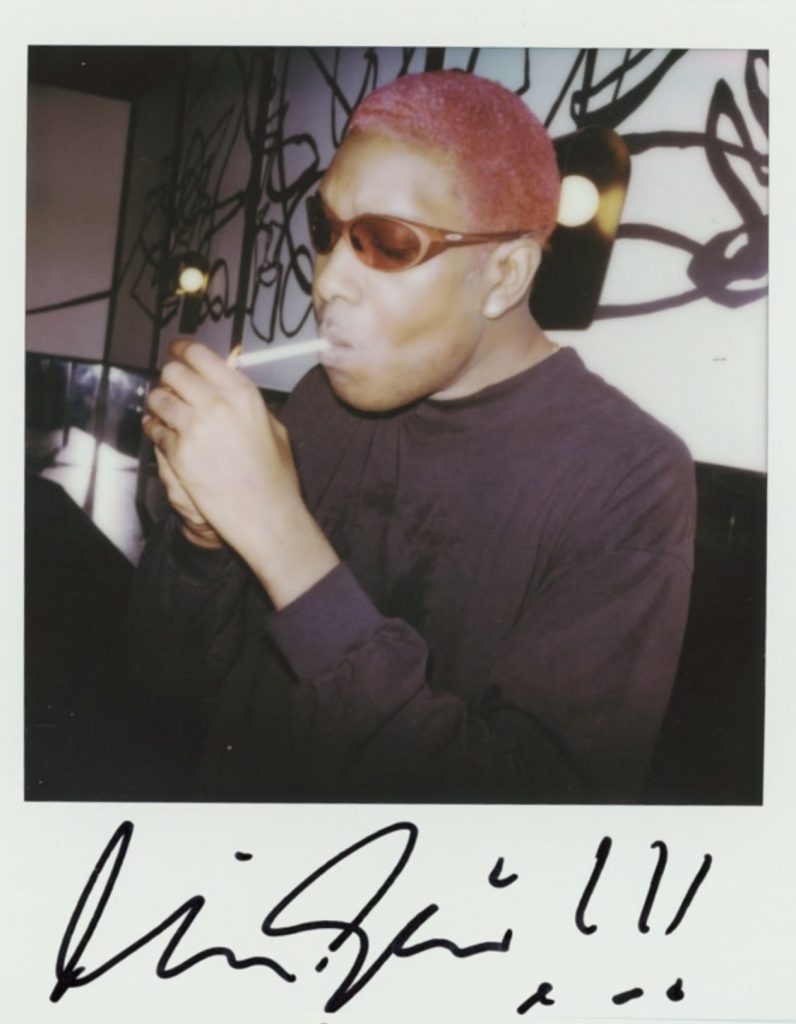
WHEN YOU’RE NOT DIGGING FOR A DJ SET OR ACTIVELY THINKING ABOUT MAKING MUSIC, WHAT ARE YOU LISTENING TO PURELY FOR PLEASURE?
To be honest, I don’t really listen to much electronic music. I either listen to my own stuff, or my friends’ stuff that’s out or not out yet.
Outside of that, it’s rap, trap, R&B, jazz fusion. It’s mostly stuff you probably wouldn’t expect from hearing my records. I listen to Concrete Boys. A lot of trap, to be fair.
YOU’RE ALSO BRINGING THE DRUM MACHINES INTO YOUR LIVE SET. WHAT DOES THAT CHANGE ABOUT YOUR ROLE BEHIND THE DECKS?
Half of it is programmed to know what it’s doing and the other half is spur of the moment, going with the energy. So things will happen in one show that are never going to happen again in another.
That’s what’s exciting. I can jam on the drum machine and there’s this energy going back and forth with the people. I think that’s what people like about live sets. Even though it’s hybrid — CDJs and the 808 mixed together — it’s different every time.
And just hearing raw drum machines straight through a PA is like… wow.
YOU’VE SPOKEN BEFORE ABOUT MEETING PEOPLE THROUGH PLACES LIKE PLASTIC PEOPLE AND LONDON WAREHOUSE PARTIES. DO CLUBS STILL FUNCTION AS PLACES WHERE PEOPLE MEET THEIR FUTURE FRIENDS AND COLLABORATORS?
I don’t know if that’s really changed. People still meet people. I don’t even know if it’s the club per se — it’s people having the same interests, and the club is often the place where those people happen to be. It could be another social place as well, but wherever people with the same interests gather, you meet like-minded people and friendships form.
At Plastic People, that’s where I met Femi, who runs NTS, people like Dean Blunt, and then that whole crew around Chain Gang, Judah, Deviation, Lord Tusk. I met them through Plastic People and other clubs around that time, and we formed friendships and a crew.
We’re still in contact now. Femi is one of my best friends. It’s mad to look back and think we all started as kids with the same interests and now everyone is doing what they’re doing.
APRON FEELS LIKE A MODERN VERSION OF THAT SAME THING — A LABEL, BUT ALSO A COMMUNITY. WHAT DOES IT EXIST TO DO FOR YOU NOW?
To piggyback off what I was saying about friends and family and community from the clubs back in the day, Apron is that today.
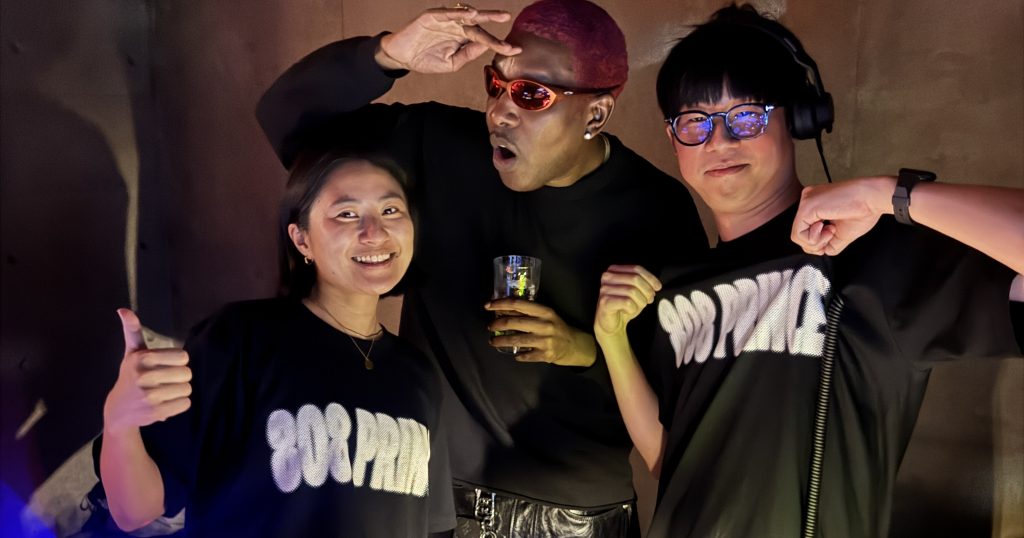
A lot of my current friends, crew and affiliates I’ve met through Apron. Jarren is one of my closest friends now. Then you go touring and it’s crazy — you go to Brazil and there’s the Apron fam there, you go to Asia and there’s Apron fam there, Europe too.
It’s almost like this tribe around the world. Everyone’s got the T-shirts or the hats, and it’s all built around the same interest in the music, the sound, the taste, everything. It’s really sick.
HOW HAS RUNNING YOUR OWN LABEL CHANGED YOUR IDEA OF INDEPENDENCE? DOES IT STILL FEEL LIKE FREEDOM?
It’s funny because people always think you need an office space, ten staff, all these things. You don’t need fuck all. Me personally, I need my phone and my imagination. I can do so much with that.
Obviously there are people who help with distribution, graphic designers, whatever, but mostly it’s just me. People imagine this massive team, an office and executives, but you don’t need any of that. The office can be anywhere.
So I am free in that way. But at the end of the day it’s still a business and it has to make money to stay afloat. Some decisions I’ve made haven’t been bad decisions, but they haven’t made any money. Part of me isn’t worried about that, but at the same time I have to be, because if I want Apron to last then it has to survive.
At the moment I’ve narrowed things down to a few artists who do well, and I’m trying to nurture that and take fewer risks.
WHAT ARE YOU MOST EXCITED ABOUT ONCE 808 PRINCE IS ACTUALLY OUT IN THE WORLD?
Just getting it out and making another one. I’m enjoying stretching the 808 Prince project out. It feels like a new excitement for me, and if I didn’t have that I’d probably be bored at the moment.
So I want to get the record out, tour it, bring the drum machines out for certain gigs and have fun with it.
There’s another project I’ve had sitting there as well. I don’t know exactly what I’m going to call it yet, but it’s much more jazz fusion, prog rock, electronic. That’s a whole different project and I might even sign it to somebody else rather than put it out on Apron. I just need to get it out at some point.
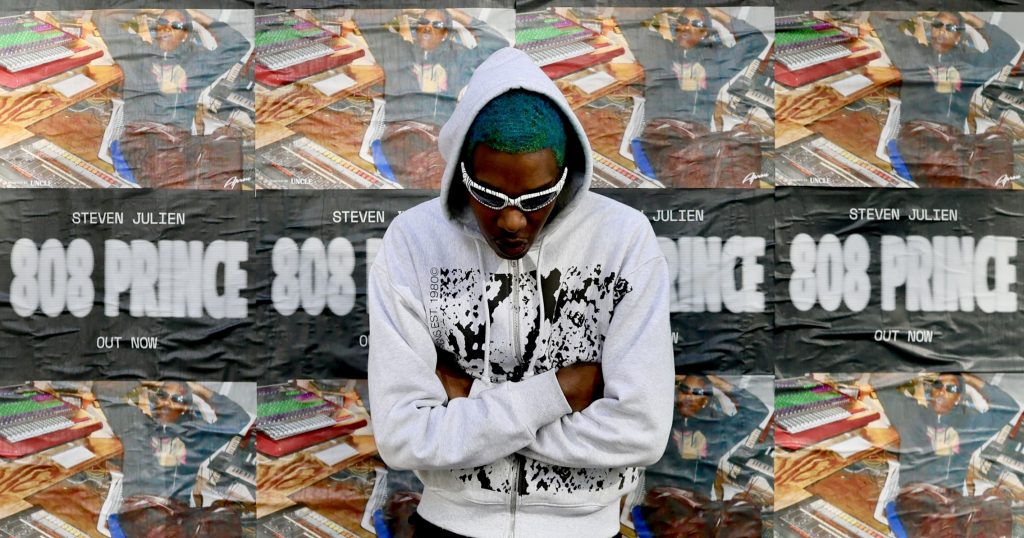
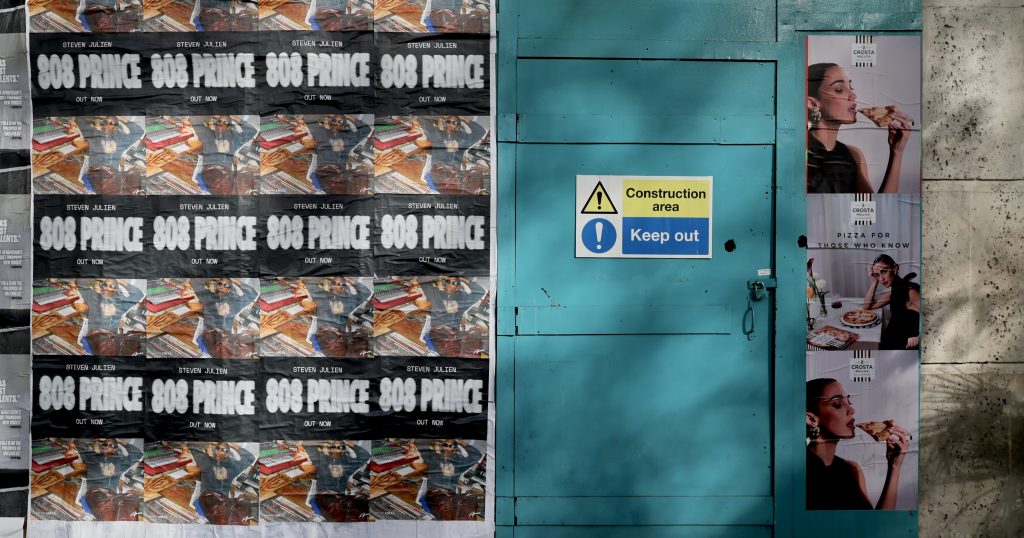
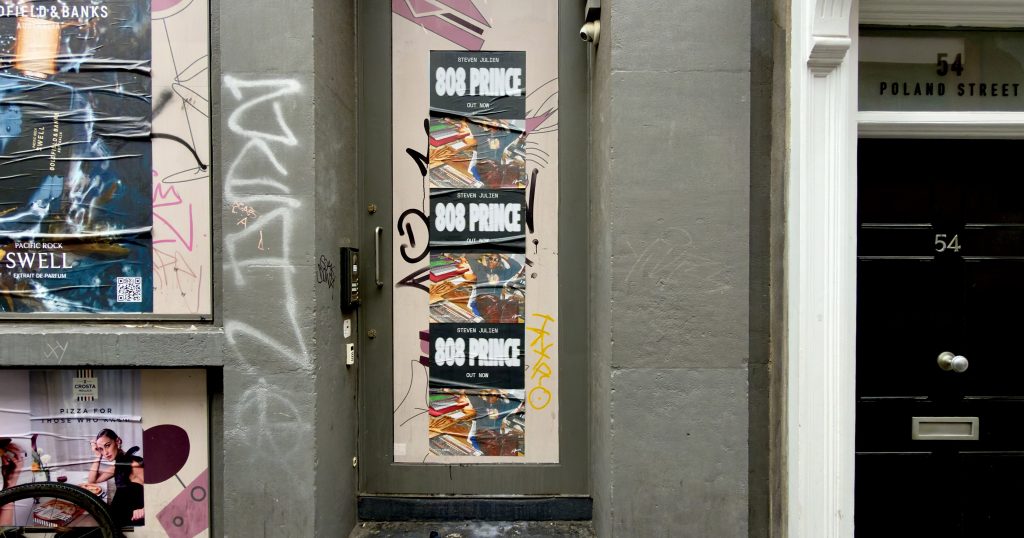
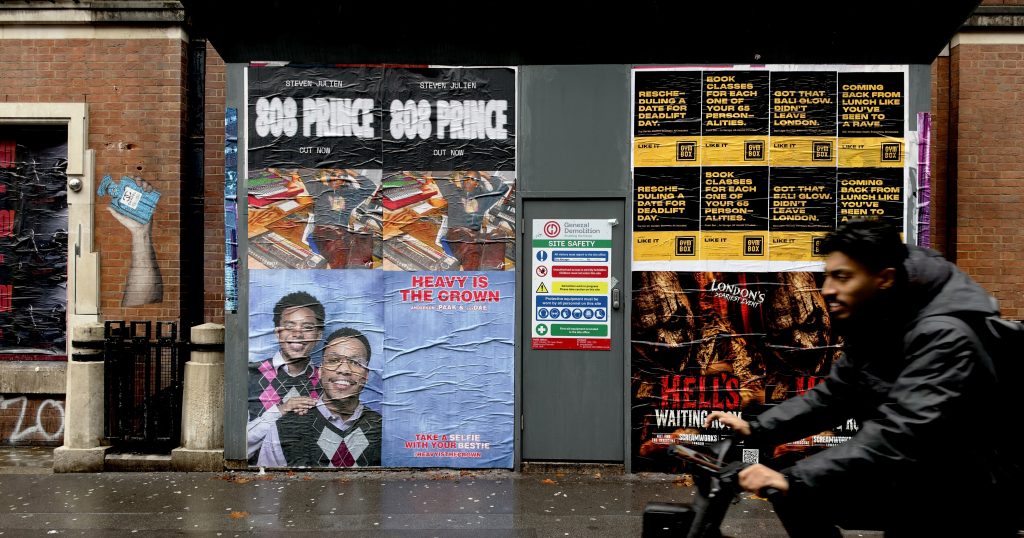
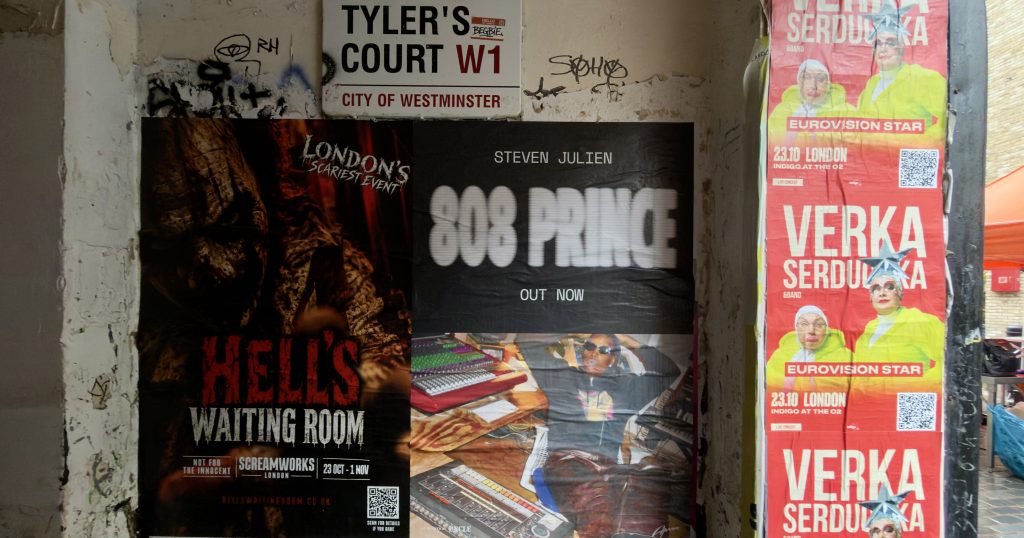
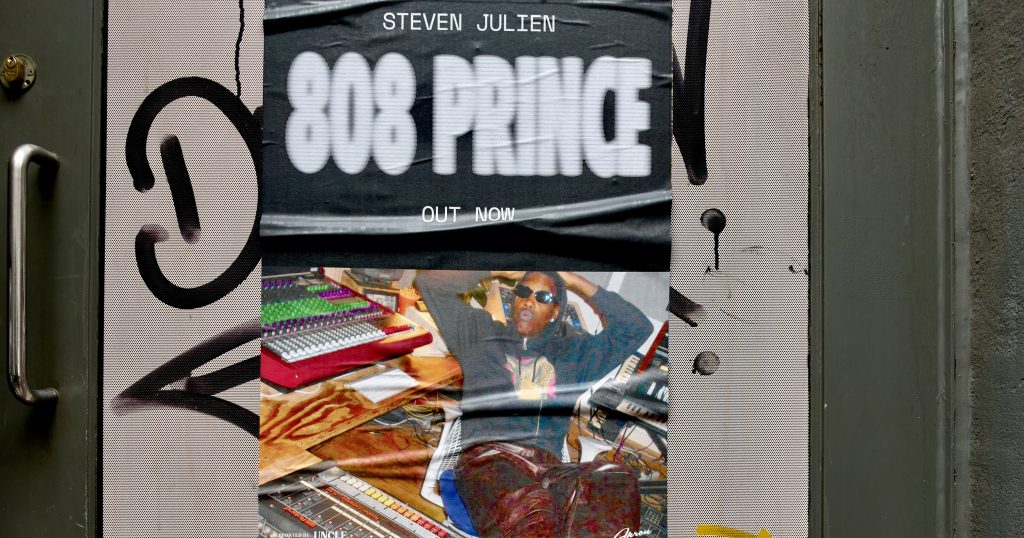
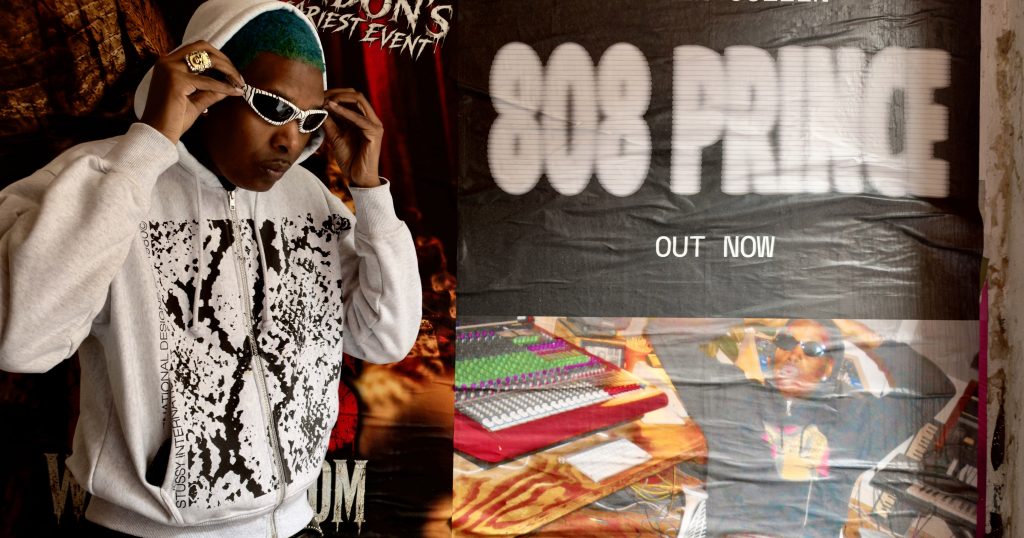
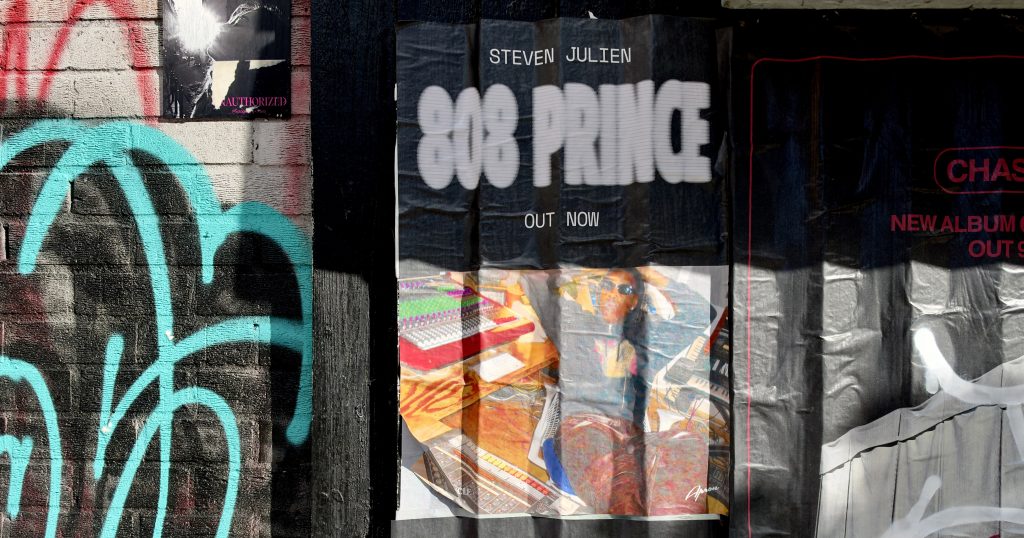
THIS PROJECT IS ALSO GOING TO EXIST PHYSICALLY ON THE STREET THROUGH THE WILDPOSTING CAMPAIGN. HOW DOES IT FEEL TO HAVE THE RECORD TAKEN OUT OF THE USUAL MUSIC SPACES AND PUT IN FRONT OF PEOPLE LIKE THAT?
That’s what I always wanted from the very beginning.
When I first entered the music industry I was quite naive. As a kid in the ’90s, I just assumed I’d make records, make loads of money, and there would be billboards and all this stuff. Then you enter the real world and realise that’s not true. The way society consumes music now, there isn’t loads of money in releasing records. You’re like, “Oh, I have to do gigs to make money from my record — and there are no billboards.”
So coming back around to it now, this is what I always wanted. It feels full circle.
As a kid, all your favourite artists had billboards and posters. You’d see them on the street and it was a statement. It was like, “Oh, this is official now.” And it wasn’t just online.
I’ve always been into things that are tangible, that you can touch and see, things that don’t only live in the digital world. So I’m very excited about that.