

“Black culture exists in this city, it is welcome in this city, and everyone is invited to come and explore and enjoy it with us.”
That is the statement at the centre of BARCO BASH, Brighton’s Black-led arts and culture carnival, and one that grows more visible with every summer it returns to St Ann’s Well Gardens.
BASH has quickly become a date to circle in Brighton’s cultural calendar. The kind of annual event around which people begin building their own traditions: the same route through the park, the same group chat revived each summer, the same house nearby where everyone meets for a drink beforehand. Decades from now, people might be able to say, “We always go there before BASH,” without remembering exactly when the routine began.
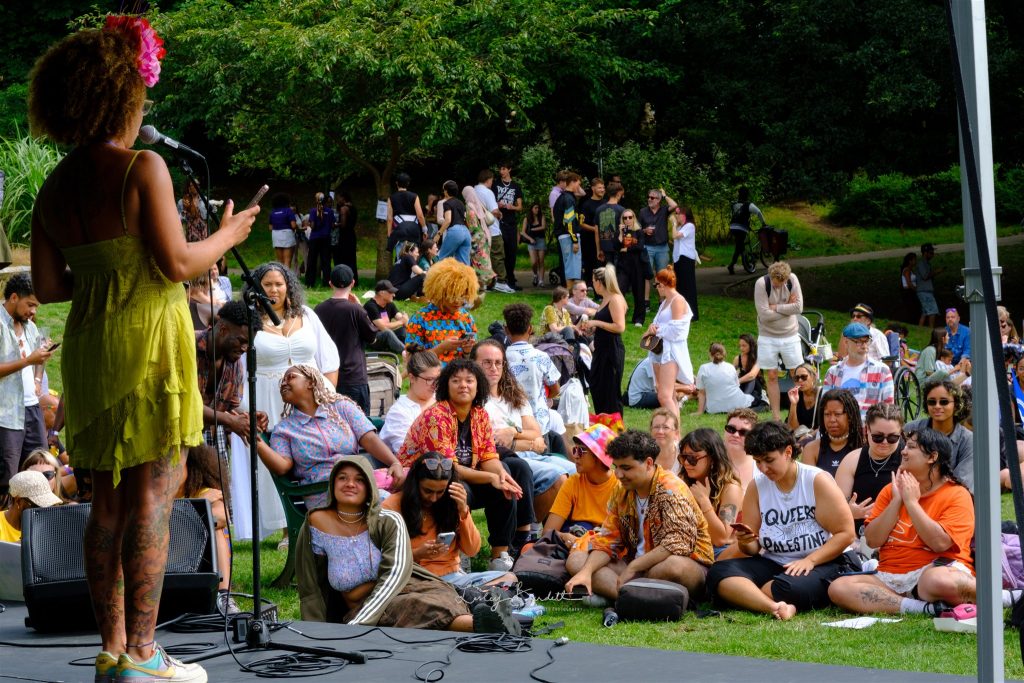
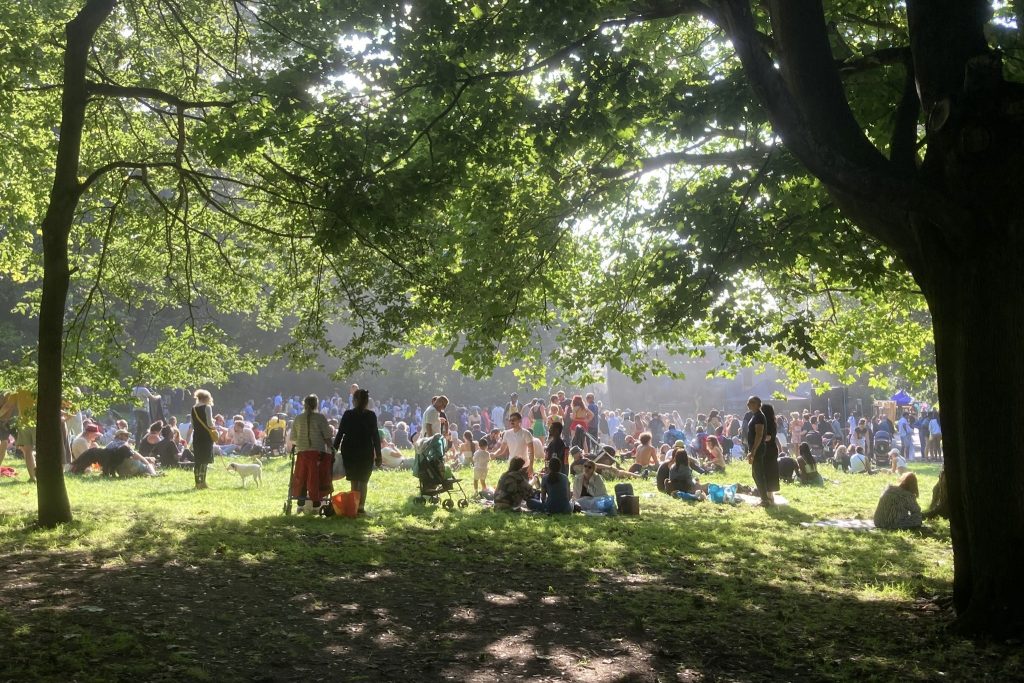
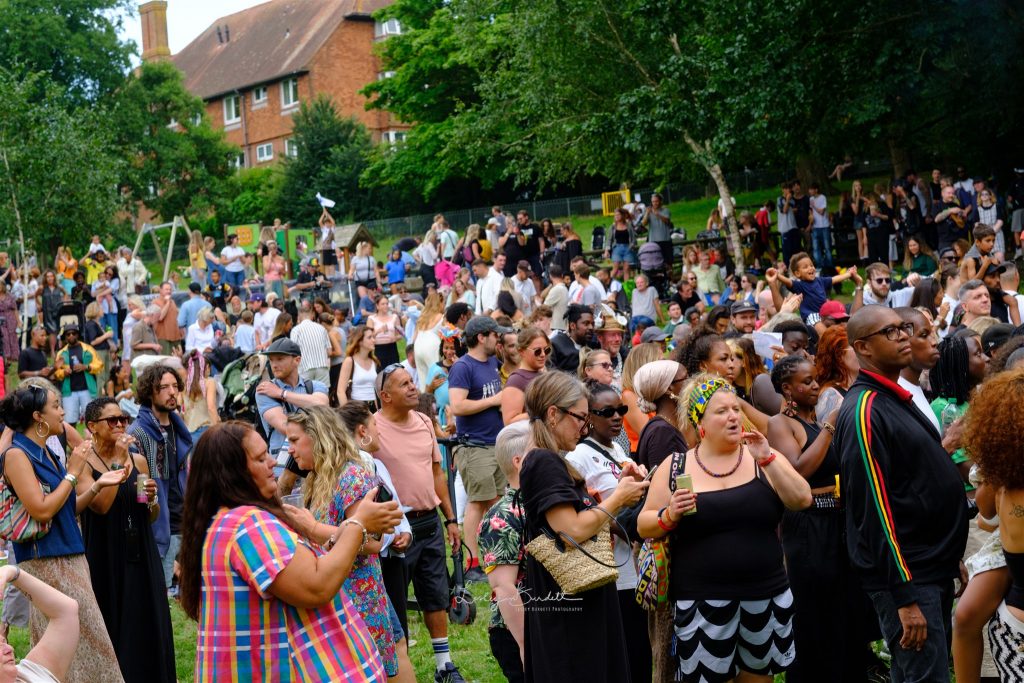
St Ann’s Well Gardens is already a historic park, but a walk through it on the day before BASH, or on the reflective day after, gives the sense that history is still being written there. Stages rise between the trees, familiar paths become part of a carnival site, and the atmosphere lingers even once the music has stopped. New blue plaques will have to go up.
The journey to that park began years earlier. Before 2020, BARCO (Black Anti-Racism Community Organisation) co-founder Bud Johnston already had what he describes as a “yearning” to create a Notting Hill-style carnival in Brighton. The initial response from some influential people in the city was discouraging. Brighton already had Pride and a busy events calendar, he was told. Similar ideas had failed before. Some, ignorantly, even questioned whether a Black community existed in Brighton at all.
“2020 was shit for many reasons, but the spotlight on anti-Black racism through the George Floyd incident, and that worldwide lens on it, almost felt like a wake-up call to white people,” Bud recalls.
Conversations that had previously been dismissed began to open up. Bud and Rob “Bobby” Brown started discussing what an organisation could look like if carnival sat at its centre without representing the full extent of its work. They studied the year-round models behind carnivals in Bristol, Manchester and Notting Hill, where work with young people, costume-making, steel pan rehearsals and community organising all build towards one public celebration.
Around the same time, Bud met Annie (AFLO The Poet), who had independently organised protests in Brighton just as he had. Their conversations moved from what had happened to what might come next, and BARCO was born in the Africa Cafe on London Road.
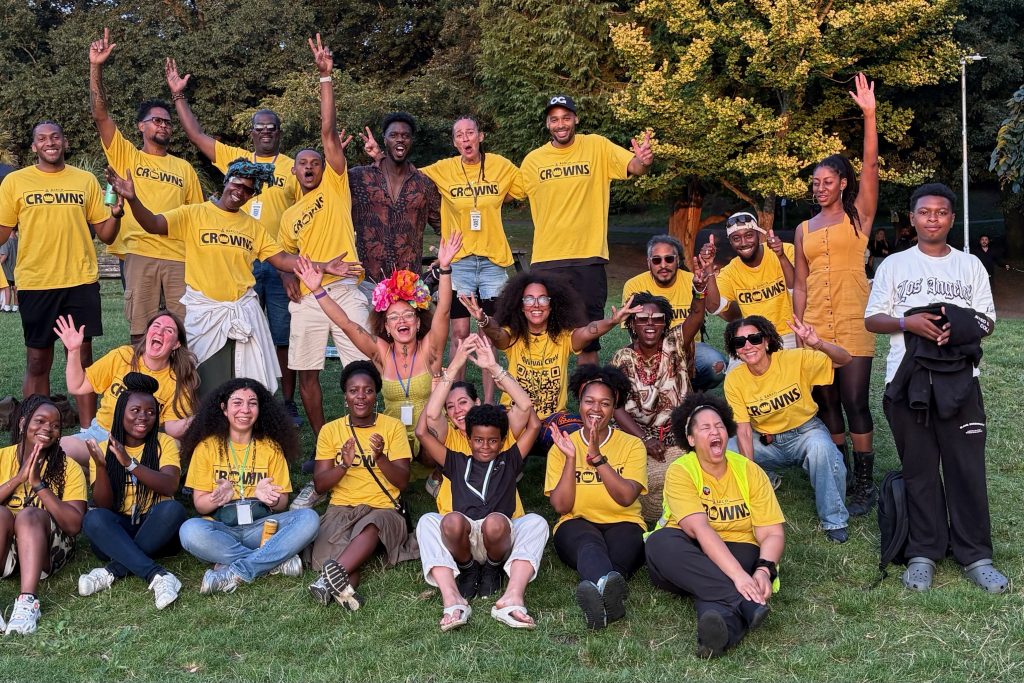
Bobby later brought Jacob Mee into the fold as the person who could help turn their ambition into an event. Vannessa Crawford of the Black and Minority Ethnic Young People’s Project joined as an early trustee and supporter, bringing valuable experience of building and sustaining grassroots, not-for-profit organisations. A wider team grew around them, made up of people willing to offer their time, knowledge and labour to something the city had previously been told it did not need.
BASH’s early editions were smaller: a marquee, one food vendor and no proper stage outside St Peter’s Church, followed by a move to Jubilee Square, where a small stage and traders from Black Brighton Market joined the programme.
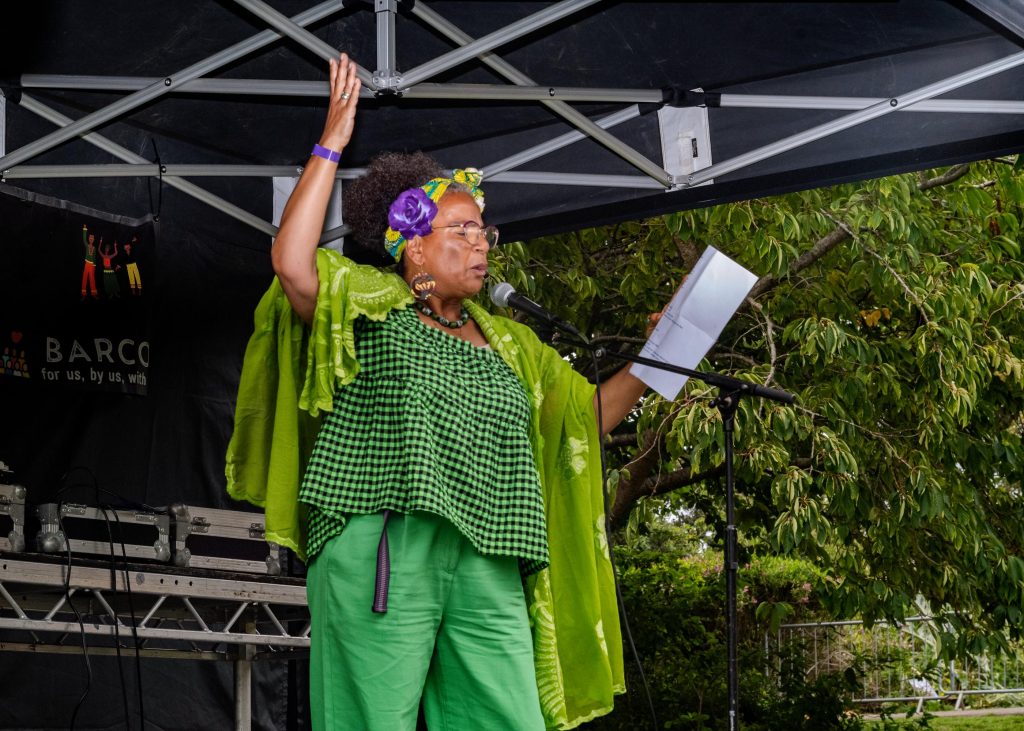
Its eventual move to St Ann’s Well Gardens transformed what the event could become. The park’s trees, slopes and distinct pockets provide natural environments for music, food, performance and gathering, while leaving space for the carnival to continue growing. BASH stands for Building Alliance, Solidarity and Hope, and the event is simultaneously a celebration of Black culture, a meeting place and an invitation to the wider city.
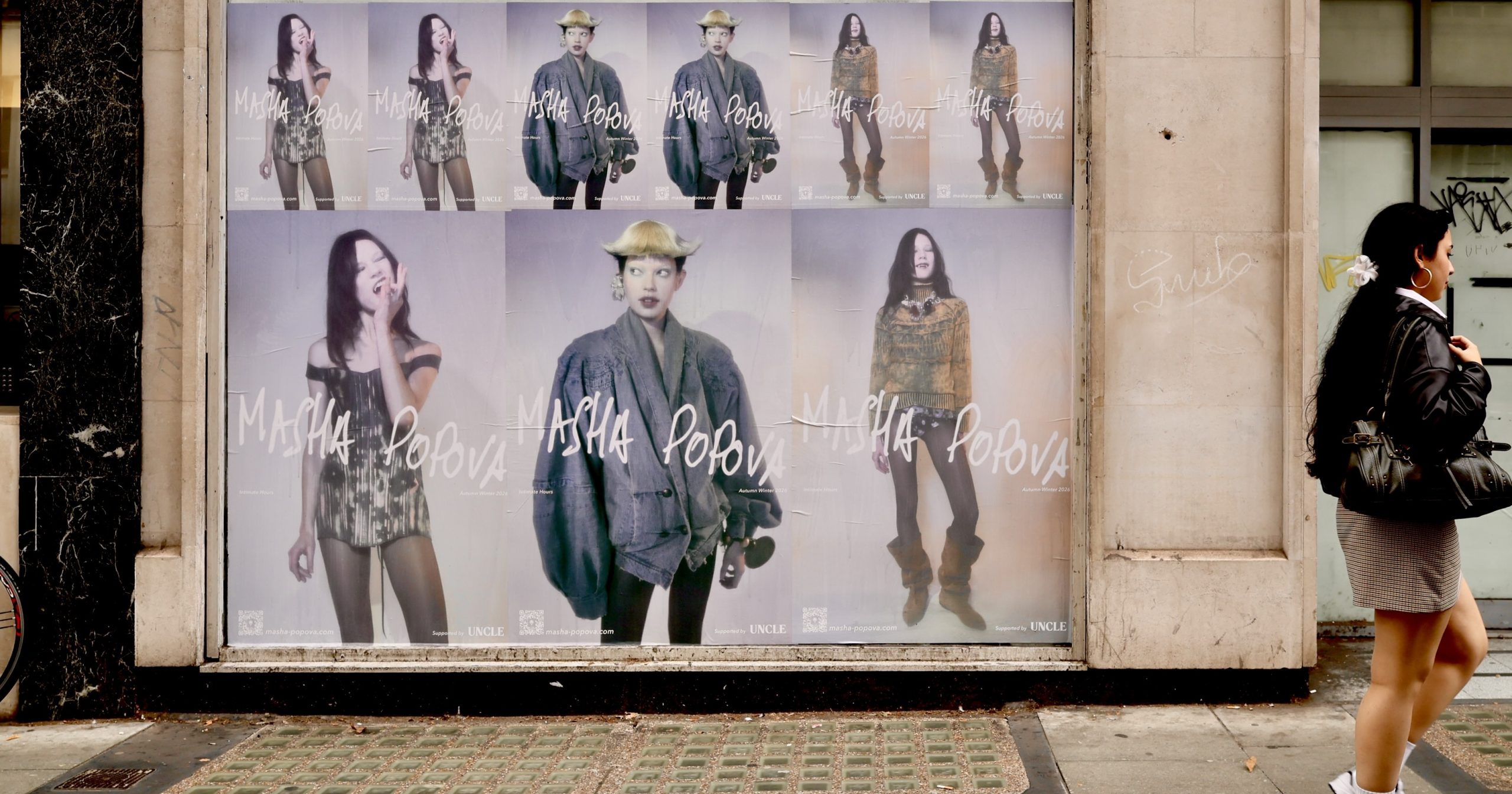
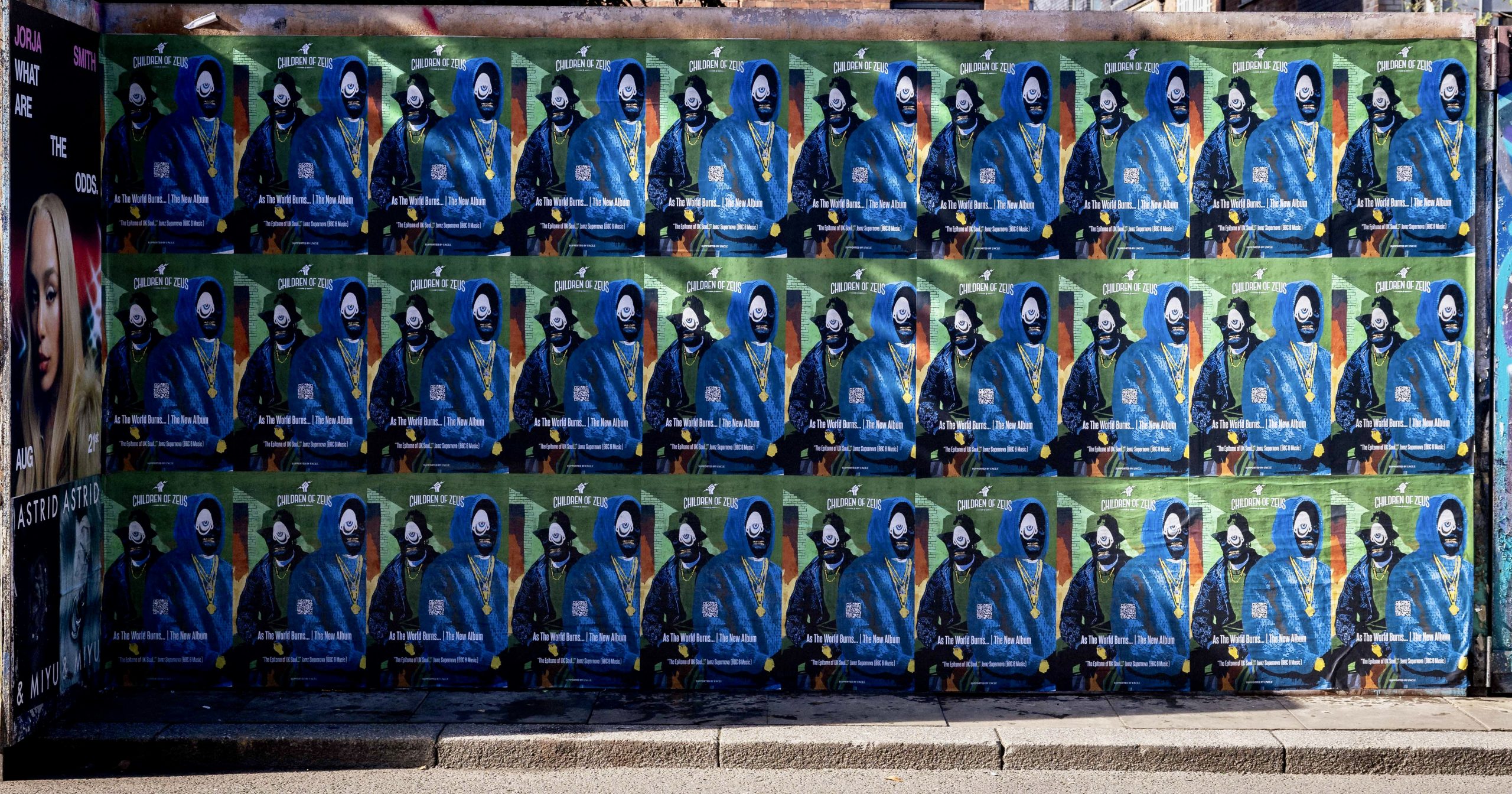
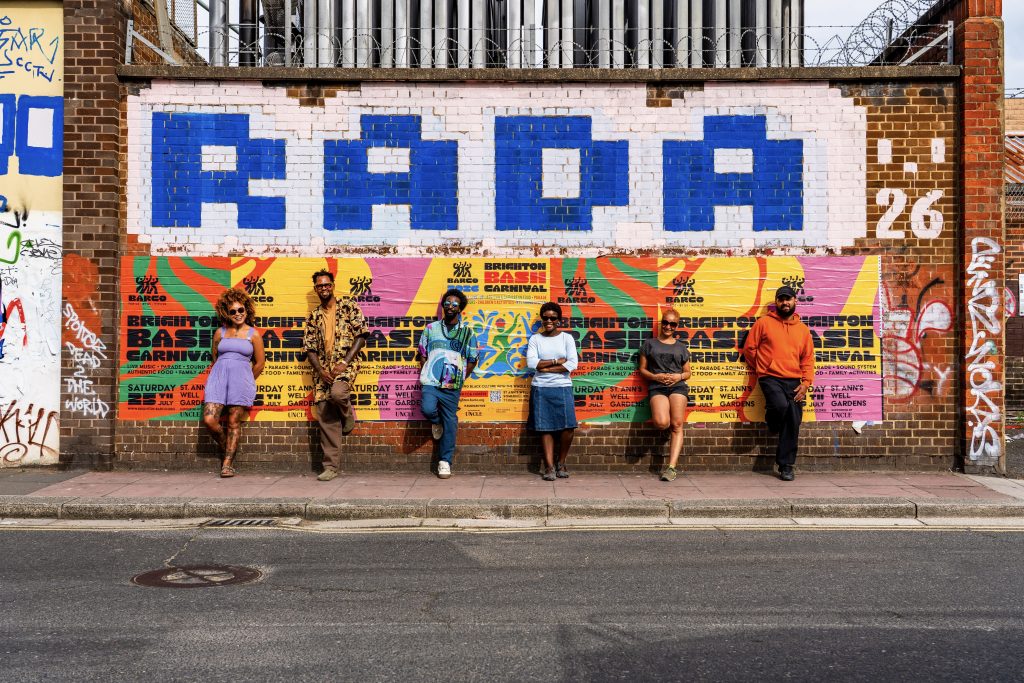
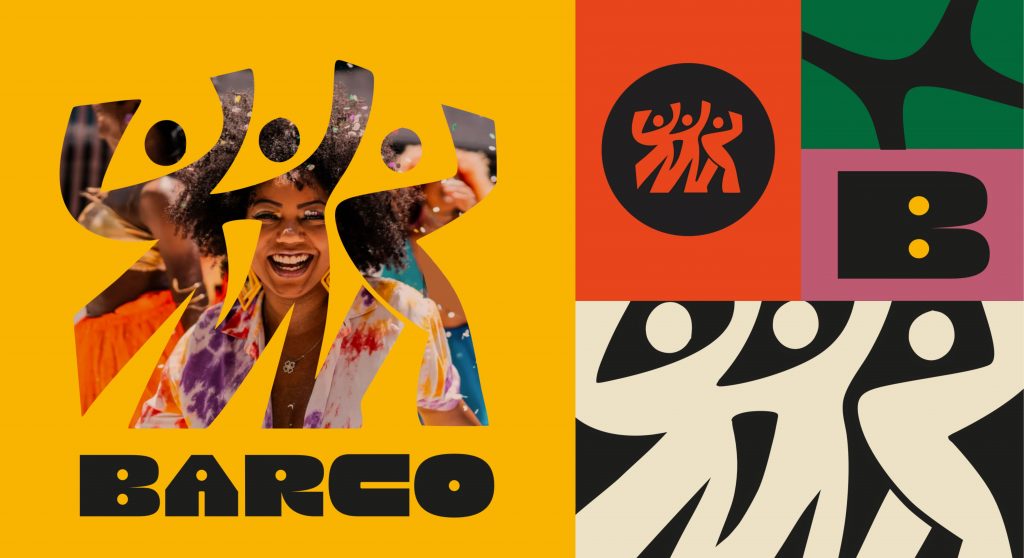
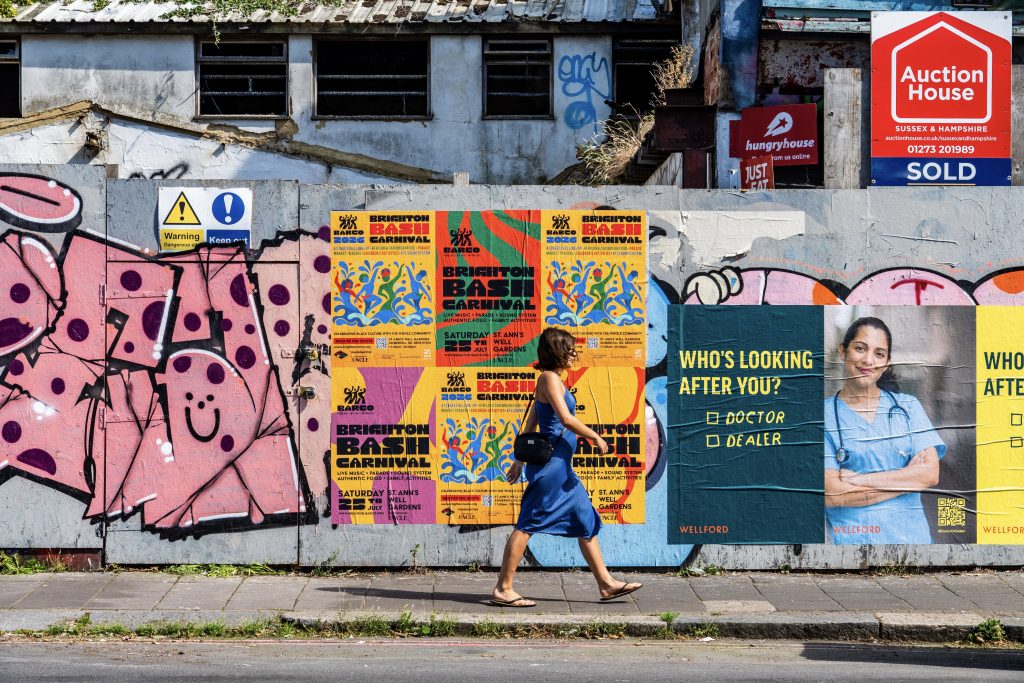
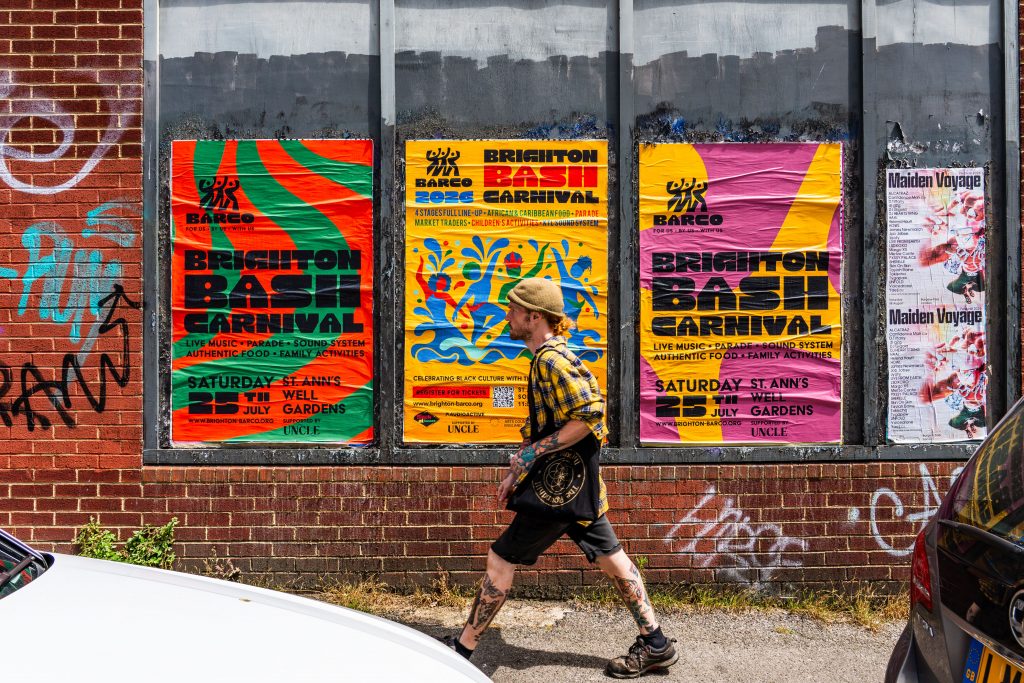
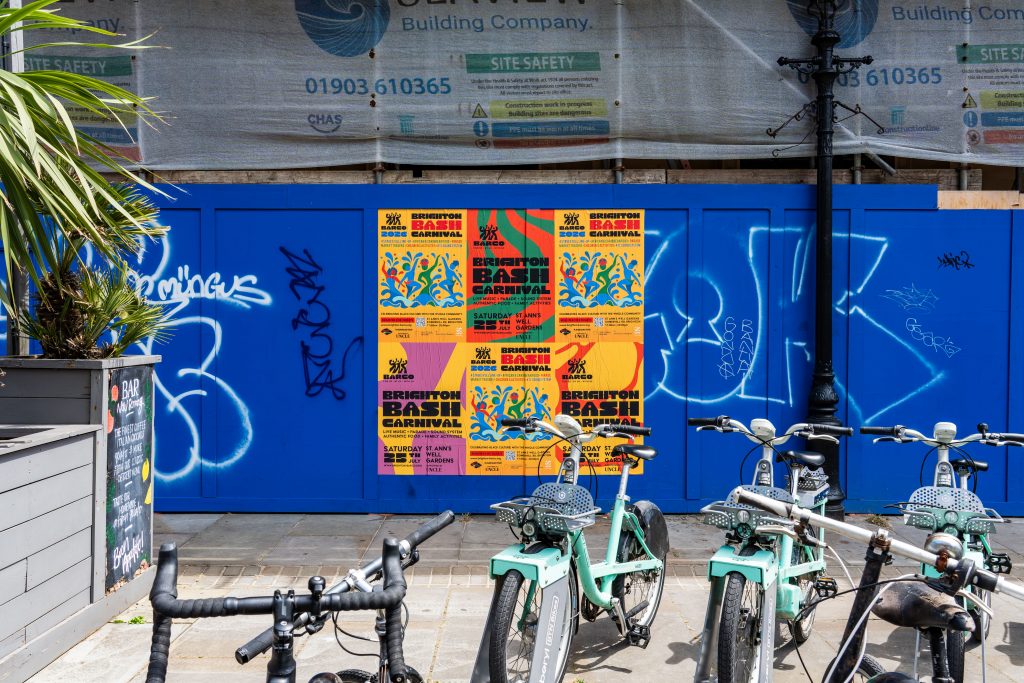
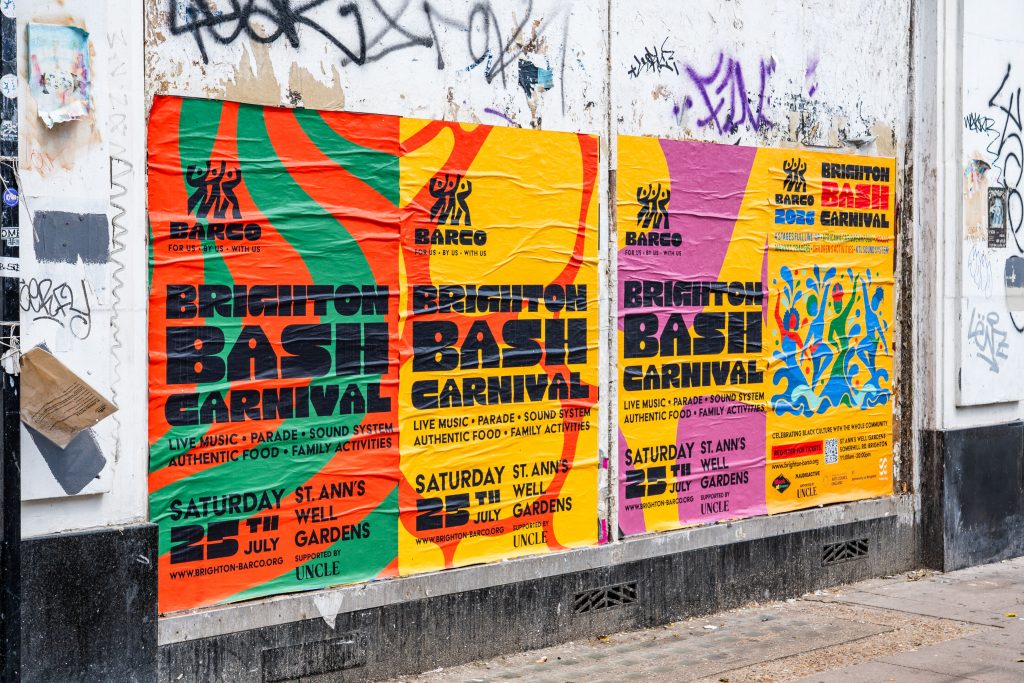
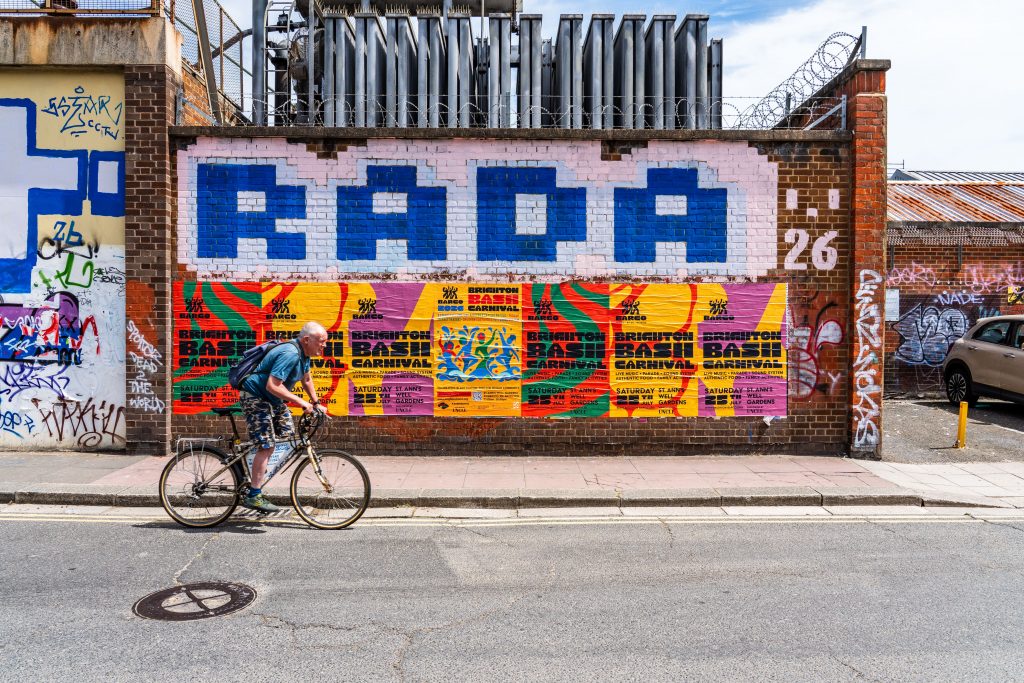
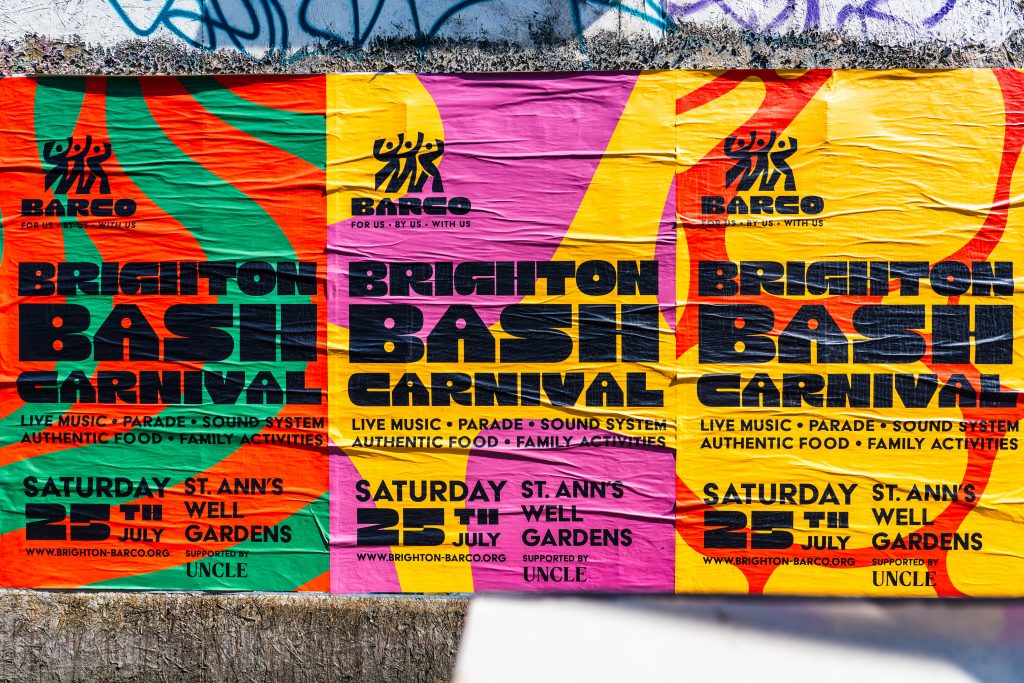
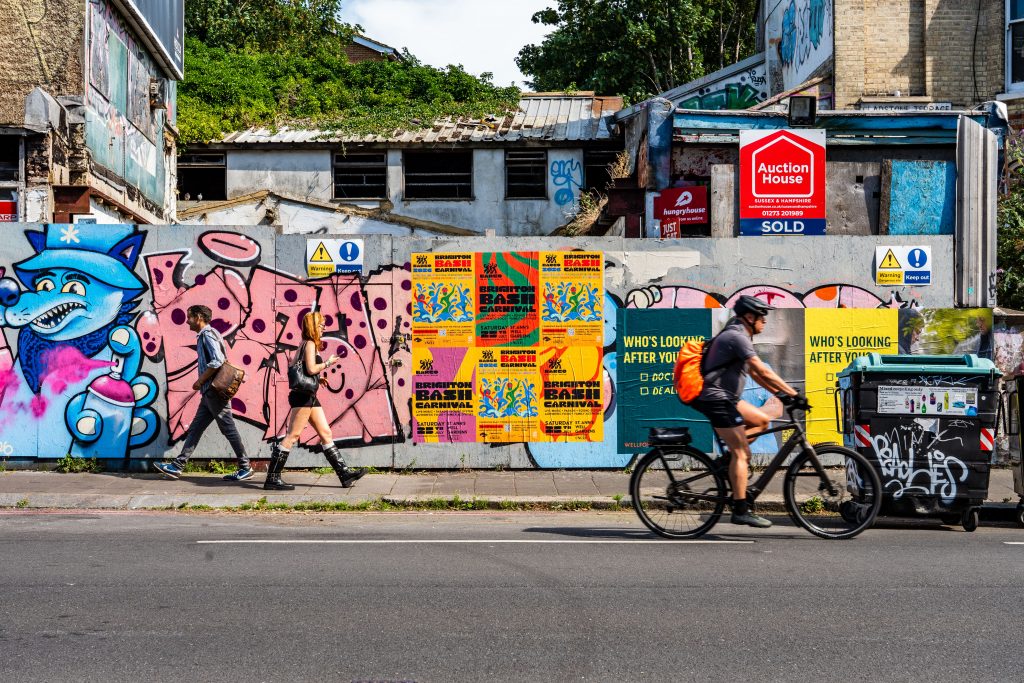
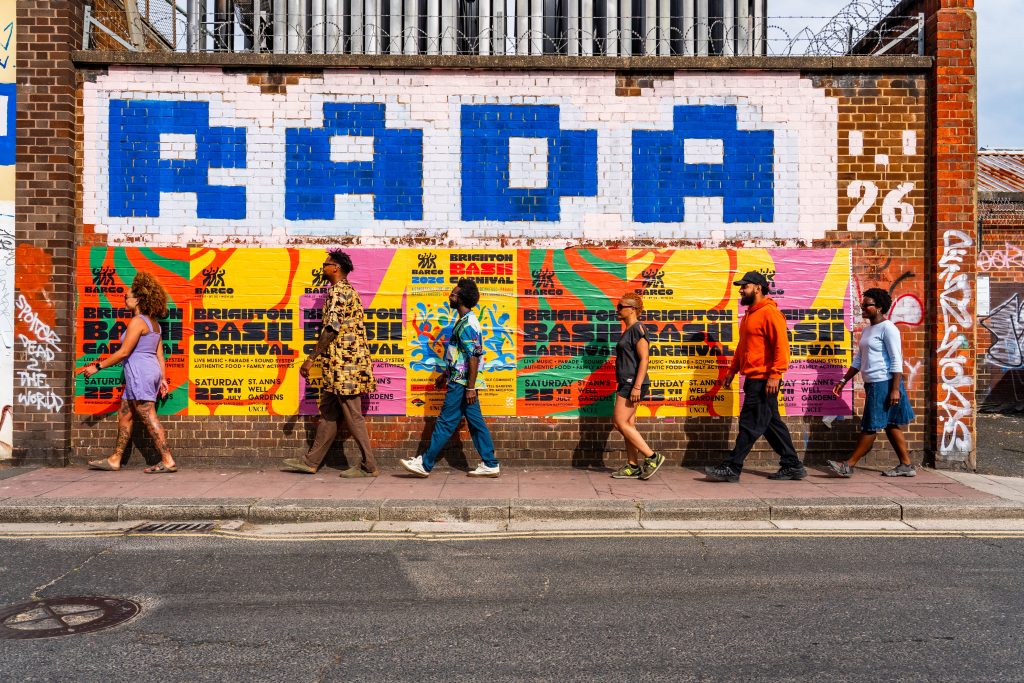
This year, UNCLE is supporting BARCO through a flyposting campaign that carries that message beyond the park and onto Brighton’s streets. Ahead of BASH, we spoke with Bud Johnston and Jacob Mee about carnival as a means of building community, Brighton’s progressive reputation, the labour behind sustaining a grassroots organisation and their hope that, decades from now, they will be able to attend simply as passengers.





features
07.26 BARCO BASH: The Carnival Writing New History in Brighton
FOR ANYONE DISCOVERING BASH FOR THE FIRST TIME THIS YEAR, WHAT CAN THEY EXPECT? WHAT’S THE EXPERIENCE YOU’RE TRYING TO CREATE?
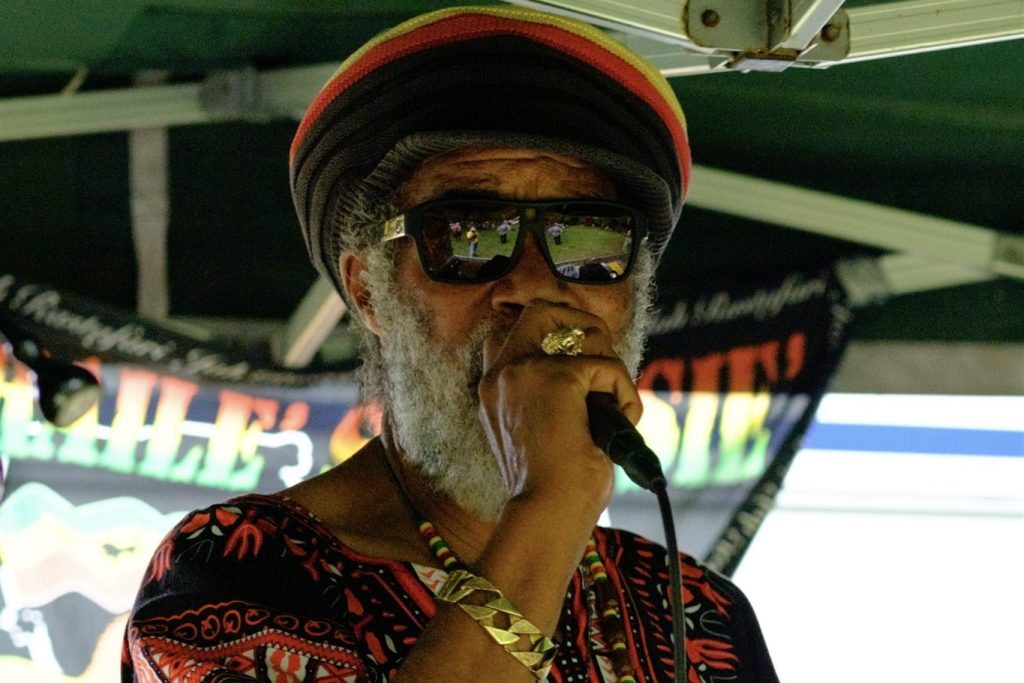
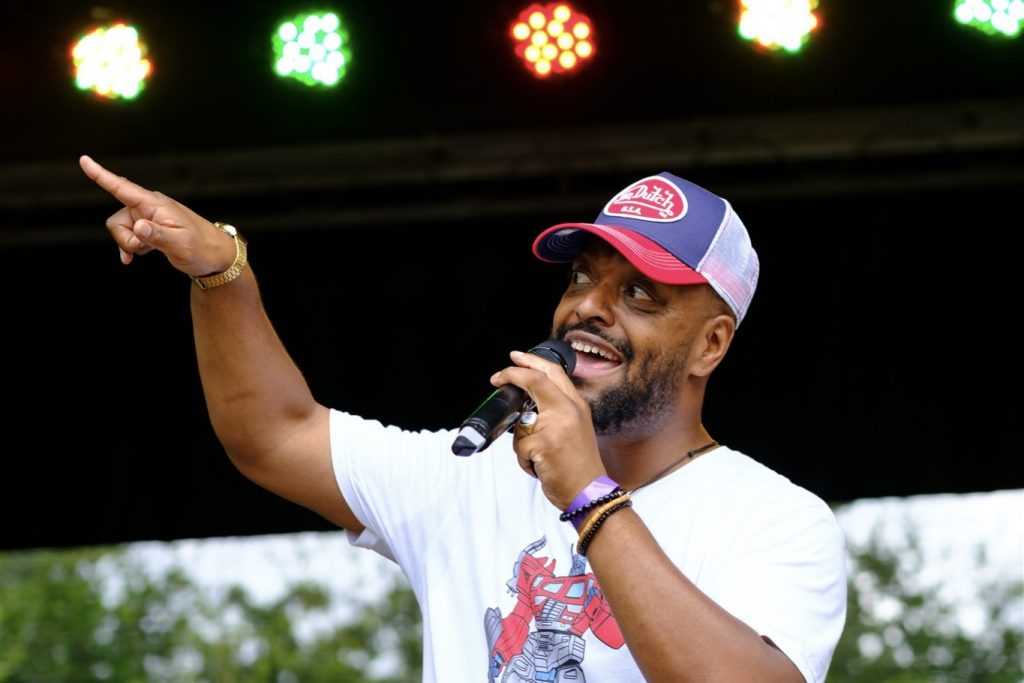
Bud Johnston: The most direct comparison is probably a mini Notting Hill Carnival with a Brighton twist. The fact that it takes place in St Ann’s Well Gardens gives it a different dynamic, because you’ve got this central green space with all these different pockets and areas within it. It’s very much a family-focused daytime event, although we also try to arrange some after-dark activity around it.
BASH stands for Building Alliance, Solidarity and Hope. It’s a celebration of Black culture in Brighton, but it’s also a statement that Black culture exists in this city, belongs in this city and should have the space to be seen, shared and enjoyed.
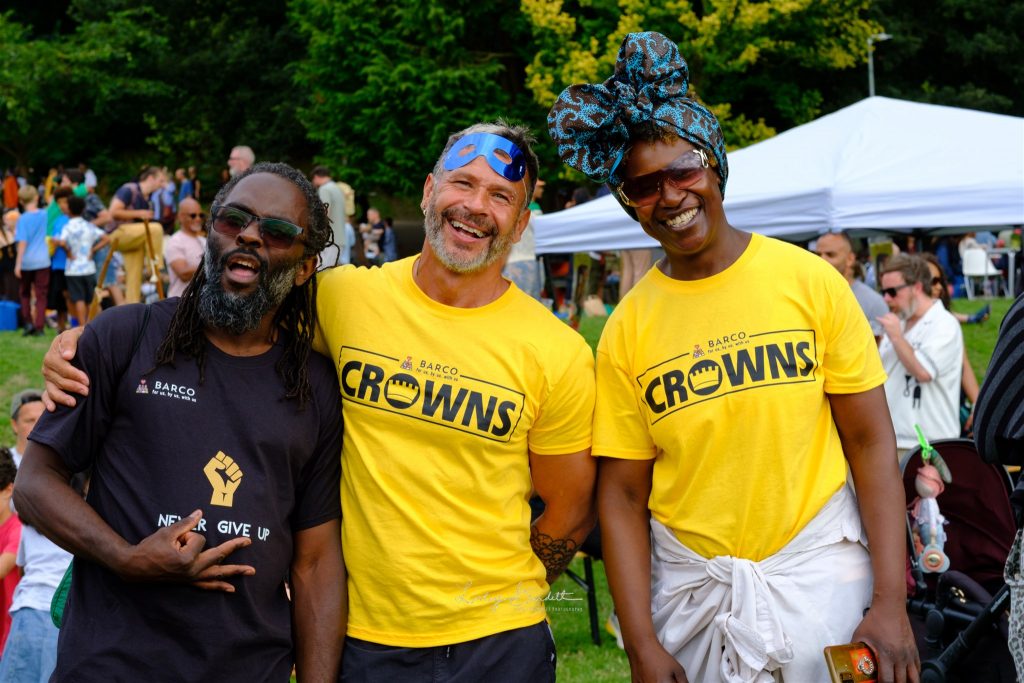
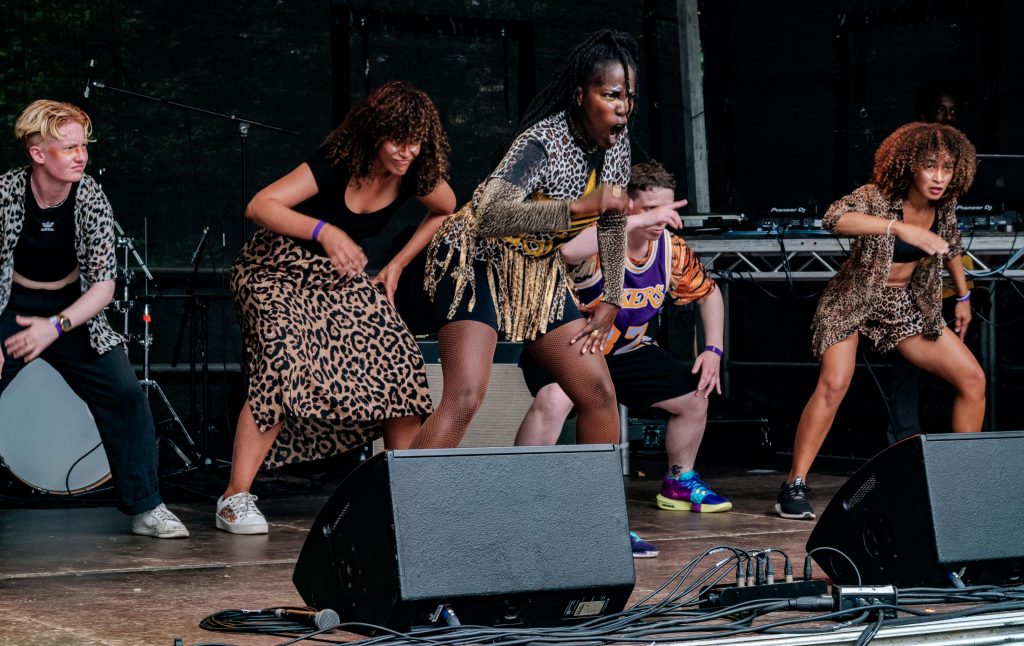
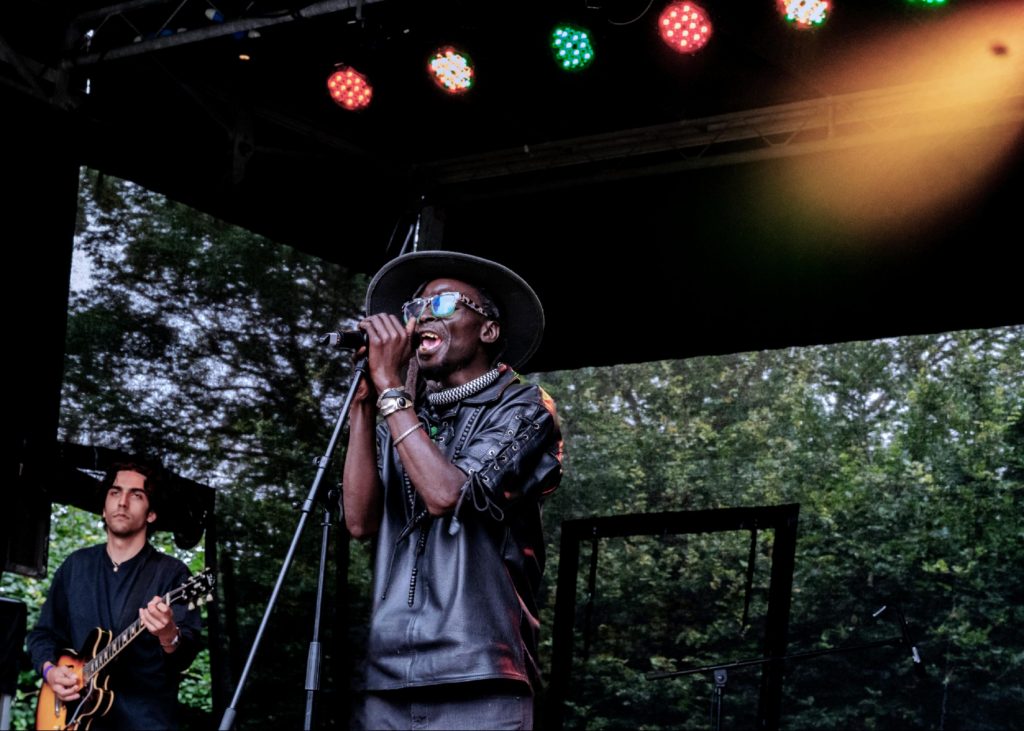
Jacob Mee: The experience we’re trying to create is one that brings the local community together, whether that’s artists, performers, committee members, volunteers or the people attending. There’s a real focus on local talent, and a huge amount of volunteer time goes into making it happen, so it feels genuinely community-led.
WHY CARNIVAL? THERE ARE COUNTLESS WAYS TO BRING PEOPLE TOGETHER THROUGH CULTURE. WHAT MAKES CARNIVAL SUCH A POWERFUL FORMAT FOR ACHIEVING WHAT BARCO WANTS TO ACHIEVE?
Bud Johnston: I think the first thing is that there’s a wonderful Black community in Brighton, but nourishing that community takes a different approach to many other cities in the UK.
If you look at places like London, Manchester, Birmingham, Nottingham or Liverpool, Black communities have often become established in particular areas, sometimes around particular parts of the African diaspora. In Brighton, we’re not all living in one place, and we come from a much wider cross-section of the diaspora.
That means creating community, and then nourishing it, takes real effort. That’s not to say community is built in those other cities without effort, but when people are living alongside each other, conversations happen more naturally and aspirations can align more quickly. In Brighton, we’re not always having those conversations as frequently, so we have to be much more intentional about creating the conditions for community to form.
Carnival becomes a statement piece for that. It’s about celebrating and enjoying Black culture, but also sharing it with the wider community as a way of breaking down barriers.
As an organisation, we’ve taken the view that one route towards challenging anti-Black racism is through sharing culture in a way that people can learn from and enjoy. That feels more human to us than some of the more clinical approaches, where the focus is on what people can and can’t say, or on things like unconscious bias training. Those spaces can sometimes feel robotic.
Carnival taps into something much more instinctive. People want to be together, people want to enjoy themselves together and people want to feel part of a community.
BRIGHTON’S OFTEN CELEBRATED AS A CREATIVE CITY. FROM YOUR PERSPECTIVE, WHAT DOES BRIGHTON DO REALLY WELL WHEN IT COMES TO CULTURE AND COMMUNITY?
Jacob Mee: Brighton is a really interesting city because it changes so quickly, especially with it being such a student-led place. Bud and I are both born-and-bred Brightonians, which feels increasingly rare. Compared with the city we grew up in, I think it still has the same essence, but in many ways it feels completely different now.
Creatively, it is a real hub for events. There’s a wide variety happening across the city, from the larger, more commercial events to smaller independent projects. Within BARCO, we’ve been able to express ourselves and build something within the capacity and resources we have.
One of Brighton’s strengths is that people connect quite well. I don’t feel like there’s much animosity between different events or organisations. People tend to support each other, push each other’s work and collaborate. From that perspective, I think Brighton does a pretty good job of creating a connected creative community.
Bud Johnston: The most direct comparison is probably a mini Notting Hill Carnival with a Brighton twist. The fact that it takes place in St Ann’s Well Gardens gives it a different dynamic, because you’ve got this central green space with all these different pockets and areas within it. It’s very much a family-focused daytime event, although we also try to arrange some after-dark activity around it.
BASH stands for Building Alliance, Solidarity and Hope. It’s a celebration of Black culture in Brighton, but it’s also a statement that Black culture exists in this city, belongs in this city and should have the space to be seen, shared and enjoyed.
Jacob Mee: The experience we’re trying to create is one that brings the local community together, whether that’s artists, performers, committee members, volunteers or the people attending. There’s a real focus on local talent, and a huge amount of volunteer time goes into making it happen, so it feels genuinely community-led.
WHY CARNIVAL? THERE ARE COUNTLESS WAYS TO BRING PEOPLE TOGETHER THROUGH CULTURE. WHAT MAKES CARNIVAL SUCH A POWERFUL FORMAT FOR ACHIEVING WHAT BARCO WANTS TO ACHIEVE?
Bud Johnston: I think the first thing is that there’s a wonderful Black community in Brighton, but nourishing that community takes a different approach to many other cities in the UK.
If you look at places like London, Manchester, Birmingham, Nottingham or Liverpool, Black communities have often become established in particular areas, sometimes around particular parts of the African diaspora. In Brighton, we’re not all living in one place, and we come from a much wider cross-section of the diaspora.
That means creating community, and then nourishing it, takes real effort. That’s not to say community is built in those other cities without effort, but when people are living alongside each other, conversations happen more naturally and aspirations can align more quickly. In Brighton, we’re not always having those conversations as frequently, so we have to be much more intentional about creating the conditions for community to form.
Carnival becomes a statement piece for that. It’s about celebrating and enjoying Black culture, but also sharing it with the wider community as a way of breaking down barriers.
As an organisation, we’ve taken the view that one route towards challenging anti-Black racism is through sharing culture in a way that people can learn from and enjoy. That feels more human to us than some of the more clinical approaches, where the focus is on what people can and can’t say, or on things like unconscious bias training. Those spaces can sometimes feel robotic.
Carnival taps into something much more instinctive. People want to be together, people want to enjoy themselves together and people want to feel part of a community.
BRIGHTON’S OFTEN CELEBRATED AS A CREATIVE CITY. FROM YOUR PERSPECTIVE, WHAT DOES BRIGHTON DO REALLY WELL WHEN IT COMES TO CULTURE AND COMMUNITY?
Jacob Mee: Brighton is a really interesting city because it changes so quickly, especially with it being such a student-led place. Bud and I are both born-and-bred Brightonians, which feels increasingly rare. Compared with the city we grew up in, I think it still has the same essence, but in many ways it feels completely different now.
Creatively, it is a real hub for events. There’s a wide variety happening across the city, from the larger, more commercial events to smaller independent projects. Within BARCO, we’ve been able to express ourselves and build something within the capacity and resources we have.
One of Brighton’s strengths is that people connect quite well. I don’t feel like there’s much animosity between different events or organisations. People tend to support each other, push each other’s work and collaborate. From that perspective, I think Brighton does a pretty good job of creating a connected creative community.
AND WHERE DO YOU THINK BRIGHTON STILL HAS WORK TO DO? WHAT GAPS OR CHALLENGES IS BARCO TRYING TO ADDRESS?
Bud Johnston: Brighton gets a pass a lot of the time. The stamp of approval the city prides itself on is often based on having Pride every year, but that doesn’t mean everything else is cool and breezy.
Pride is phenomenal, but I think it has lost some of its origins. It began through activism, protest and demonstration, and it has now become a very commercial enterprise with ticketing and major headline acts. If that’s what it has evolved into, that’s great, but Brighton still needs to make more space for unheard voices.
Growing up here, my parents had to go above and beyond to create a sense of community. They opened our house as somewhere people could gather and feel welcome. Igbo from African Night Fever has been doing that kind of work for years, creating spaces where people can enjoy African culture, music and food.
Once upon a time, I think there were more spaces across the city where those things could happen. Over time, some of them diminished. The people who originally drove those spaces became older, tired or slowed down, and the torch wasn’t always passed across.
That’s one of the challenges Brighton needs to address, but it’s also something BARCO needs to improve. This year, we’ve taken a much stronger approach to bringing in younger voices and beginning the process of handing the torch over. I don’t want to be doing this forever. It needs continuation, and the next generation needs the opportunity to take it over and make it their own.
If Brighton can create more space and make more people feel genuinely welcome, younger generations will know there is somewhere for them to build, contribute and continue this work.
HOW IMPORTANT HAS ST ANN’S WELL GARDENS BECOME TO THE IDENTITY OF BASH? HOW HAS MOVING INTO THAT SPACE CHANGED WHAT YOU’RE ABLE TO DO COMPARED WITH THE EARLIER FORMAT IN THE CITY CENTRE?
Jacob Mee: It has become hugely important. The move almost fell into our laps. Ian from the council had supported us over the years, and during one of our meetings he asked what we thought about St Ann’s Well Gardens.
I hadn’t really experienced many events there before, but once we visited and I looked at it through an event manager’s eyes, I could immediately see how special it could be. It’s a really unique green space. The topography, the different pockets and the way the park naturally breaks into separate areas all give you something that you would otherwise have to build from scratch in a big open field.
That completely changed what BASH could be. Before St Ann’s Well, we had been working in much smaller city-centre spaces with one small stage, a food vendor and a handful of traders. The park gave us room to create different environments, expand the programme and make the event feel much more immersive.
It was daunting at first because the capacity and scale were so much greater than anything we had taken on before, but it now feels like the natural home of BASH. Even after several years there, I don’t think we’ve reached the full potential of the space.
In the future, we’d love to develop the carnival parade further and potentially take it out onto the road, with St Ann’s Well becoming the final destination. At the moment, the parade stays within the park, but there is plenty of room for that side of BASH to grow.
Bud Johnston: Brighton gets a pass a lot of the time. The stamp of approval the city prides itself on is often based on having Pride every year, but that doesn’t mean everything else is cool and breezy.
Pride is phenomenal, but I think it has lost some of its origins. It began through activism, protest and demonstration, and it has now become a very commercial enterprise with ticketing and major headline acts. If that’s what it has evolved into, that’s great, but Brighton still needs to make more space for unheard voices.
Growing up here, my parents had to go above and beyond to create a sense of community. They opened our house as somewhere people could gather and feel welcome. Igbo from African Night Fever has been doing that kind of work for years, creating spaces where people can enjoy African culture, music and food.
Once upon a time, I think there were more spaces across the city where those things could happen. Over time, some of them diminished. The people who originally drove those spaces became older, tired or slowed down, and the torch wasn’t always passed across.
That’s one of the challenges Brighton needs to address, but it’s also something BARCO needs to improve. This year, we’ve taken a much stronger approach to bringing in younger voices and beginning the process of handing the torch over. I don’t want to be doing this forever. It needs continuation, and the next generation needs the opportunity to take it over and make it their own.
If Brighton can create more space and make more people feel genuinely welcome, younger generations will know there is somewhere for them to build, contribute and continue this work.
HOW IMPORTANT HAS ST ANN’S WELL GARDENS BECOME TO THE IDENTITY OF BASH? HOW HAS MOVING INTO THAT SPACE CHANGED WHAT YOU’RE ABLE TO DO COMPARED WITH THE EARLIER FORMAT IN THE CITY CENTRE?
Jacob Mee: It has become hugely important. The move almost fell into our laps. Ian from the council had supported us over the years, and during one of our meetings he asked what we thought about St Ann’s Well Gardens.
I hadn’t really experienced many events there before, but once we visited and I looked at it through an event manager’s eyes, I could immediately see how special it could be. It’s a really unique green space. The topography, the different pockets and the way the park naturally breaks into separate areas all give you something that you would otherwise have to build from scratch in a big open field.
That completely changed what BASH could be. Before St Ann’s Well, we had been working in much smaller city-centre spaces with one small stage, a food vendor and a handful of traders. The park gave us room to create different environments, expand the programme and make the event feel much more immersive.
It was daunting at first because the capacity and scale were so much greater than anything we had taken on before, but it now feels like the natural home of BASH. Even after several years there, I don’t think we’ve reached the full potential of the space.
In the future, we’d love to develop the carnival parade further and potentially take it out onto the road, with St Ann’s Well becoming the final destination. At the moment, the parade stays within the park, but there is plenty of room for that side of BASH to grow.
WHAT HAVE BEEN SOME OF YOUR PROUDEST MOMENTS SINCE STARTING BARCO?
Bud Johnston: Honestly, just still being here. The not-for-profit, grassroots sector is mental. So many organisations are competing for the same small pots of funding, trying to win money in one place to make something happen somewhere else. Everyone involved has real jobs, real lives and other responsibilities, so a lot of this work happens on borrowed time.
Many grassroots organisations don’t make it beyond one or two years because people burn out. A lot of us are burned out too, but the shared belief in why BARCO matters has kept us going.
I’m proud that we’ve maintained a core group, stayed true to the mission and built a following around the work. We’ve also somehow managed to stay friends through it all. This is more than an organisation; it’s a relationship, it’s family, and that can be difficult. So the longevity itself, and the fact that we’re still here, is probably the thing I’m most proud of.
Jacob Mee: For me, it’s the moment when 11am arrives on the day of BASH and you realise: okay, it’s happening.
You’ve got 20 or 30 people who have all given their time to put this event together. They might not all have professional experience of running something on that scale, but they have the will to make it work. Together, we’re able to deliver an event that would normally take an entire company to run.
When all the stages are live, the final problems have been ironed out and the day begins to flow, there’s a moment where you can finally breathe. Our job is almost done, and we can watch everything the team has built come to life. That’s the proudest moment for me every year.
IF SOMEBODY IS READING THIS AND THINKING, “I’D LOVE TO BE INVOLVED SOMEHOW,” WHAT’S THE BEST WAY FOR THEM TO CONTRIBUTE?
Bud Johnston: The first thing is to understand what you can bring, but also to find out what the organisation actually needs.
If I had a pound for everyone who said they wanted to get involved, I’d be laughing. It’s genuinely flattering when people want to offer their time and expertise, but we don’t necessarily need 100 litter pickers or 100 people who can design a T-shirt.
For a grassroots organisation already running on fumes, the most useful thing someone can do is ask what is missing. Where are the gaps? What support would genuinely make a difference?
We haven’t yet found the perfect mechanism for making those needs obvious, especially now that more people are asking how they can help, but that’s something we need to improve.
Jacob Mee: After each BASH, we open applications for people to join the committee. There’s a form where people can tell us about their experience, interests and what they think they can contribute.
I’ll then speak with them to work out where they might fit, what support we currently need and whether they have the capacity to commit to helping run the next event.
It’s about matching people’s skills and enthusiasm with the areas where they can have a real impact.
FINALLY, IMAGINE WE’RE HAVING THIS CONVERSATION AGAIN IN 50 YEARS. WHAT DO YOU HOPE BASH HAS BECOME BY THEN? WHAT WOULD SUCCESS LOOK LIKE?
Bud Johnston: First and foremost, I want to be attending it and enjoying it.
I want new energy, new ideas and younger people to shape what BASH becomes. In 50 years, it should be less about what I wanted it to be and more about what they want it to be.
The core message still needs to be there: Black culture exists in this city, it is welcome in this city, and everyone is invited to come and explore and enjoy it with us.
BASH stands for Building Alliance, Solidarity and Hope. If it can hold onto that, then it doesn’t really matter what it looks or sounds like in the future. Music will change, culture will evolve and the stages might be playing things we can’t even imagine yet. Who knows?
For me, success would be becoming a passenger. I want to be able to turn up, enjoy it and watch new people bring their own vision to it.
Jacob Mee: From an event-management perspective, I’d like BASH to become genuinely sustainable and able to run on its own gas.
I’d love for the core team to be paid properly while still keeping that volunteer element. I’d like it to create part-time jobs, opportunities for local people and a continuing platform for artists and the wider community.
I’d also like to see the parade grow and eventually move beyond the park, but it doesn’t always need to be bigger and better. As long as BASH keeps happening and keeps providing something meaningful for the community, that should be enough.
I can see it becoming a 60-year annual event and a real staple in Brighton for the Black community.
ANYTHING ELSE TO ADD?
Just to say thank you for the support and for connecting us with UNCLE.
Marketing is one of the areas we’ve always struggled with. We spend so much time with our heads down, focused on operations and trying to make everything work, that promoting what we do can easily fall by the wayside.
Having support that gives BASH a stronger physical and digital presence really matters to us, so we genuinely appreciate it.
Bud Johnston: Honestly, just still being here. The not-for-profit, grassroots sector is mental. So many organisations are competing for the same small pots of funding, trying to win money in one place to make something happen somewhere else. Everyone involved has real jobs, real lives and other responsibilities, so a lot of this work happens on borrowed time.
Many grassroots organisations don’t make it beyond one or two years because people burn out. A lot of us are burned out too, but the shared belief in why BARCO matters has kept us going.
I’m proud that we’ve maintained a core group, stayed true to the mission and built a following around the work. We’ve also somehow managed to stay friends through it all. This is more than an organisation; it’s a relationship, it’s family, and that can be difficult. So the longevity itself, and the fact that we’re still here, is probably the thing I’m most proud of.
Jacob Mee: For me, it’s the moment when 11am arrives on the day of BASH and you realise: okay, it’s happening.
You’ve got 20 or 30 people who have all given their time to put this event together. They might not all have professional experience of running something on that scale, but they have the will to make it work. Together, we’re able to deliver an event that would normally take an entire company to run.
When all the stages are live, the final problems have been ironed out and the day begins to flow, there’s a moment where you can finally breathe. Our job is almost done, and we can watch everything the team has built come to life. That’s the proudest moment for me every year.
IF SOMEBODY IS READING THIS AND THINKING, “I’D LOVE TO BE INVOLVED SOMEHOW,” WHAT’S THE BEST WAY FOR THEM TO CONTRIBUTE?
Bud Johnston: The first thing is to understand what you can bring, but also to find out what the organisation actually needs.
If I had a pound for everyone who said they wanted to get involved, I’d be laughing. It’s genuinely flattering when people want to offer their time and expertise, but we don’t necessarily need 100 litter pickers or 100 people who can design a T-shirt.
For a grassroots organisation already running on fumes, the most useful thing someone can do is ask what is missing. Where are the gaps? What support would genuinely make a difference?
We haven’t yet found the perfect mechanism for making those needs obvious, especially now that more people are asking how they can help, but that’s something we need to improve.
Jacob Mee: After each BASH, we open applications for people to join the committee. There’s a form where people can tell us about their experience, interests and what they think they can contribute.
I’ll then speak with them to work out where they might fit, what support we currently need and whether they have the capacity to commit to helping run the next event.
It’s about matching people’s skills and enthusiasm with the areas where they can have a real impact.
FINALLY, IMAGINE WE’RE HAVING THIS CONVERSATION AGAIN IN 50 YEARS. WHAT DO YOU HOPE BASH HAS BECOME BY THEN? WHAT WOULD SUCCESS LOOK LIKE?
Bud Johnston: First and foremost, I want to be attending it and enjoying it.
I want new energy, new ideas and younger people to shape what BASH becomes. In 50 years, it should be less about what I wanted it to be and more about what they want it to be.
The core message still needs to be there: Black culture exists in this city, it is welcome in this city, and everyone is invited to come and explore and enjoy it with us.
BASH stands for Building Alliance, Solidarity and Hope. If it can hold onto that, then it doesn’t really matter what it looks or sounds like in the future. Music will change, culture will evolve and the stages might be playing things we can’t even imagine yet. Who knows?
For me, success would be becoming a passenger. I want to be able to turn up, enjoy it and watch new people bring their own vision to it.
Jacob Mee: From an event-management perspective, I’d like BASH to become genuinely sustainable and able to run on its own gas.
I’d love for the core team to be paid properly while still keeping that volunteer element. I’d like it to create part-time jobs, opportunities for local people and a continuing platform for artists and the wider community.
I’d also like to see the parade grow and eventually move beyond the park, but it doesn’t always need to be bigger and better. As long as BASH keeps happening and keeps providing something meaningful for the community, that should be enough.
I can see it becoming a 60-year annual event and a real staple in Brighton for the Black community.
ANYTHING ELSE TO ADD?
Just to say thank you for the support and for connecting us with UNCLE.
Marketing is one of the areas we’ve always struggled with. We spend so much time with our heads down, focused on operations and trying to make everything work, that promoting what we do can easily fall by the wayside.
Having support that gives BASH a stronger physical and digital presence really matters to us, so we genuinely appreciate it.