

“It’s very important to construct the chaos.”
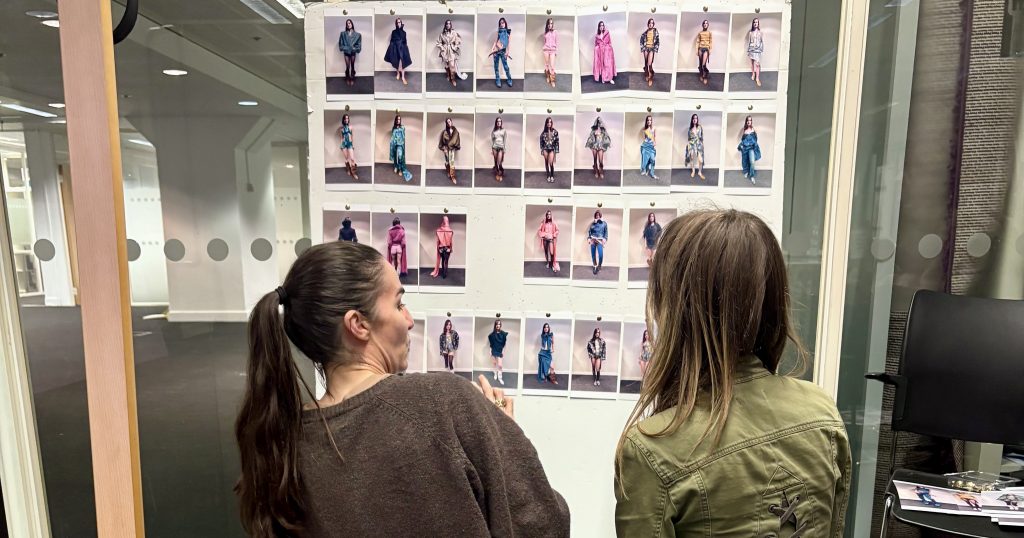
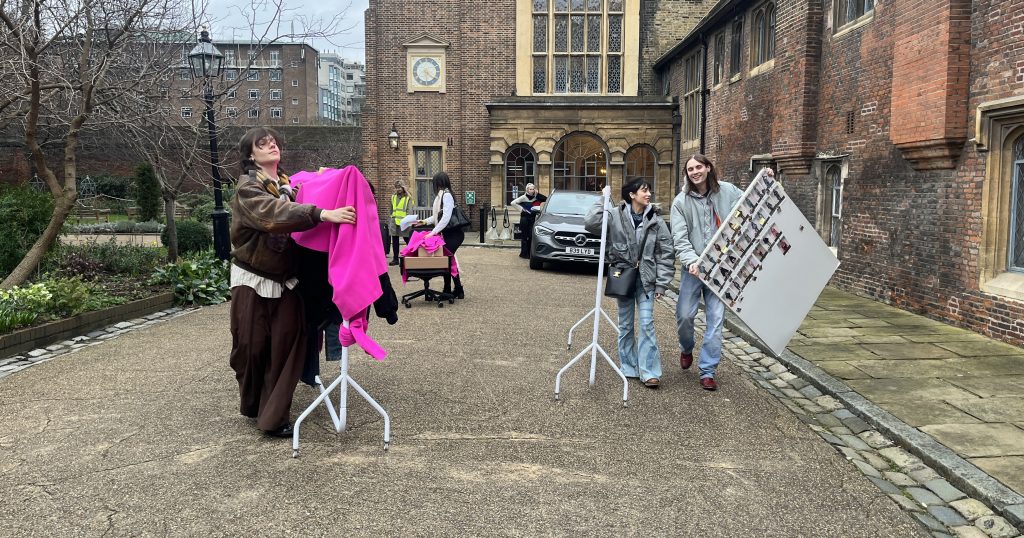
Behind Masha Popova, the construction is ongoing. Garments fill the background of her London studio, while a colleague moves through the rails, pulling out pieces and steaming them. It is buzzy, busy and only getting busier. When we speak, London Fashion Week is a few weeks away.
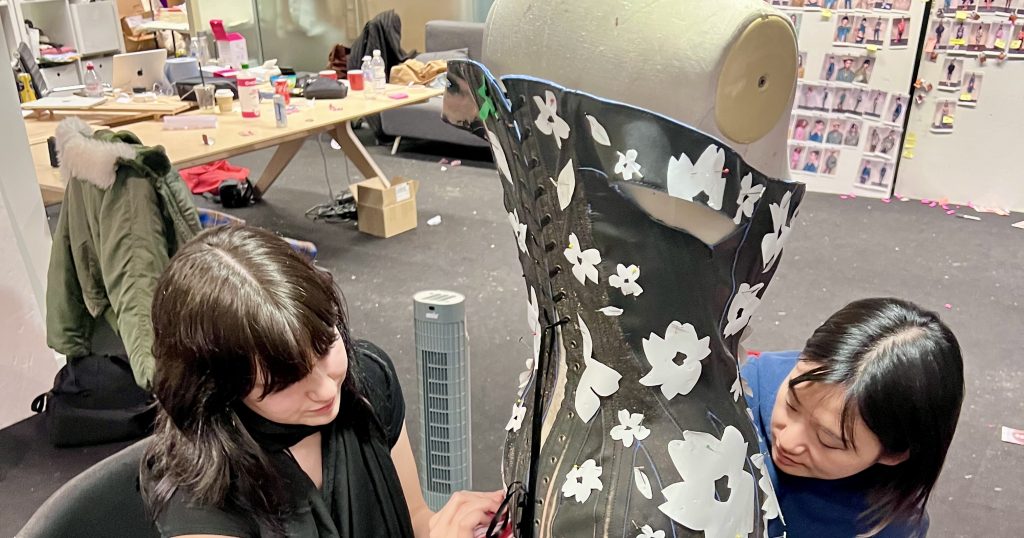
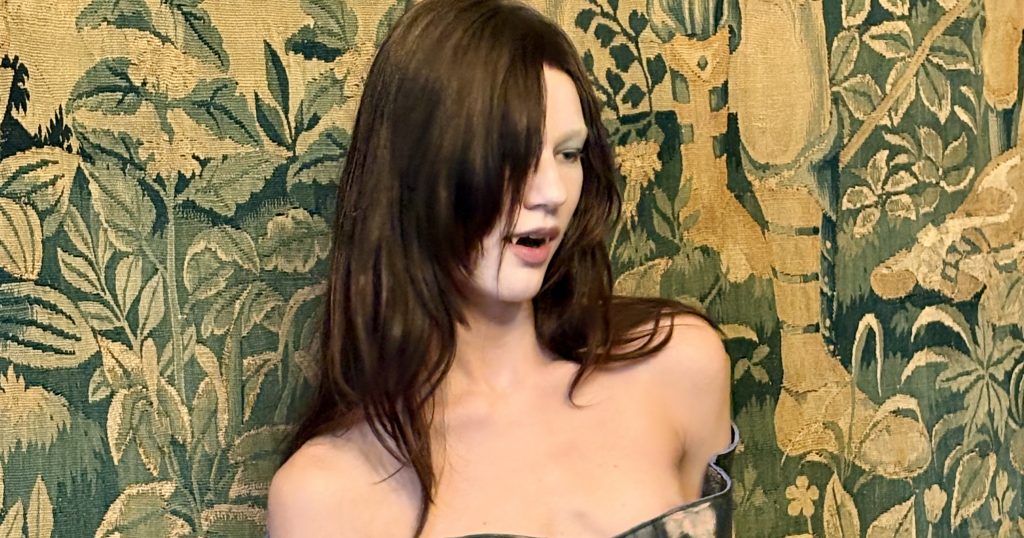
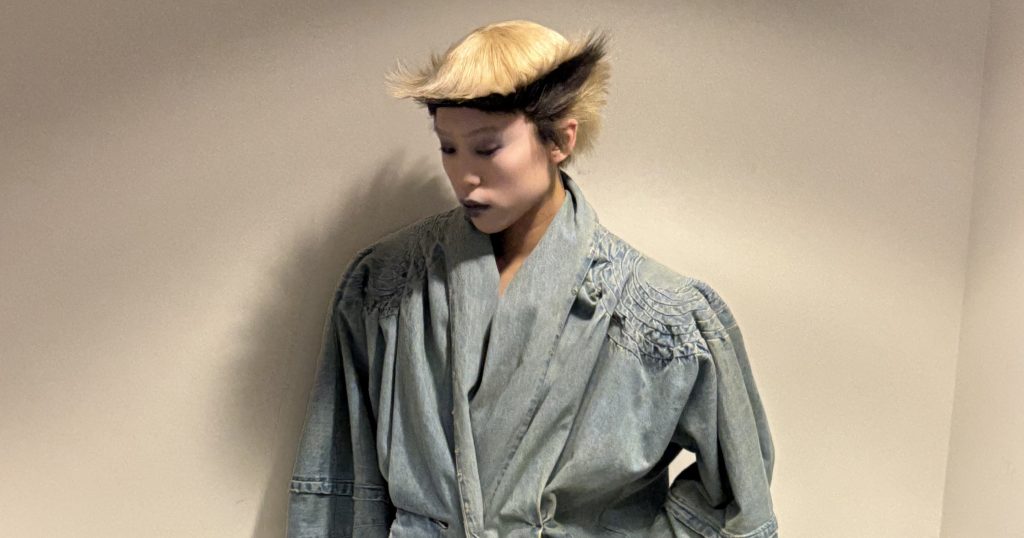
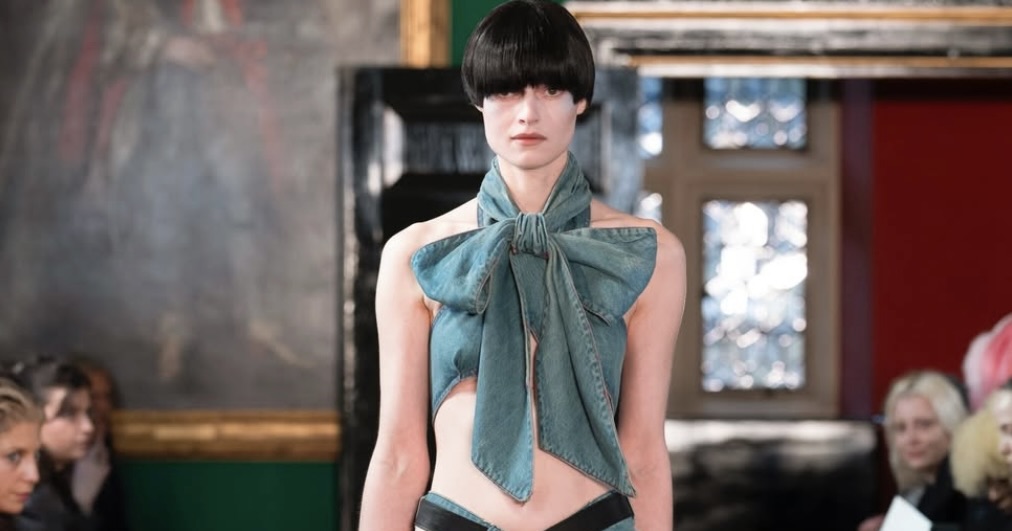
Popova introduces herself as the founder and creative director of her womenswear brand, best known for its subversive use of denim and clothing that is “heavy in craft and handwork”. Her designs can appear distressed, twisted or caught in motion, but that chaos is precisely constructed. New shapes begin in three dimensions, draped directly onto a mannequin, with the behaviour of the fabric allowed to lead the process.
That approach has roots beyond fashion. Born in Ukraine, Popova initially studied architecture before moving to London. She grew up searching enormous second-hand markets for individual pieces at a time when her hometown did not have the familiar high-street shops that might otherwise have dictated what a teenager should wear. Later, she spent her first architecture scholarship payment on a domestic sewing machine, driven by the urge to make something with her hands. Architecture proved too static and slow. Although she now concedes that fashion may move a little too quickly.
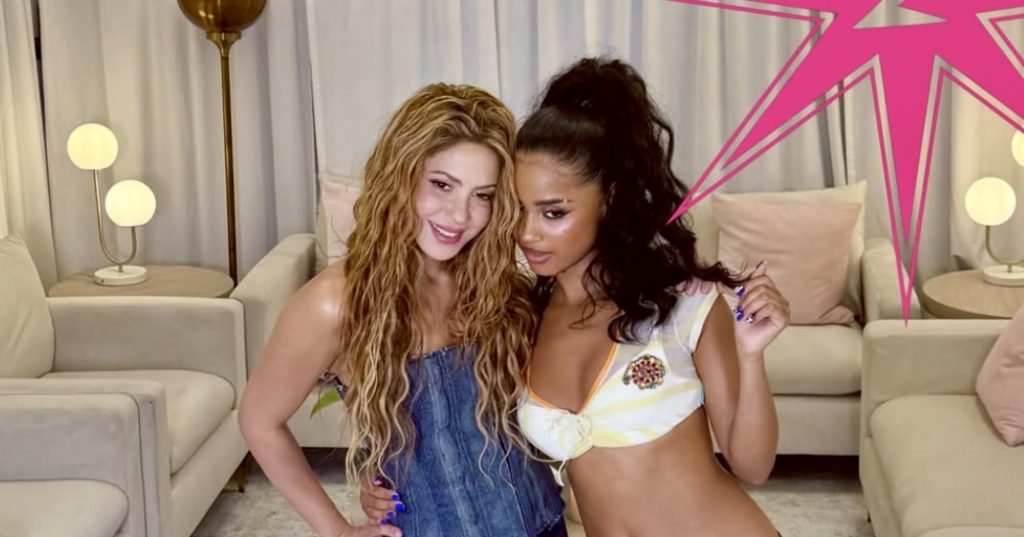
Since establishing her label, Popova’s warped denim, low-slung silhouettes and hand-treated garments have found their way onto musicians including PinkPantheress, Tyla, Zara Larsson, FKA twigs and Charli xcx. That relationship with pop culture has widened the brand’s audience.
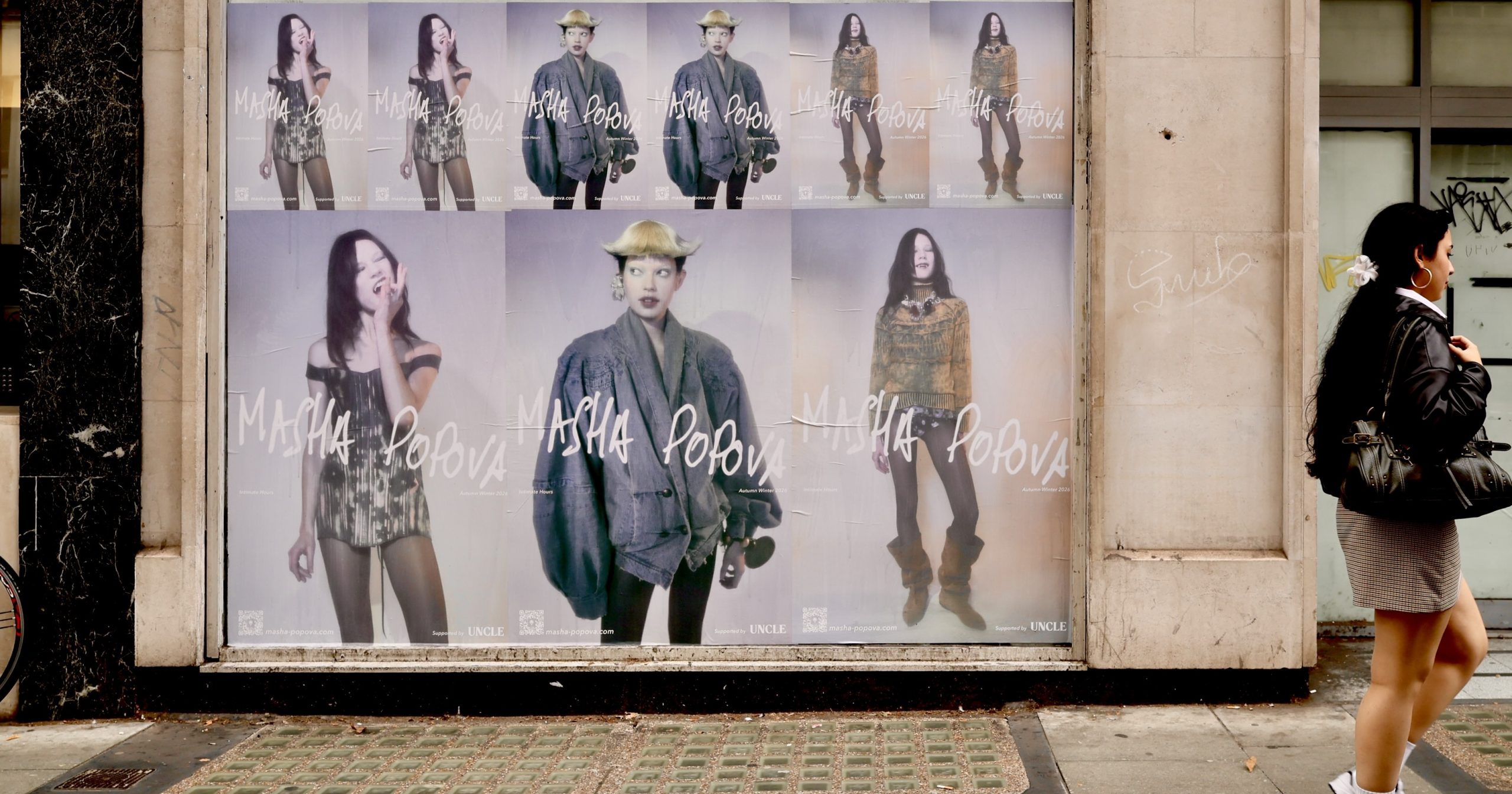
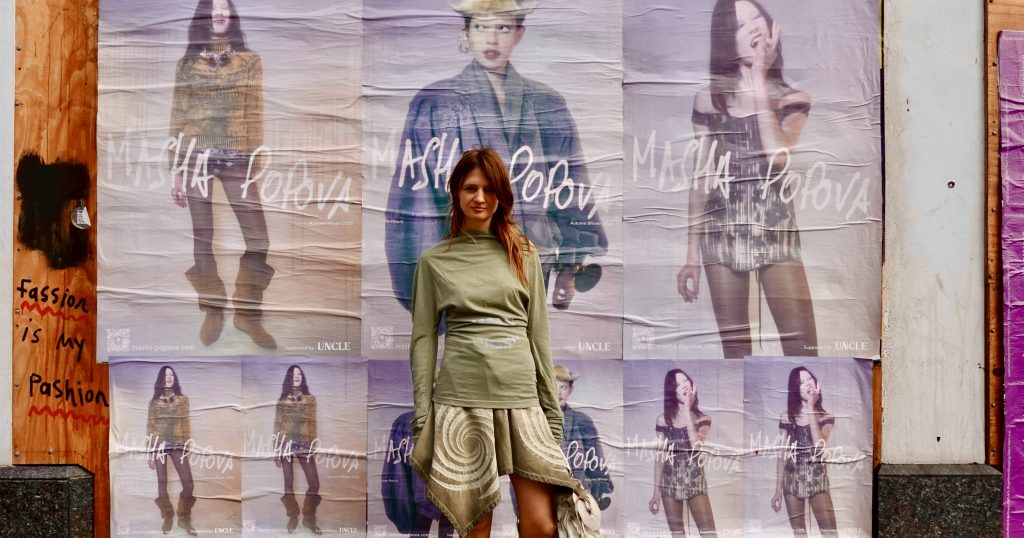
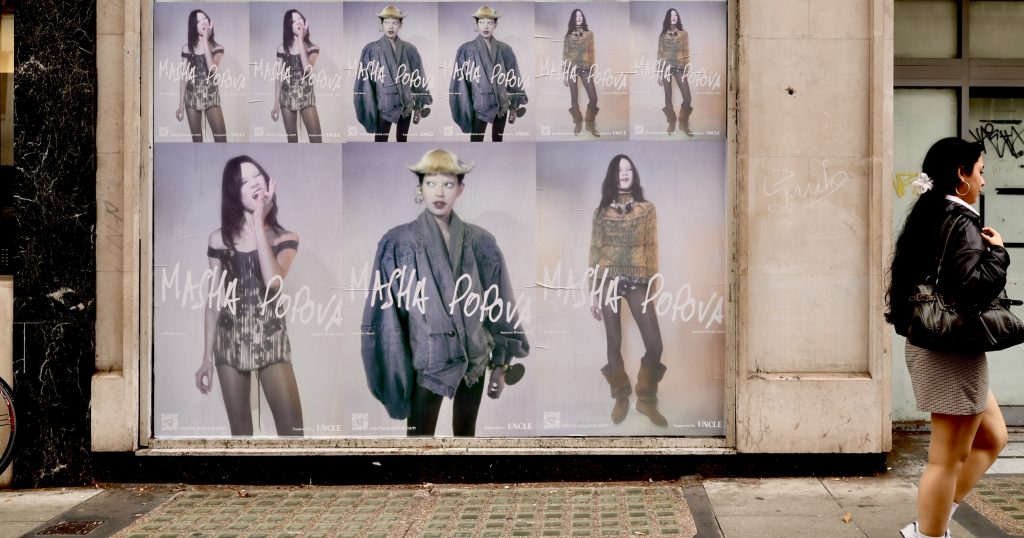
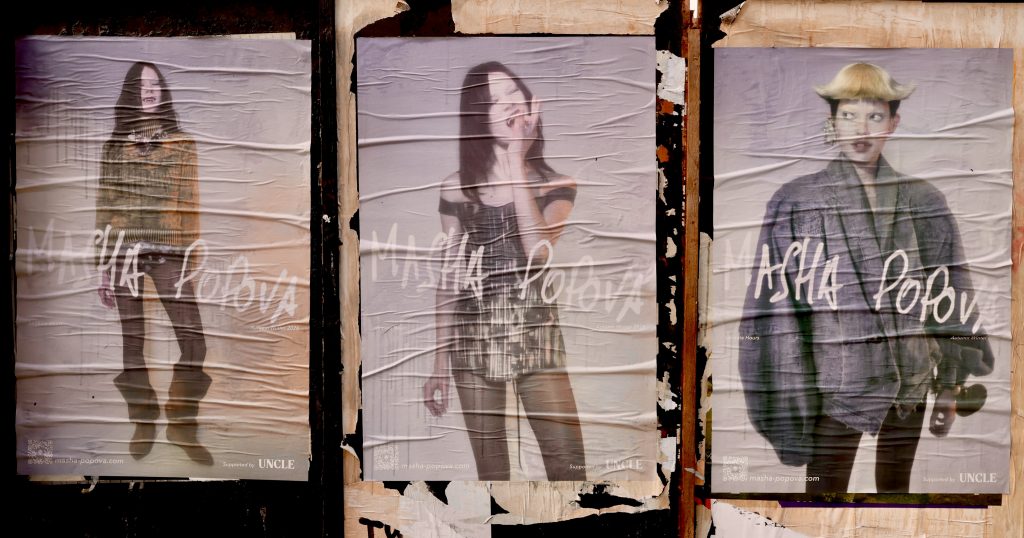
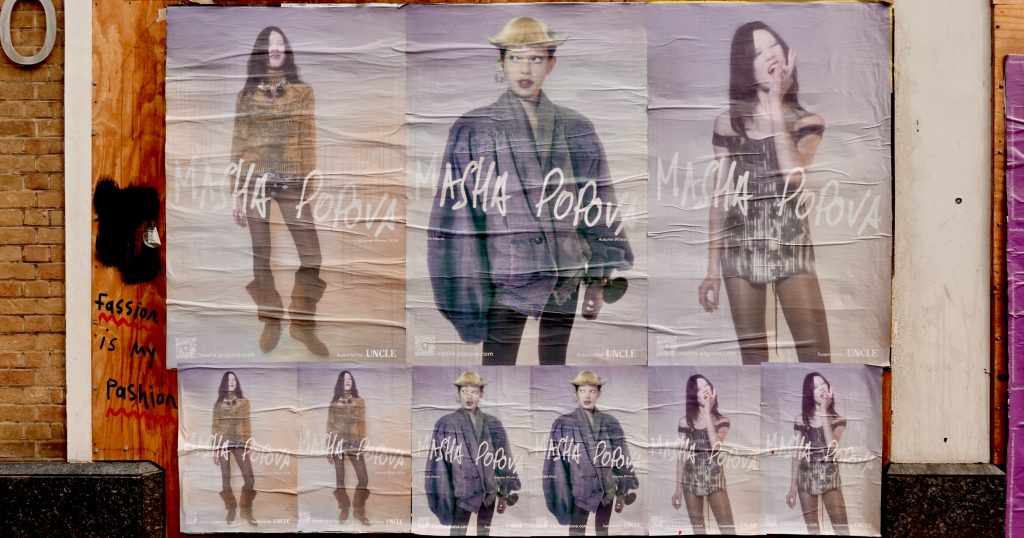
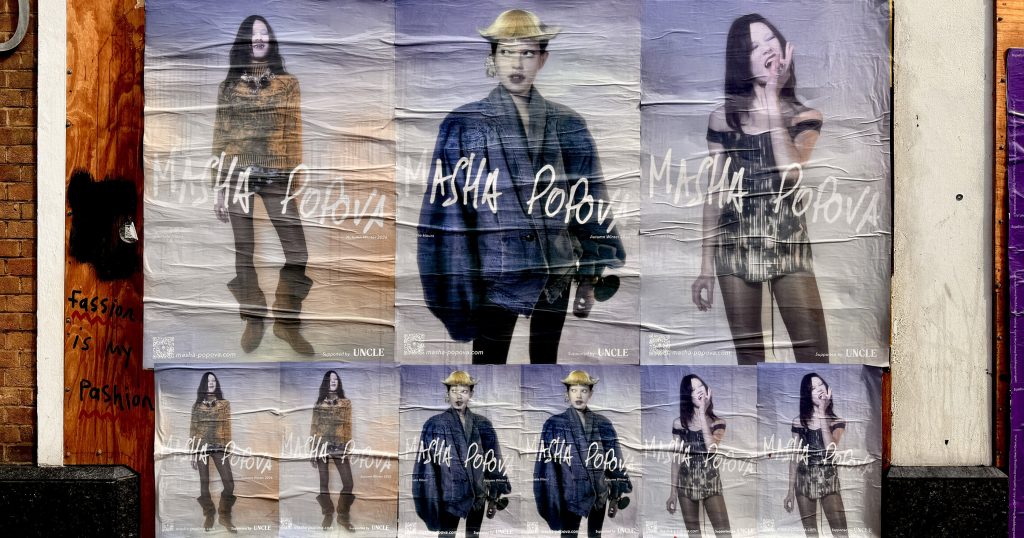
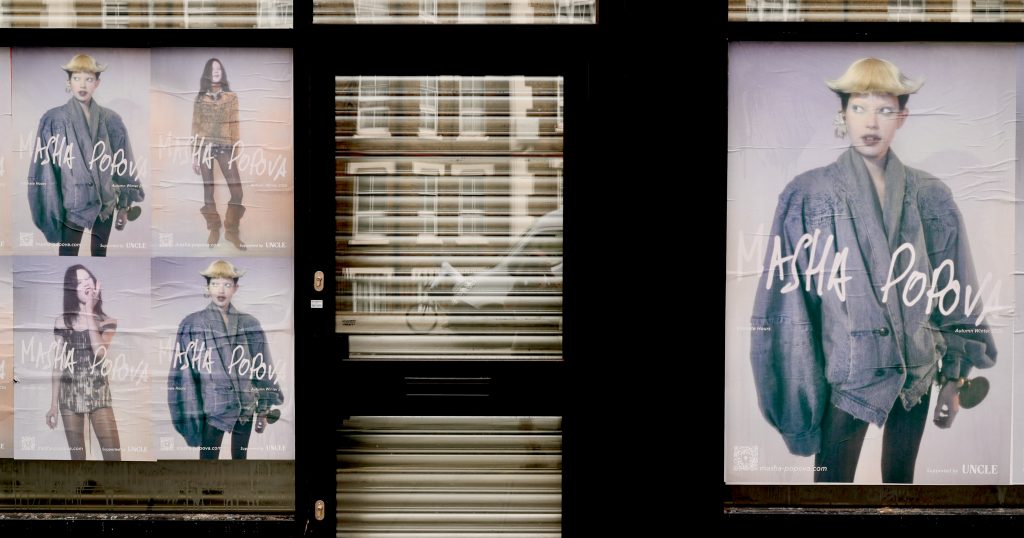
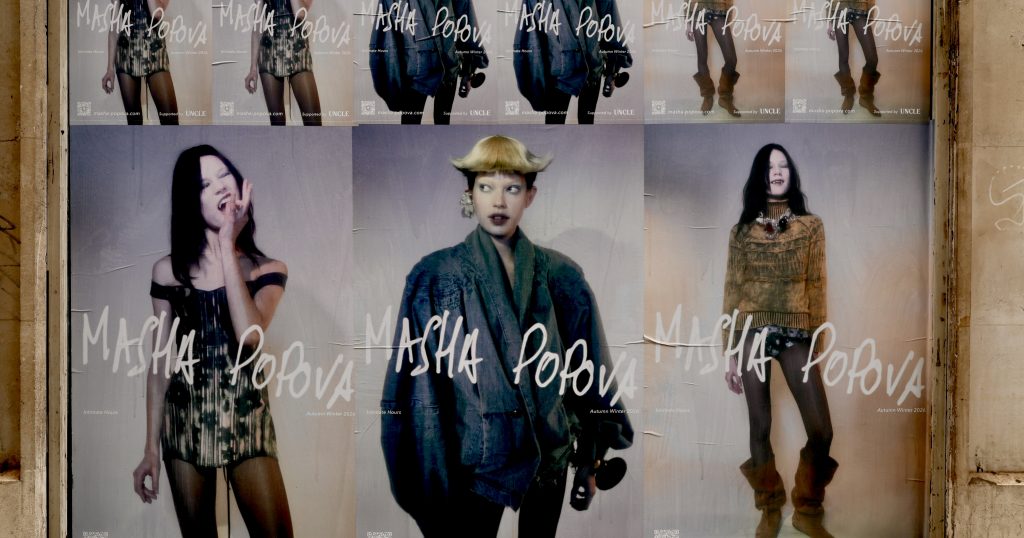
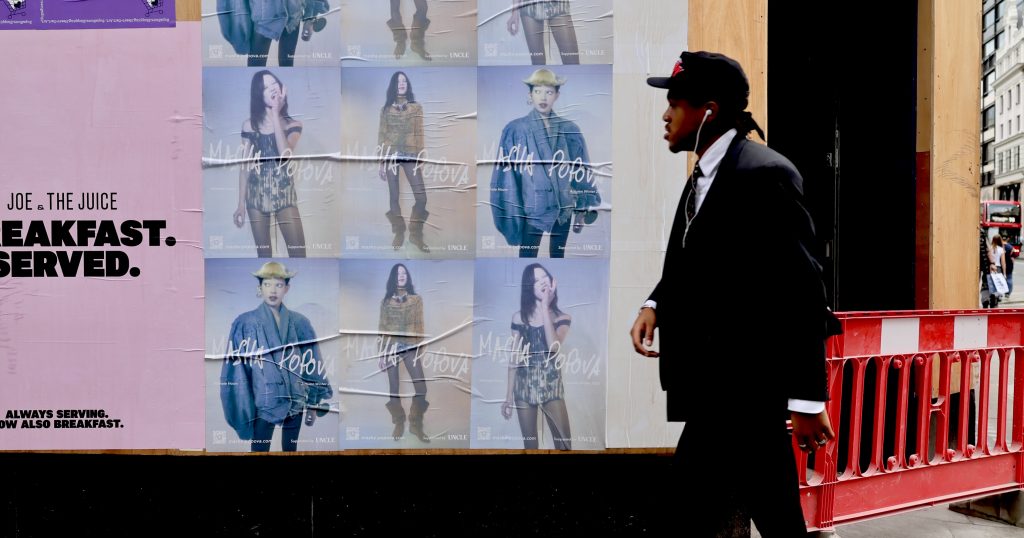
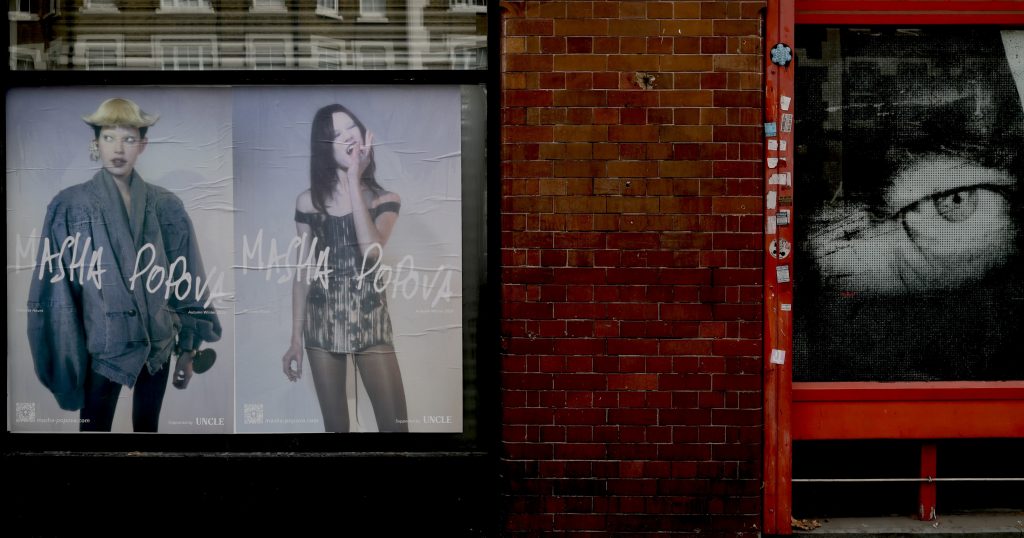
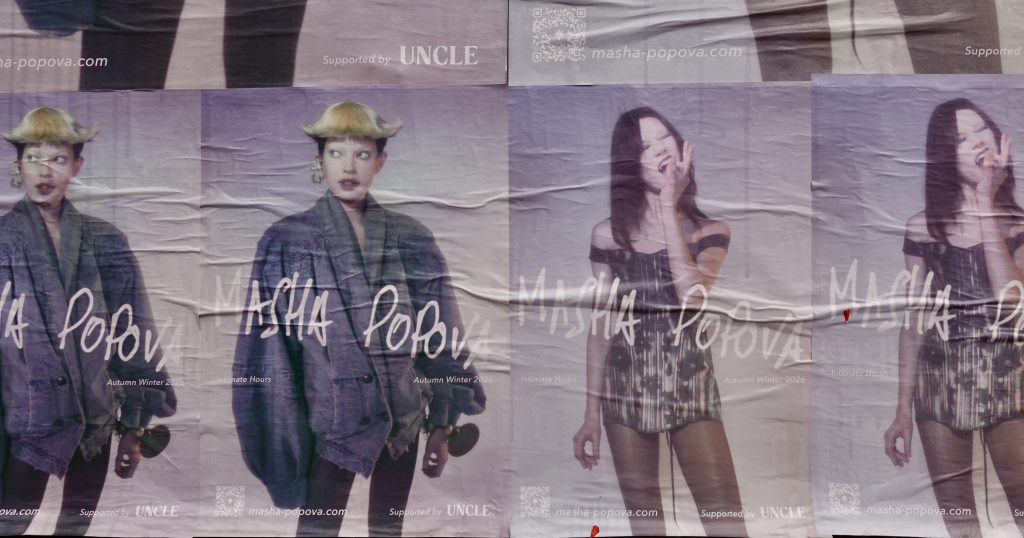
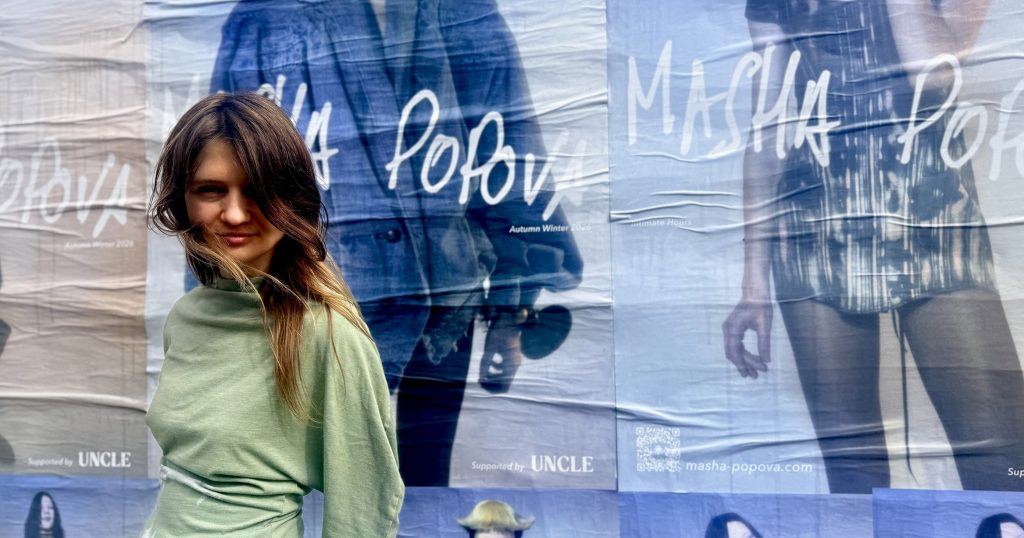
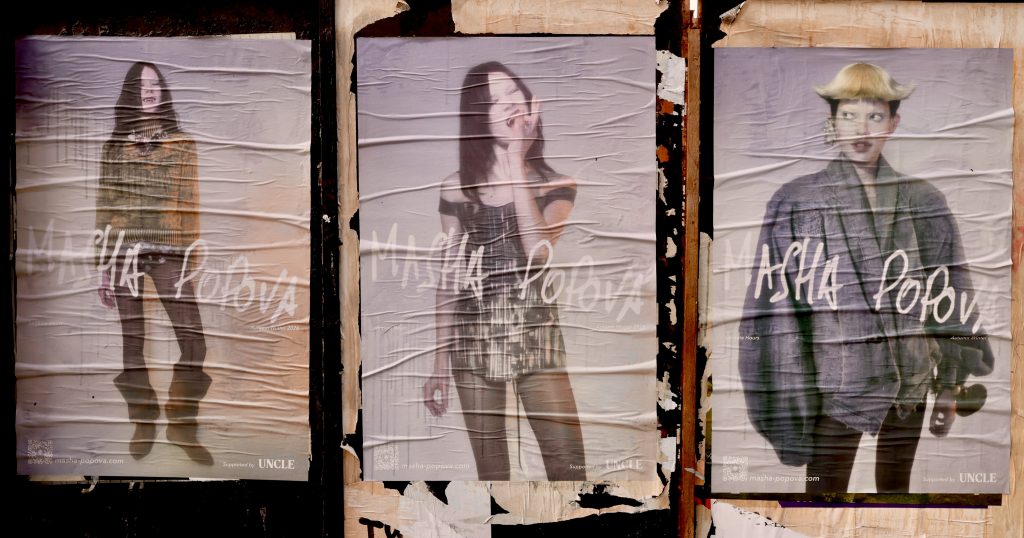
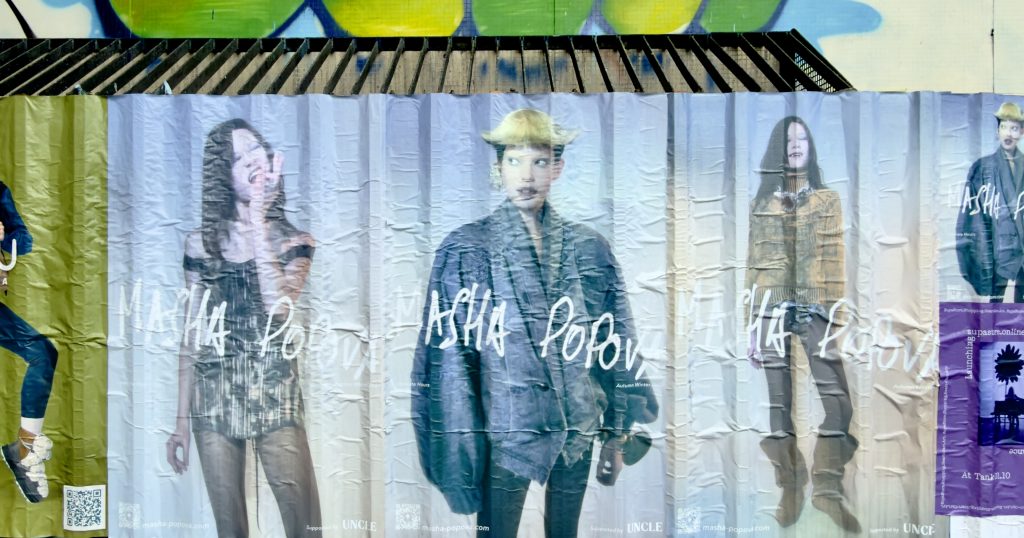
The demands of visibility sit at the centre of our conversation. Popova describes Fashion Week as exciting, but also ’emotionally, physically and financially draining.’ For her latest UNCLE campaign, she is taking photographs originally created around a runway show and placing them across the streets of London.
On the street, the work can escape both the fashion industry’s familiar spaces and the logic of a social media feed. It can be encountered by somebody who did not search for the brand, follow the right account or arrive through a celebrity wearing it. The designer who constructs chaos in the studio is about to release it into the city.





features
09.26 Constructing Chaos: Fashion Designer Masha Popova on Denim, the Algorithm and London Fashion Week
YOU STUDIED ARCHITECTURE IN UKRAINE BEFORE MOVING TO LONDON TO STUDY FASHION. WHAT CONVINCED YOU TO MAKE THAT SWITCH, AND HAS ANYTHING FROM ARCHITECTURE STAYED WITH YOU?
I do love architecture, but I graduated while I was turning 20 and, especially at that age, it seemed very static and slow. It wasn’t working with my temperament or the way I wanted to live. I wanted to work with my hands, whereas architecture in reality is very computer-based and involves very long projects. At the time, that didn’t seem like an exciting way to live. I wanted a medium in which I could experiment, be directly involved and see something taking shape through my own hands.
Fashion felt like a way to communicate through handwork and craft. In a way, clothes are the same as buildings and spaces because we live in them. They are just a different medium. The pace felt more suitable, exciting and hands-on, although now I sometimes feel like the pace might be a little too fast. You can experiment, be involved and make things with your hands.
I don’t think I reference architecture directly, but it shaped how I think about materials. What I love about clothes is how they age and the patina they acquire over time. That is really important in architecture: you consider how concrete or another material is going to change as it ages. That way of thinking about materials and clothes is at the core of the brand.
WHAT WERE YOUR EARLIEST LESSONS IN FASHION?
Lots of people say they grew up in a family connected to fashion or the arts, but I didn’t have any of that. My mum is a doctor, my father is an engineer and nobody in my family worked in a creative profession.
I grew up in a very small town in Ukraine in the late 1990s and early 2000s. I was around ten when I started thinking about what I wanted to wear and how I wanted to communicate with the world through clothes. In Ukraine at that time, you had to put a lot of thought into it. There wasn’t even an H&M or Zara or anything like that where I lived, so you had to go to these enormous second-hand markets and spend hours or days looking through them. They could be the size of Selfridges.
I learnt to search for individual pieces and put them together. It was a more unique way of figuring out how to dress because you weren’t simply being given a trend. Then, during my first year studying architecture, I saved my first scholarship payment and bought a domestic sewing machine. I didn’t actually use that machine very much, but I already had this desire to make something quickly with my hands.
I do love architecture, but I graduated while I was turning 20 and, especially at that age, it seemed very static and slow. It wasn’t working with my temperament or the way I wanted to live. I wanted to work with my hands, whereas architecture in reality is very computer-based and involves very long projects. At the time, that didn’t seem like an exciting way to live. I wanted a medium in which I could experiment, be directly involved and see something taking shape through my own hands.
Fashion felt like a way to communicate through handwork and craft. In a way, clothes are the same as buildings and spaces because we live in them. They are just a different medium. The pace felt more suitable, exciting and hands-on, although now I sometimes feel like the pace might be a little too fast. You can experiment, be involved and make things with your hands.
I don’t think I reference architecture directly, but it shaped how I think about materials. What I love about clothes is how they age and the patina they acquire over time. That is really important in architecture: you consider how concrete or another material is going to change as it ages. That way of thinking about materials and clothes is at the core of the brand.
WHAT WERE YOUR EARLIEST LESSONS IN FASHION?
Lots of people say they grew up in a family connected to fashion or the arts, but I didn’t have any of that. My mum is a doctor, my father is an engineer and nobody in my family worked in a creative profession.
I grew up in a very small town in Ukraine in the late 1990s and early 2000s. I was around ten when I started thinking about what I wanted to wear and how I wanted to communicate with the world through clothes. In Ukraine at that time, you had to put a lot of thought into it. There wasn’t even an H&M or Zara or anything like that where I lived, so you had to go to these enormous second-hand markets and spend hours or days looking through them. They could be the size of Selfridges.
I learnt to search for individual pieces and put them together. It was a more unique way of figuring out how to dress because you weren’t simply being given a trend. Then, during my first year studying architecture, I saved my first scholarship payment and bought a domestic sewing machine. I didn’t actually use that machine very much, but I already had this desire to make something quickly with my hands.
YOU’VE SPOKEN ABOUT GROWING UP AROUND A VERSION OF GLAMOUR THAT COULD BE MAXIMALIST, BOOTLEG OR DISMISSED AS TACKY. YOUR WORK IS NOW FREQUENTLY DESCRIBED THROUGH A Y2K LENS. DOES THAT ACCURATELY CAPTURE YOUR INFLUENCES?
In Ukraine during the 2000s, there were a lot of bootlegs on the markets rather than what people might think of as real glamour. Because of that, the word glamour always felt quite tacky to me.
The Y2K influence is obviously there because that was the time when I was becoming a teenager and figuring out who I was and how I wanted to look. It was simply how I was learning about fashion. It influenced me unconsciously rather than being a design decision or a reference I deliberately returned to later. I never consciously decided that I wanted whatever I made to look Y2K, but everyone who writes about the work keeps referencing it, so I guess it is there.
HOW DID MUSIC CONTRIBUTE TO THE WAY YOU EXPERIMENTED WITH CLOTHES AND IDENTITY WHILE GROWING UP?
I didn’t know anything about fashion brands or designer and musician combinations then. In terms of music, I went through many different phases. I never really listened to the Spice Girls, for example, but I listened to some Britney Spears, as well as Metallica and Evanescence. I had a slightly more rock or gothic period, and I listened to Eminem when I was very young too. There wasn’t one musician or one fixed identity that defined it.
I would go through a hip-hop phase, wearing baggy jeans and T-shirts, and then move towards flares before wearing black and more distressed things later on. Each phase suggested a different silhouette and a different way of presenting myself. I was exploring and figuring out who I was. Music helped me understand what I might want to look like. It directed the looks during those teenage years.
AT A TIME WHEN MANY PEOPLE’S UNDERSTANDING OF UKRAINE IS ATTACHED ALMOST ENTIRELY TO THE WAR, HOW DO YOU PRESERVE SPACE FOR A DIFFERENT KIND OF UKRAINIAN LIFE WITHIN YOUR WORK?
First of all, what is going on is not inspiring. It is not something that inspires my work in any way. Fashion is almost the opposite for me. It is an escape from reality and a form of fantasy.
Whether you make ready-to-wear or something else, you create a character and an entire fantasy around them. You think about what that character feels, how they live, what they think and who they are. Personally, I don’t want to imagine that character struggling through war. It is unfortunately what is happening to the country I am from, but it does not define who I am or everything I create.
In Ukraine during the 2000s, there were a lot of bootlegs on the markets rather than what people might think of as real glamour. Because of that, the word glamour always felt quite tacky to me.
The Y2K influence is obviously there because that was the time when I was becoming a teenager and figuring out who I was and how I wanted to look. It was simply how I was learning about fashion. It influenced me unconsciously rather than being a design decision or a reference I deliberately returned to later. I never consciously decided that I wanted whatever I made to look Y2K, but everyone who writes about the work keeps referencing it, so I guess it is there.
HOW DID MUSIC CONTRIBUTE TO THE WAY YOU EXPERIMENTED WITH CLOTHES AND IDENTITY WHILE GROWING UP?
I didn’t know anything about fashion brands or designer and musician combinations then. In terms of music, I went through many different phases. I never really listened to the Spice Girls, for example, but I listened to some Britney Spears, as well as Metallica and Evanescence. I had a slightly more rock or gothic period, and I listened to Eminem when I was very young too. There wasn’t one musician or one fixed identity that defined it.
I would go through a hip-hop phase, wearing baggy jeans and T-shirts, and then move towards flares before wearing black and more distressed things later on. Each phase suggested a different silhouette and a different way of presenting myself. I was exploring and figuring out who I was. Music helped me understand what I might want to look like. It directed the looks during those teenage years.
AT A TIME WHEN MANY PEOPLE’S UNDERSTANDING OF UKRAINE IS ATTACHED ALMOST ENTIRELY TO THE WAR, HOW DO YOU PRESERVE SPACE FOR A DIFFERENT KIND OF UKRAINIAN LIFE WITHIN YOUR WORK?
First of all, what is going on is not inspiring. It is not something that inspires my work in any way. Fashion is almost the opposite for me. It is an escape from reality and a form of fantasy.
Whether you make ready-to-wear or something else, you create a character and an entire fantasy around them. You think about what that character feels, how they live, what they think and who they are. Personally, I don’t want to imagine that character struggling through war. It is unfortunately what is happening to the country I am from, but it does not define who I am or everything I create.
YOUR CLOTHES CAN LOOK SPONTANEOUS, DISTRESSED OR CAUGHT IN MOTION, BUT THAT EFFECT RELIES ON PRECISE CONSTRUCTION. HOW DO YOU “CONSTRUCT THE CHAOS”?
Chaos, clothes caught in movement and the idea of life being imprinted onto them are all very important to me. Through construction, fabrication and different techniques, we try to imprint that moment into the clothes. It is important to construct the chaos.
When we develop new shapes, we always start in three dimensions rather than working flat. Every fabric is different. It behaves and feels differently, especially once you start doing things to it. The fabric directs you through the way it drapes and falls. It guides how you construct the garment, rather than you trying to force a predetermined construction into the material.
Building directly on a mannequin can feel a little like sculpture. It is also more spontaneous and playful. If I sketch something and then try to recreate that exact image, it never works as perfectly as it did in the drawing. The reality of a fabric will always complicate the image you had in your head. When you let the process lead, the result is more exciting because it can take you towards something you haven’t seen before. Working the other way around, you can end up unconsciously referencing something you have already seen.
WHY DOES DENIM CONTINUE TO OFFER YOU SO MUCH AS A MATERIAL?
Denim is like a blank canvas. It is a very technical material, but raw denim is dyed quite superficially, which means it is designed to age and fade naturally as it is worn. That gives you something to work with. You can manipulate it easily, creating different highs and lows. Through different combinations of treatments and dyeing techniques, you can use exactly the same material to make collections that look completely different from one another.
It is one of the most diverse materials. Yarn might be similar because you can build an entire fabric from it. We had never really worked with knitwear until the last collection, so we are only beginning to explore it now. I find it exciting because the closer you start to the raw material, the more exciting both the process and the result become.
YOUR CLOTHES HAVE BEEN WORN BY MUSICIANS INCLUDING PINKPANTHERESS, TYLA, ZARA LARSSON, FKA TWIGS AND CHARLI XCX. HOW INVOLVED ARE YOU IN DECIDING HOW THE CLOTHES ARE PRESENTED, AND WHAT HAS THAT CONNECTION WITH MUSIC MEANT FOR THE BRAND?
Apart from PinkPantheress, who we did a shoot with and who was very kind in supporting the brand, you are not really in control of how it happens. Working with her felt quite surreal. Usually, a stylist borrows your clothes and you don’t have control over who will wear them, what they will be paired with or how the final look will be presented.
It is interesting, although sometimes it can be a little disappointing. When I was a student designing clothes, I imagined the person I was designing for. Then people started wearing them, particularly these jeans that became very popular, and it was never the person I had imagined. They would style them in a completely different way from how I would. I found it really interesting to see how people interpreted what I designed in their own way.
Music has contributed to the image of the label. We are still a tiny brand and I’m not saying we are a household name, but through those connections the brand has become a small part of popular culture.
Chaos, clothes caught in movement and the idea of life being imprinted onto them are all very important to me. Through construction, fabrication and different techniques, we try to imprint that moment into the clothes. It is important to construct the chaos.
When we develop new shapes, we always start in three dimensions rather than working flat. Every fabric is different. It behaves and feels differently, especially once you start doing things to it. The fabric directs you through the way it drapes and falls. It guides how you construct the garment, rather than you trying to force a predetermined construction into the material.
Building directly on a mannequin can feel a little like sculpture. It is also more spontaneous and playful. If I sketch something and then try to recreate that exact image, it never works as perfectly as it did in the drawing. The reality of a fabric will always complicate the image you had in your head. When you let the process lead, the result is more exciting because it can take you towards something you haven’t seen before. Working the other way around, you can end up unconsciously referencing something you have already seen.
WHY DOES DENIM CONTINUE TO OFFER YOU SO MUCH AS A MATERIAL?
Denim is like a blank canvas. It is a very technical material, but raw denim is dyed quite superficially, which means it is designed to age and fade naturally as it is worn. That gives you something to work with. You can manipulate it easily, creating different highs and lows. Through different combinations of treatments and dyeing techniques, you can use exactly the same material to make collections that look completely different from one another.
It is one of the most diverse materials. Yarn might be similar because you can build an entire fabric from it. We had never really worked with knitwear until the last collection, so we are only beginning to explore it now. I find it exciting because the closer you start to the raw material, the more exciting both the process and the result become.
YOUR CLOTHES HAVE BEEN WORN BY MUSICIANS INCLUDING PINKPANTHERESS, TYLA, ZARA LARSSON, FKA TWIGS AND CHARLI XCX. HOW INVOLVED ARE YOU IN DECIDING HOW THE CLOTHES ARE PRESENTED, AND WHAT HAS THAT CONNECTION WITH MUSIC MEANT FOR THE BRAND?
Apart from PinkPantheress, who we did a shoot with and who was very kind in supporting the brand, you are not really in control of how it happens. Working with her felt quite surreal. Usually, a stylist borrows your clothes and you don’t have control over who will wear them, what they will be paired with or how the final look will be presented.
It is interesting, although sometimes it can be a little disappointing. When I was a student designing clothes, I imagined the person I was designing for. Then people started wearing them, particularly these jeans that became very popular, and it was never the person I had imagined. They would style them in a completely different way from how I would. I found it really interesting to see how people interpreted what I designed in their own way.
Music has contributed to the image of the label. We are still a tiny brand and I’m not saying we are a household name, but through those connections the brand has become a small part of popular culture.
HOW DO YOU FEEL ABOUT LONDON FASHION WEEK AT THIS POINT IN YOUR CAREER?
It is the busiest and most hectic time of the year. It is also the most expensive time and is very draining emotionally, physically and financially. At the same time, it is exciting because everything seems to start and end there. That is when everybody’s eyes are on fashion and on the brands.
I think it is important to do something during that period, but the more Fashion Weeks we do, the more I realise that it doesn’t necessarily have to be a runway. Runways can be great, but they are only one format. There are many different ways to show up and do something that is sustainable for the brand while still being interesting and different.
WHAT HAVE BEEN THE MOST SIGNIFICANT MOMENTS FROM YOUR PREVIOUS LONDON FASHION WEEKS?
We received NEWGEN support very early in the life of the brand, so our first proper collection was made for the runway. The brand almost started with the runway. When you begin with something that big, you feel pressure to keep doing it that way.
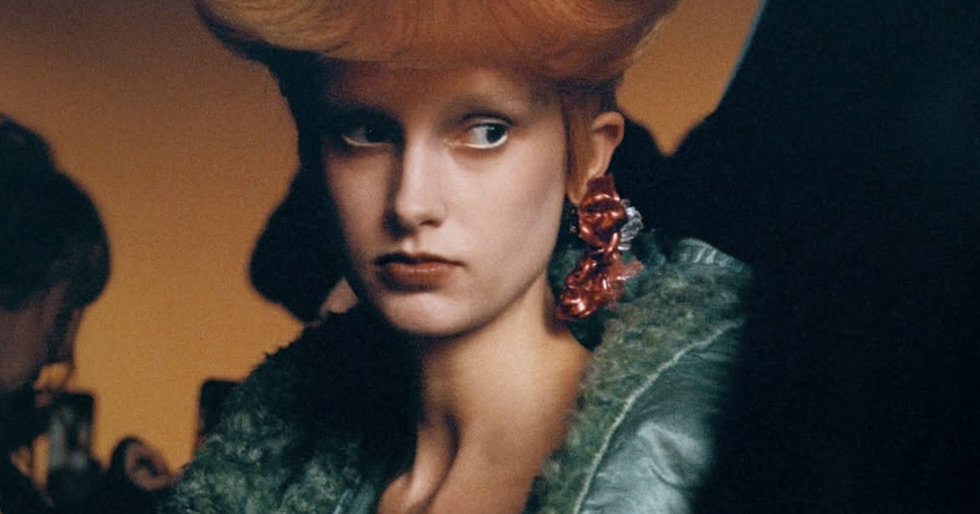
We did around three more NEWGEN shows, and then in February 2026 we produced our first independent show. That was very exciting because we used a different space and could create the entire image around the collection, rather than being restricted by a space we had been given. It felt much more like our own world. At the same time, it was the most stressful experience because producing an entire show is crazy.
The first show remains the most emotionally charged for me. It is a little sad, but I don’t think I will ever experience that same level of emotion again, so I will never forget it. The independent show was also a highlight for us, but in a different way.
WHAT ARE YOU PLANNING TO USE THE STREET CAMPAIGN FOR, AND WHY DID YOU DECIDE TO USE THESE PARTICULAR PHOTOGRAPHS?
When we were first offered the opportunity, I became really excited and thought we would shoot an entirely new campaign. It turned out to be unrealistic because it was expensive, it was August and everybody was on holiday.
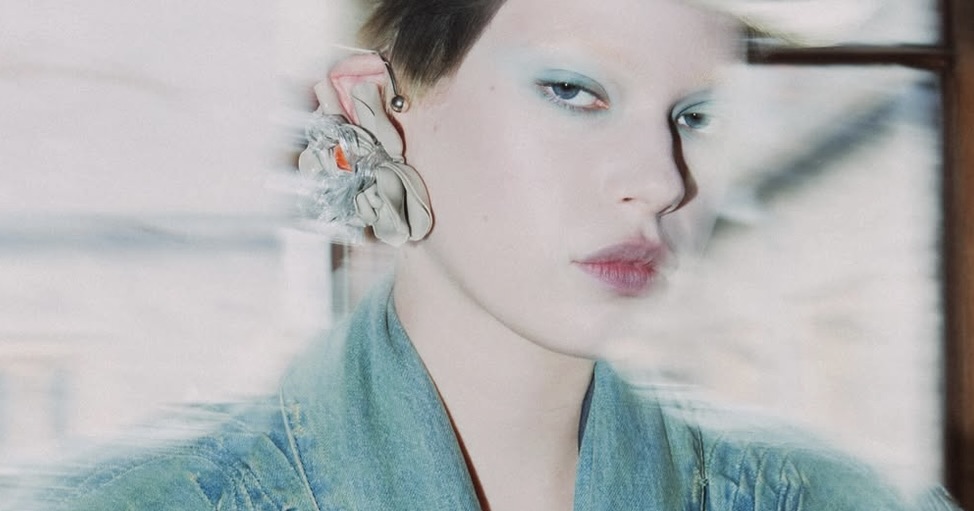
Then I realised that, when we did our show, we had worked with an amazing photographer and created beautiful images of the collection. I shared some of them after the show, but kept the best ones back because I knew I wanted to use them for a campaign when the collection became available. We got excited and initially wanted to make something new, but the photographs we already had were strong. I had deliberately saved those images for this moment, so it made sense for them to become the campaign.
Instagram can be quite sad in that way. If you shoot something beautiful that is not native to the language of Instagram, the algorithm does not favour it and only a very small number of people might see it. Putting those images on the street gives us a way around the algorithm and allows other people to see them.
FASHION IS USUALLY ENCOUNTERED IN SPACES PEOPLE HAVE DELIBERATELY ENTERED, FROM RUNWAYS AND SHOPS TO MAGAZINES AND SOCIAL-MEDIA FEEDS. HOW DOES IT FEEL TO PLACE YOUR WORK ON THE STREET, WHERE ANYBODY MIGHT FIND IT?
It is very exciting because I have never done anything like this before. I’m interested to see what might come from it.
Most people who discover the brand are already interested in fashion, or they find it through an artist they like who has worn something. That means the audience usually arrives through an existing interest, recommendation or algorithm. Showing the work on the street is different. It means potentially reaching people who would not otherwise find us and allowing the images to exist beyond those familiar routes. It opens the brand to a wider audience, and I’m excited to see how people respond.
It is the busiest and most hectic time of the year. It is also the most expensive time and is very draining emotionally, physically and financially. At the same time, it is exciting because everything seems to start and end there. That is when everybody’s eyes are on fashion and on the brands.
I think it is important to do something during that period, but the more Fashion Weeks we do, the more I realise that it doesn’t necessarily have to be a runway. Runways can be great, but they are only one format. There are many different ways to show up and do something that is sustainable for the brand while still being interesting and different.
WHAT HAVE BEEN THE MOST SIGNIFICANT MOMENTS FROM YOUR PREVIOUS LONDON FASHION WEEKS?
We received NEWGEN support very early in the life of the brand, so our first proper collection was made for the runway. The brand almost started with the runway. When you begin with something that big, you feel pressure to keep doing it that way.
We did around three more NEWGEN shows, and then in February 2026 we produced our first independent show. That was very exciting because we used a different space and could create the entire image around the collection, rather than being restricted by a space we had been given. It felt much more like our own world. At the same time, it was the most stressful experience because producing an entire show is crazy.
The first show remains the most emotionally charged for me. It is a little sad, but I don’t think I will ever experience that same level of emotion again, so I will never forget it. The independent show was also a highlight for us, but in a different way.
WHAT ARE YOU PLANNING TO USE THE STREET CAMPAIGN FOR, AND WHY DID YOU DECIDE TO USE THESE PARTICULAR PHOTOGRAPHS?
When we were first offered the opportunity, I became really excited and thought we would shoot an entirely new campaign. It turned out to be unrealistic because it was expensive, it was August and everybody was on holiday.
Then I realised that, when we did our show, we had worked with an amazing photographer and created beautiful images of the collection. I shared some of them after the show, but kept the best ones back because I knew I wanted to use them for a campaign when the collection became available. We got excited and initially wanted to make something new, but the photographs we already had were strong. I had deliberately saved those images for this moment, so it made sense for them to become the campaign.
Instagram can be quite sad in that way. If you shoot something beautiful that is not native to the language of Instagram, the algorithm does not favour it and only a very small number of people might see it. Putting those images on the street gives us a way around the algorithm and allows other people to see them.
FASHION IS USUALLY ENCOUNTERED IN SPACES PEOPLE HAVE DELIBERATELY ENTERED, FROM RUNWAYS AND SHOPS TO MAGAZINES AND SOCIAL-MEDIA FEEDS. HOW DOES IT FEEL TO PLACE YOUR WORK ON THE STREET, WHERE ANYBODY MIGHT FIND IT?
It is very exciting because I have never done anything like this before. I’m interested to see what might come from it.
Most people who discover the brand are already interested in fashion, or they find it through an artist they like who has worn something. That means the audience usually arrives through an existing interest, recommendation or algorithm. Showing the work on the street is different. It means potentially reaching people who would not otherwise find us and allowing the images to exist beyond those familiar routes. It opens the brand to a wider audience, and I’m excited to see how people respond.