
Berlin’s reputation as a place where artists can build a life is under strain. Cultural funding cuts are making that life harder to sustain, while, as photographer and writer Ilo Toerkell describes, speaking out can come with its own professional costs.
“People are getting cancellations, not being invited, having their funding revoked, or facing media shitstorms and hate for showing up, speaking out on Palestine or critiquing the status quo in Germany,” they tell UNCLE.
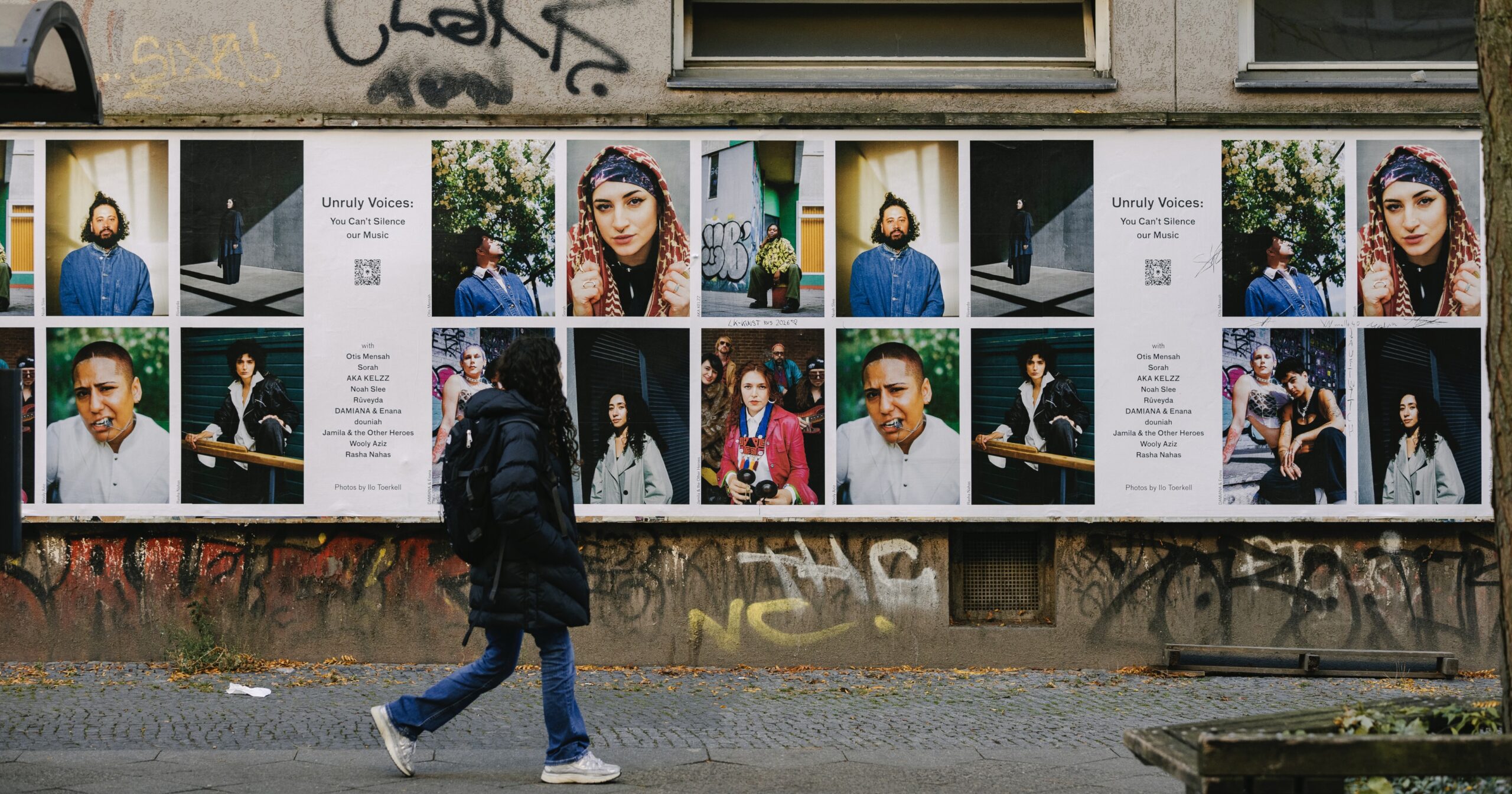
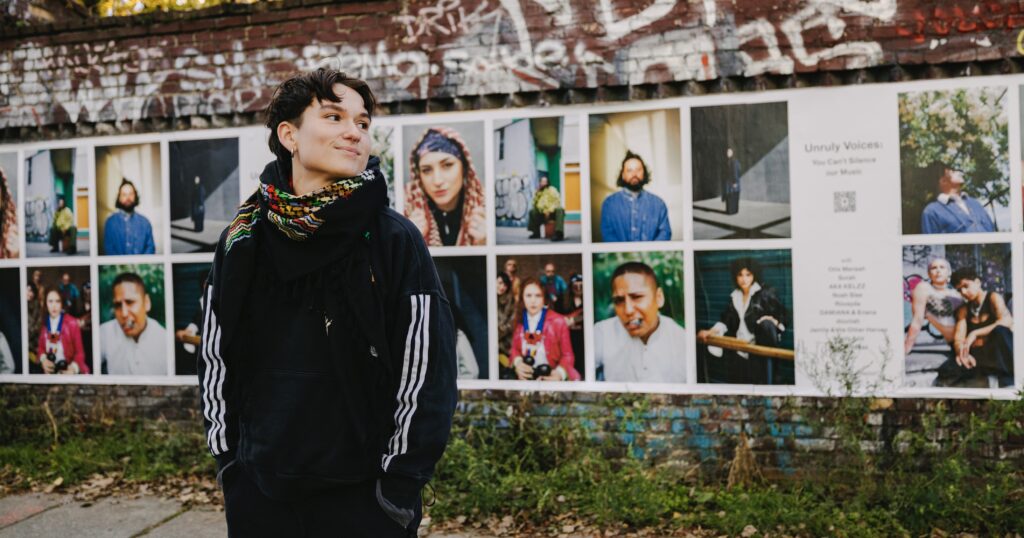
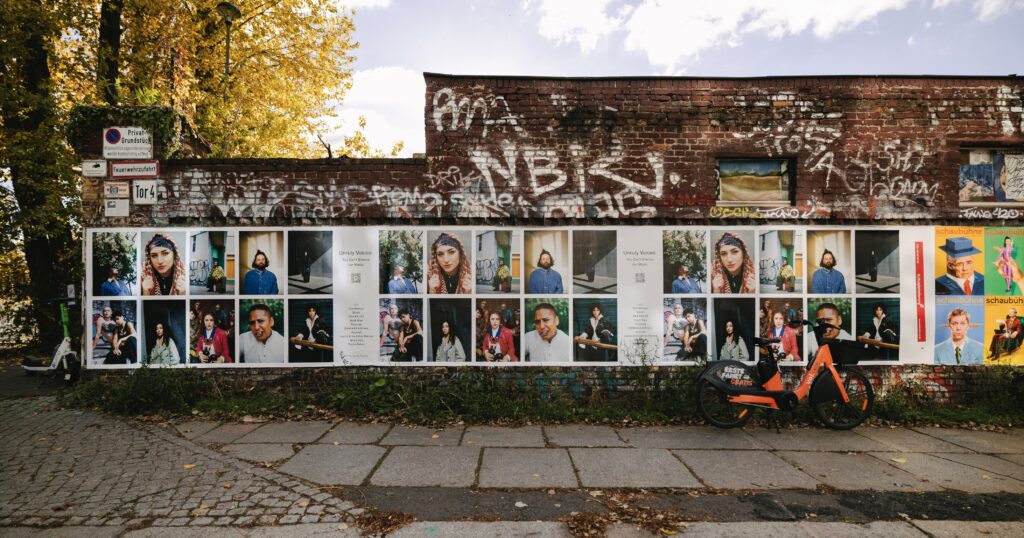
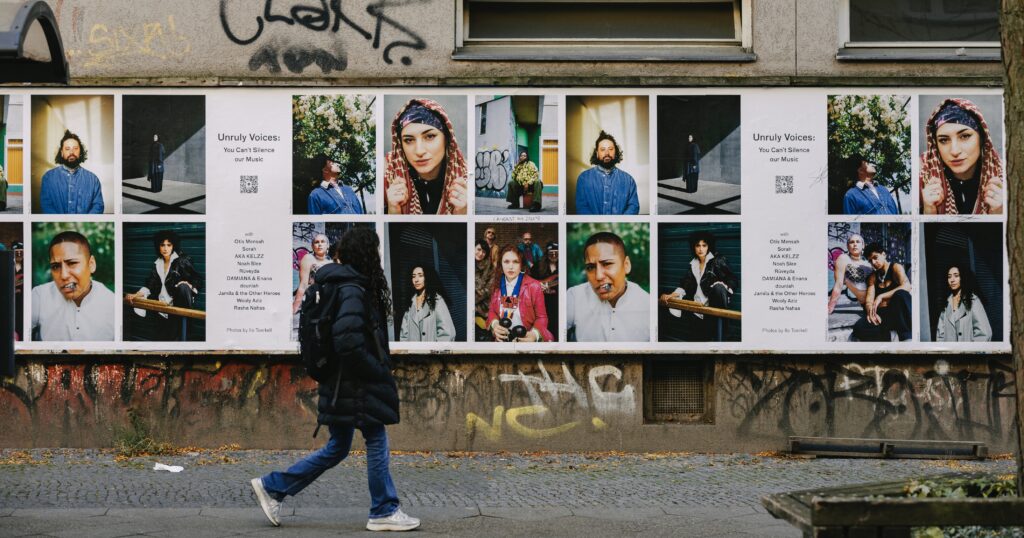
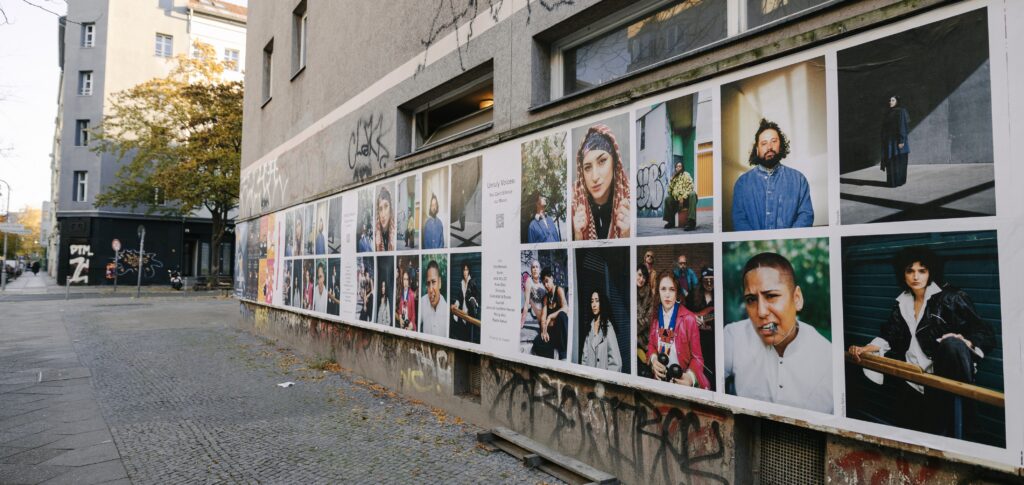
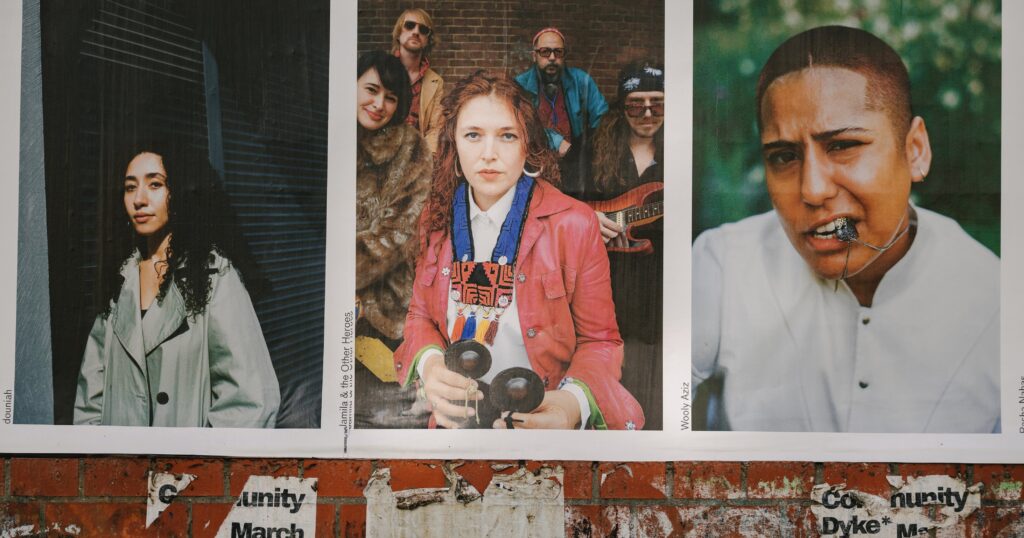
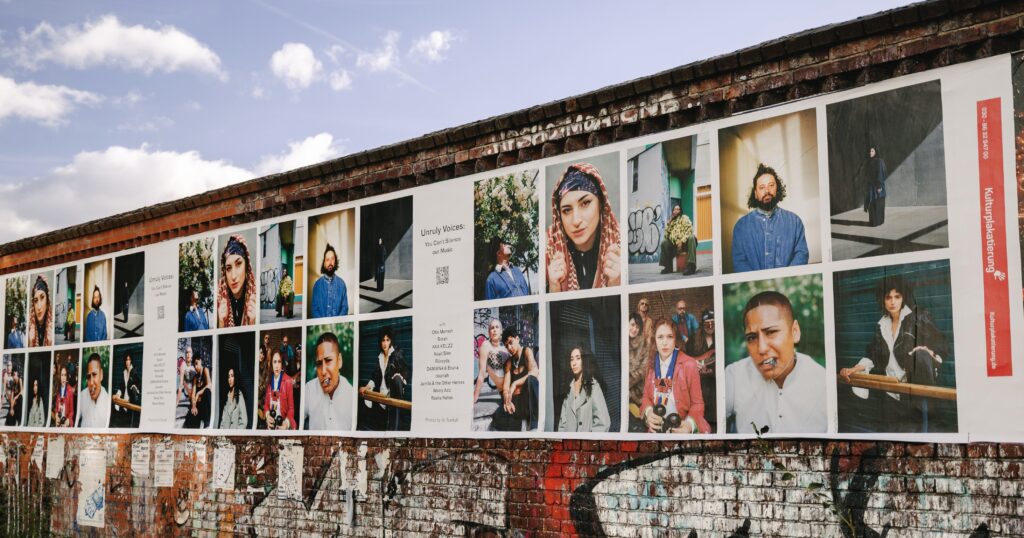
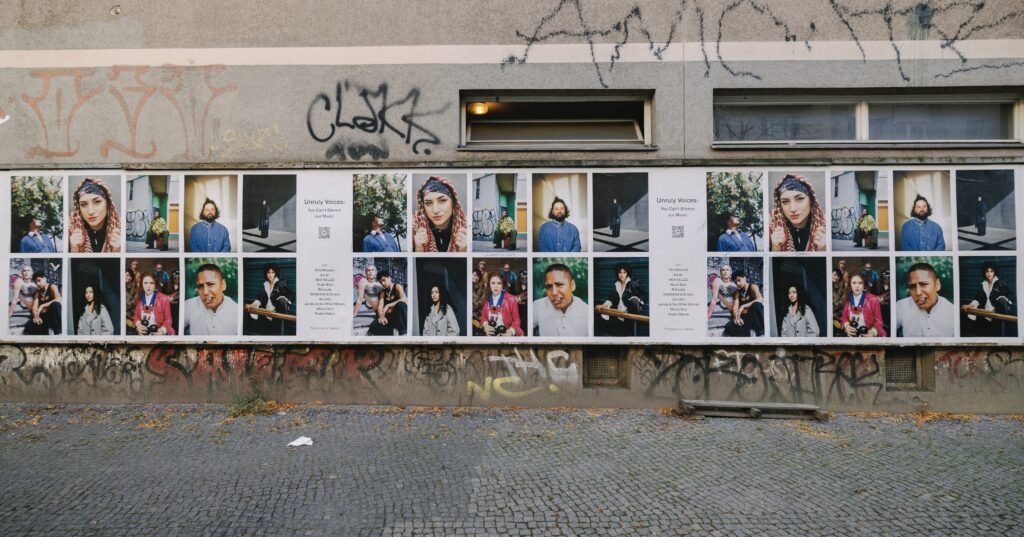
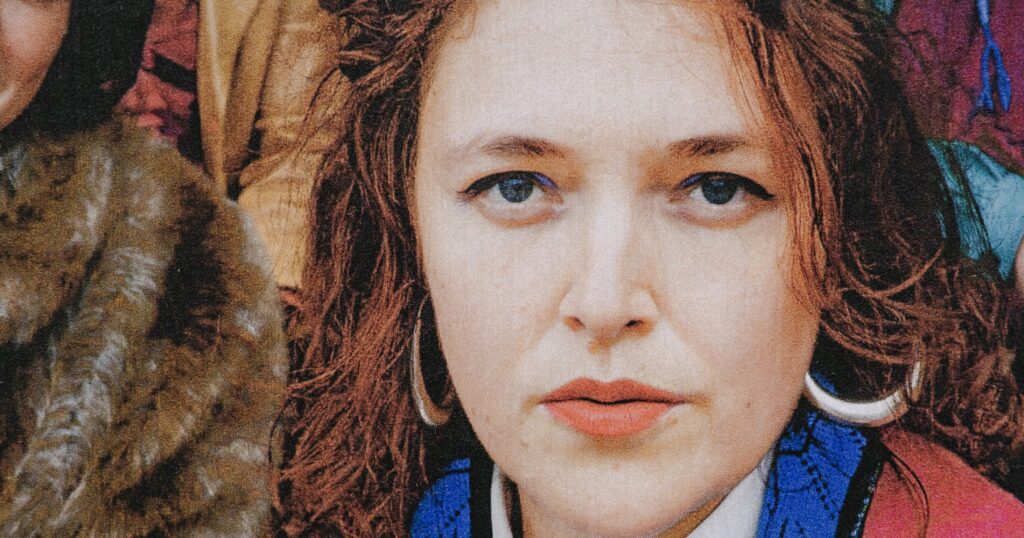
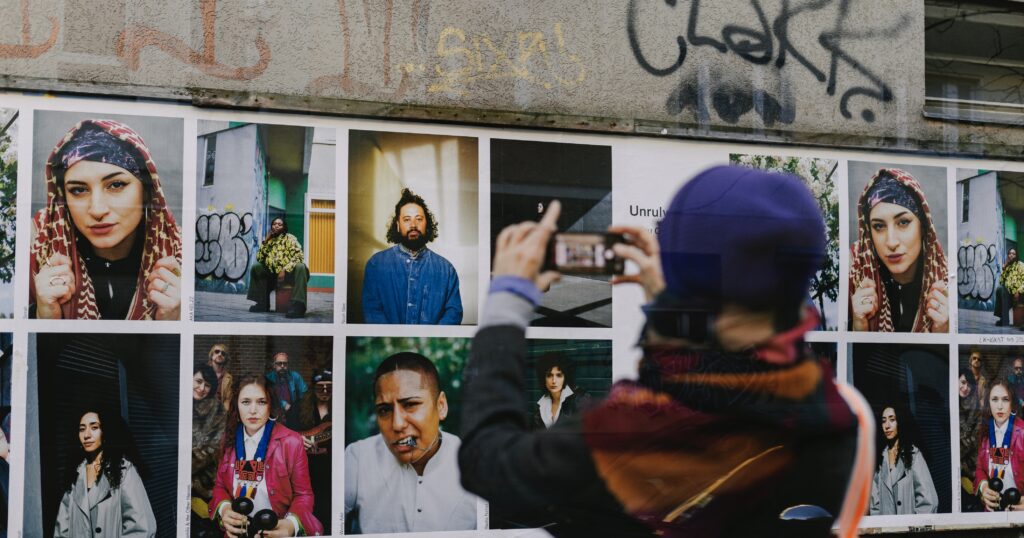
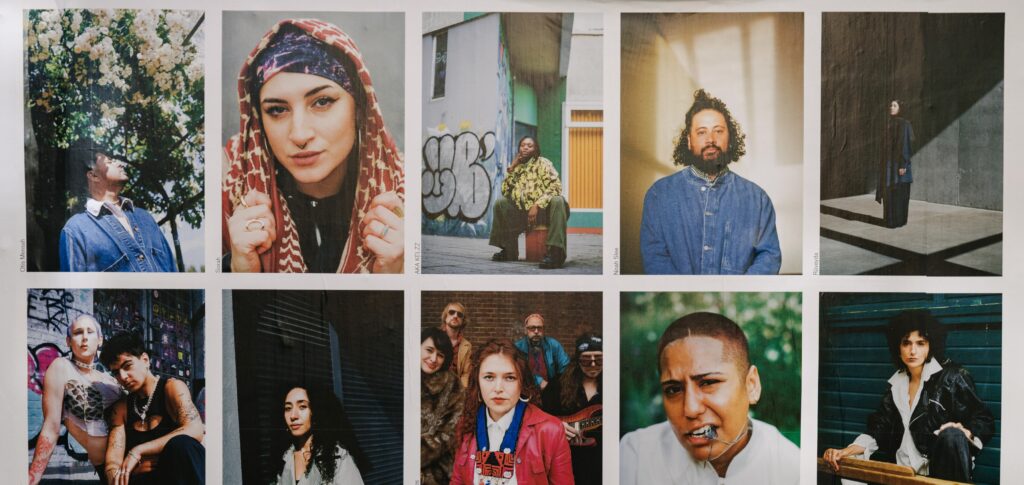
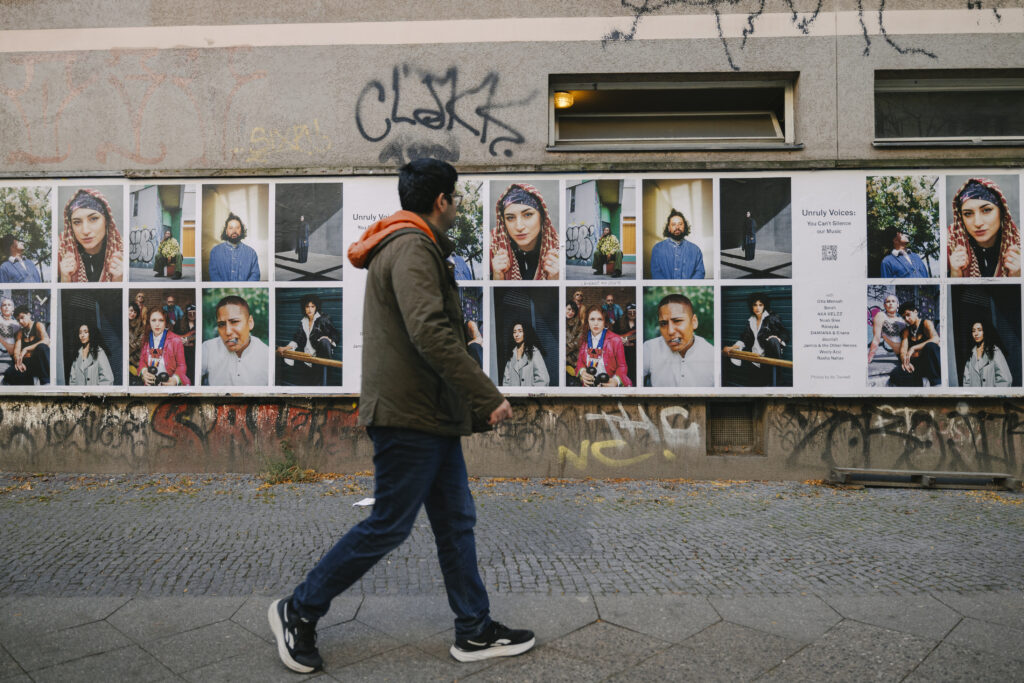
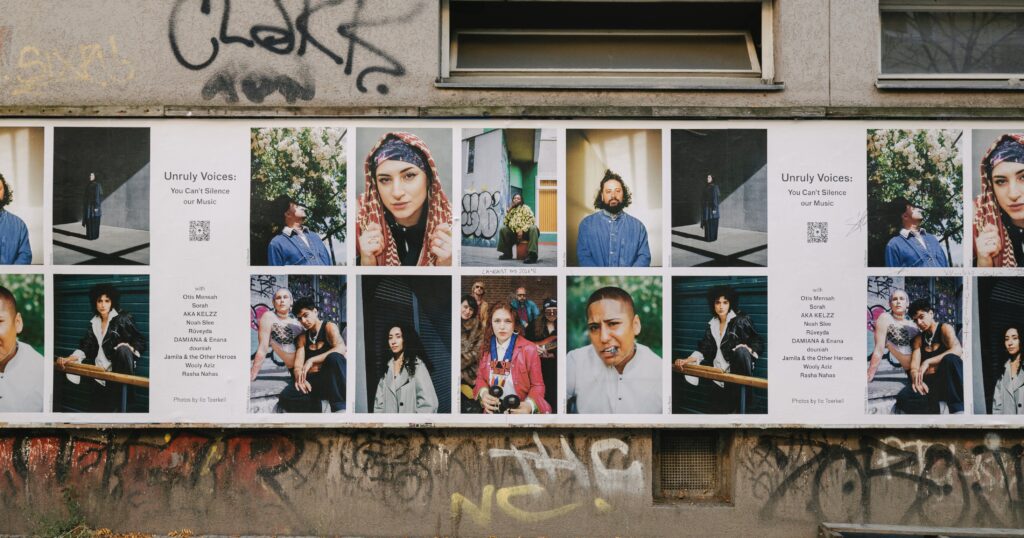
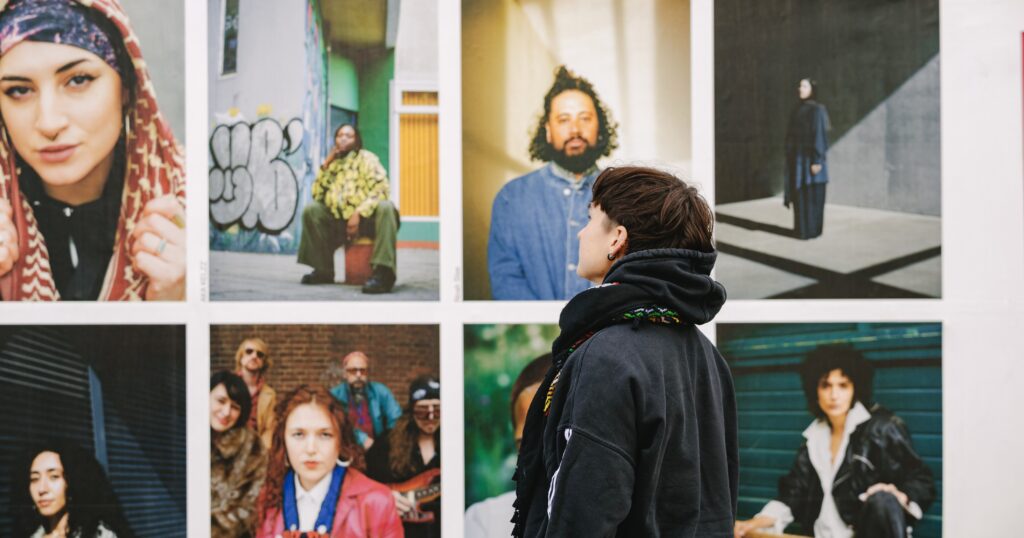
It is the backdrop to Unruly Voices: You Can’t Silence Our Music, Ilo’s portrait campaign celebrating some of the independent musicians who make Berlin sound like Berlin. Through their collaboration with UNCLE, those faces are now taking up space in the city’s streets, inviting passers-by to discover the people behind the pictures.
Originally from Munich, Ilo moved to Berlin around eight years ago to study and find community. Their work as a photographer and freelance writer has since brought them into close contact with musicians, cultural movements and the city’s queer communities.
Alongside co-editor Felicia Ete Aghaye, they run OFFKEY, an independent music publication whose detailed interviews and photography make room for artists overlooked by the mainstream industry. Run voluntarily, it is also becoming an archive of the people shaping the city, with live events extending those relationships beyond the site.
Internationally, Berlin’s musical reputation is dominated by techno and the clubs that have made it a destination for electronic music. The artists in Ilo’s campaign offer another way into the city: through rap, neo-soul, traditional elements, and a growing scene of jazz-inflected sounds.
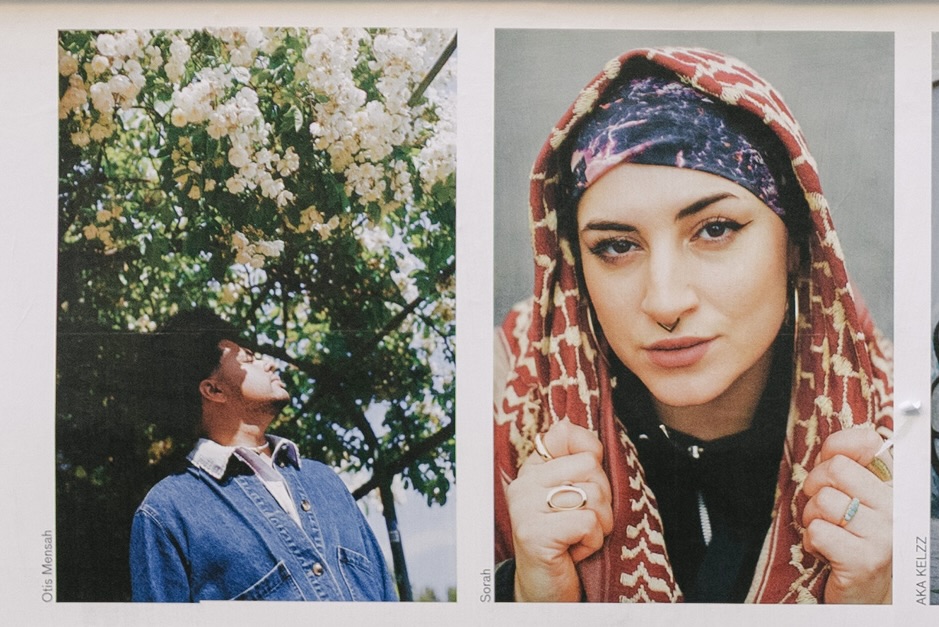
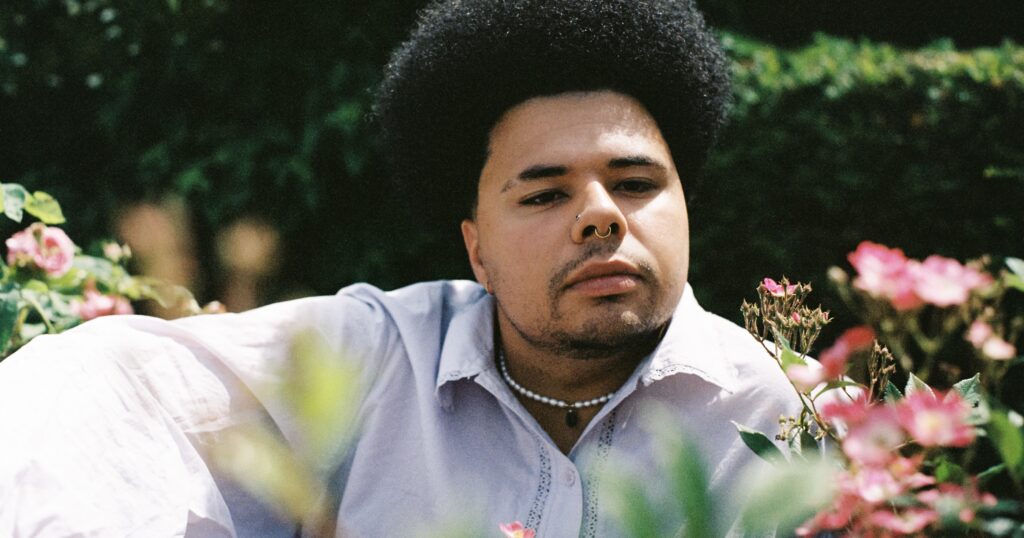
The portraits bring together AKA KELZZ, DAMIANA, douniah, Enana, Jamila & the Other Heroes, Noah Slee, Otis Mensah, Rasha Nahas, Rûveyda, Sorah and Wooly Aziz. Combining existing photographs with new shoots, the series celebrates independent artists willing to take a stance, with a QR code linking passers-by directly to the musicians involved.
“I didn’t want this project to be about me and my work,” Ilo explains. “I wanted it to be about the artists, what they have to say, their music and their message.”
The “our” in the campaign’s title reaches beyond individual records or performers. As Ilo puts it: “The sound of my Berlin, the Berlin of so many other people I know.”



features
11.26 You Can’t Silence Our Music: OFFKEY’s Portraits of Independent Berlin
FOR ANYONE COMING TO OFFKEY FOR THE FIRST TIME, WHAT IS IT, AND WHAT ARE YOU TRYING TO CREATE THROUGH IT?
OFFKEY is a platform for in-depth interviews with musicians that I run together with my co-editor, Felicia Ete Aghaye. Our work focuses on who are marginalised in society and in the music industry.
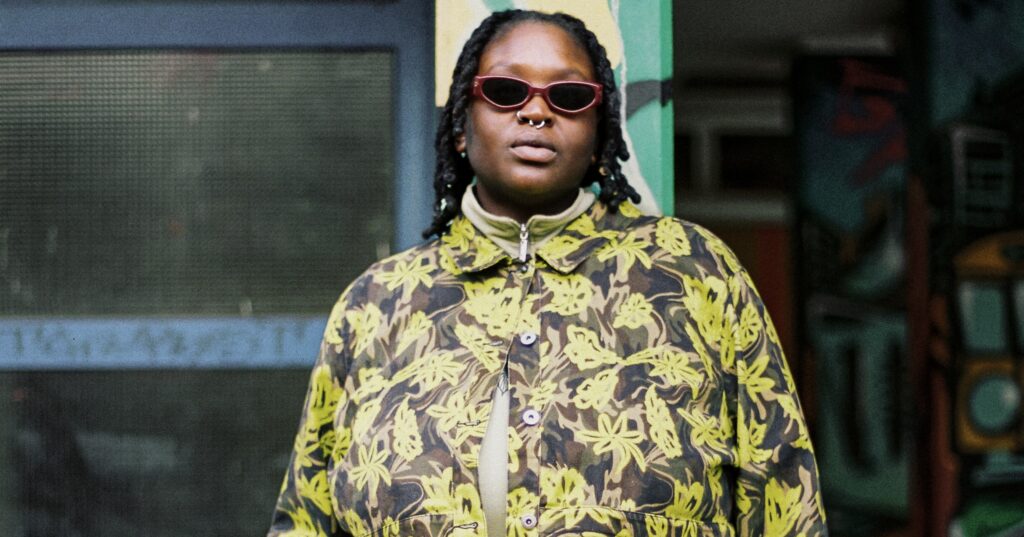
There’s such a huge music scene in Berlin, and so many people making amazing music who aren’t getting enough recognition. We’ve been growing our network in Berlin, and this year we also did our first live events. It was nice to connect what we’d been doing digitally to a physical space and bring artists together. AKA KELZZ, who’s now in the posters, performed at one of them and it was lovely. They also just released a new single called ‘Black Hole’.
DO YOU SEE THAT WORK AS ARCHIVING AS WELL AS GIVING PEOPLE A PLATFORM?
I see it as a kind of archive in the digital realm. Telling these stories in such detail keeps a really cool logbook. We’re focused less on news and more on telling profound stories. It’s a way to get to know artists and keep that as a digital archive. We don’t have any print, which is something we’d absolutely love to do in the future, but this is completely voluntary work, so there aren’t the resources for that at the moment.
WHAT FIRST DREW YOU TOWARDS DOCUMENTING OTHER PEOPLE’S LIVES?
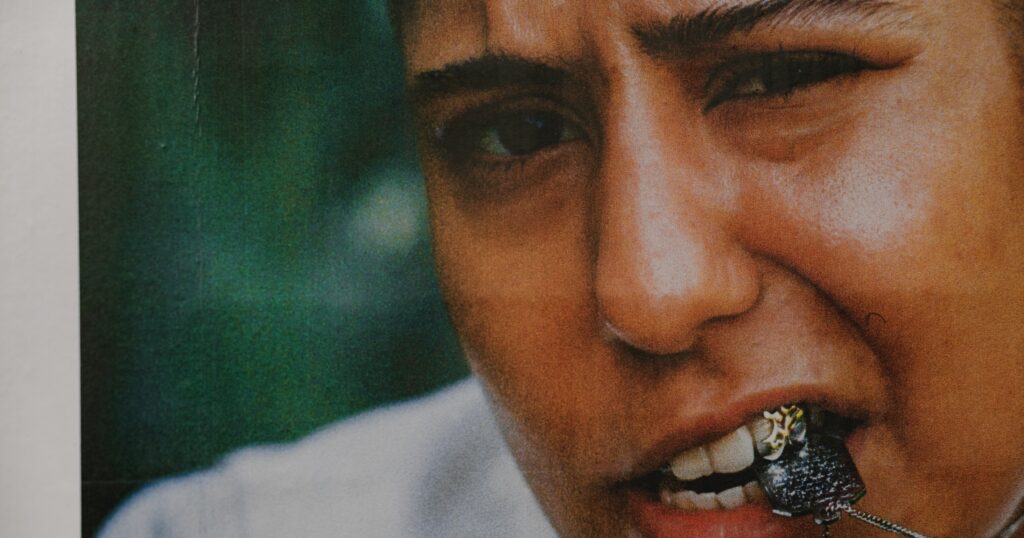
I started by taking pictures of life and friends, as many people do. Through OFFKEY and taking photos of artists, I got into more intentional portraiture. Having pictures from the exact moments when you do the interviews is much more intimate than press pictures. And I feel really drawn to faces and the stories they tell. I love catching the spark in a person’s eye or a smirk on camera.
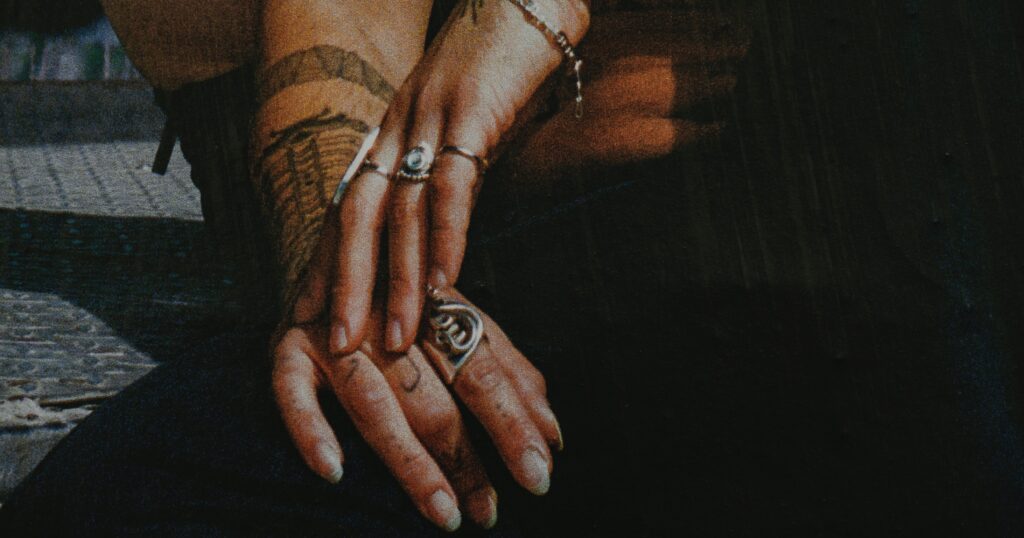
I mainly shoot analogue, which slows down the process and leaves more room to get to know each other. I enjoy a collaborative approach where we talk in between, and I try to figure out how people want to be seen and translate that into my work. I’ve had very special encounters through photography, and I feel blessed that people have trusted me in front of my lens.
IS THERE A STORY BEHIND ONE OF THE CAMPAIGN PORTRAITS THAT PARTICULARLY STAYS WITH YOU?
This is less of a story and more of a setting that people might not be aware of just by looking at the photos.
The portraits of DAMIANA & Enana as well as AKA KELZZ were taken at spots in Berlin, which are increasingly subjected to criminalisation and heavy policing. Kottbusser Tor and Görlitzer Park are both home to large migrant communities and there has been a lot of racist media propaganda claiming them as dangerous areas.
A few years ago, a police station was opened right at Kottbusser Tor and just last month, 30 AI-operated cameras were installed to surveil the area. This is part of the current push in German politics to increase militarisation, state surveillance and policing, while cutting back on education, healthcare, culture and social support.
At Görlitzer Park, likewise, there is an ongoing struggle against plans to close the park off overnight with a fence. There are many local organisations fighting back against this like Wrangelkiez United!, KOP, Görli Zaunfrei and many more. I think it is important to be aware of these things when talking about Berlin and to incorporate these conversations into cultural work as well.
And the most unexpected location was the one with Noah Slee, with the window-type light in the background. We met at Funkhaus, where there are lots of rehearsal spaces. It was a spontaneous, last-minute setup on a very rainy day. The weather was super shit, but then we walked through a random staircase and the sun came out.
I love those moments when the sun hits at a particular angle and suddenly the most mundane wall becomes a cool backdrop.
WHAT DO YOU ENJOY ABOUT LEAVING ROOM FOR THAT SPONTANEITY?
It leaves room for co-creation and looking for ideas together. Often I meet people somewhere close to where they live, or somewhere convenient for them. It can also create a personal connection because these are places people interact with.
I prefer looking together for what the image could be, rather than imposing something It’s fun to interact that way and be on the lookout for what could work. It opens up more collaboration with the artists.
OFFKEY HAS ALSO STARTED PUTTING ON EVENTS. WHAT DOES BEING TOGETHER IN A ROOM BRING TO THE PROJECT?
We had our first two live music events this year. One of them was made possible through AfroPolitan, a local organisation uplifting Black and Afrodiasporic voices in Berlin. They do workshops and small events, and they did coaching with Felicia and OFFKEY. Through that, we were able to use their space.
It is a community space. There wasn’t a stage as such; we were all together in the room. It added a personal layer, especially in Berlin. So many people struggle to connect because the city is hectic, and it’s such a hassle to find a job or an apartment. Amid all that, it’s nice to have moments to get together with people who have a similar outlook on life and want to achieve similar things. There are also the massive cuts to cultural funding in Berlin, which made it even harder for people, artists, especially marginalised artists, to sustain themselves.
BERLIN HAS THIS HUGE REPUTATION FOR ELECTRONIC MUSIC AND CLUB CULTURE. BUT WHAT DO YOU THINK GETS LEFT OUT OF BERLIN’S INTERNATIONAL REPUTATION?
There’s so much beyond the electronic music scene. There are many smaller scenes and communities and plenty of venues for small, intimate listening sessions, for example. I see it as a way of engaging more intentionally with the art, but also with each other.
That’s something I see growing in Berlin, which is really beautiful and such a different vibe from the club culture that Berlin is known for.
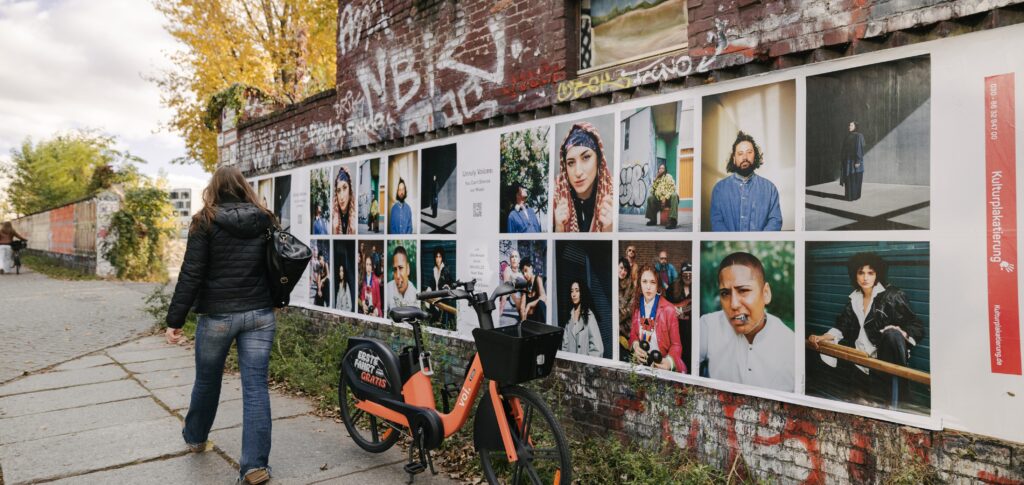
THE CAMPAIGN IS CALLED ‘UNRULY VOICES: YOU CAN’T SILENCE OUR MUSIC’. WHAT CONNECTS THE ARTISTS YOU CHOSE TO PHOTOGRAPH?
Almost all of these artists are people who we have featured on OFFKEY, so that was a big connecting point. When I thought about who I’d like to include, the idea was always to give this platform to people who don’t get mainstream recognition, and who do something in their music that subverts the mainstream outlook of the music industry.
DAMIANA and Enana, for example, have just recently released their collaborative EP “Scar Routine”, they also regularly perform at fundraisers or protests. Noah Slee founded the BiPoC choir, A Song For You, which brings together so many singers from the Berlin scene and creates an important space for and by BiPoC artists. Sorah makes very explicitly political rap also talking about anti-racism, Palestine and police brutality, she got a lot of cancellations in the last years. The singer Rûveyda creates immersive listening events with her debut EP “Uykudan Uyan”, drawing on traditional elements from Anatolian music and maqam-inspired tonalities.
I feel like the mainstream music industry in Germany isn’t very political. You have to fit a certain image, and you can’t say certain things, especially around Palestine.
‘Our music’ doesn’t necessarily refer only to each person’s music. It refers more to the sound of the city as we move through it in different communities. That sound is so important in bringing people together, and it’s been under so much threat.
WHAT PRESSURES IS BERLIN FACING?
People are getting cancellations, not being invited, having their funding revoked, or facing media shitstorms and hate for showing up, speaking out on Palestine or critiquing the status quo in Germany.
That has become real threat to free speech and art and is especially dangerous if you’re reliant on state funding or if you don’t have stable residency status. Berlin used to be a great city for developing your creative career because there were so many funds available and things you could apply to.
In the past three years, I feel that’s really changed for so many people It creates more insecurity.
And looking beyond Berlin: the far-right AfD has become the strongest party in many local elections. Their blatantly anti-immigrant, racist and queerphobic politics are a huge threat to the lives of so many people and make it really scary to look into the future of the country, especially for marginalised folks.
HOW DID THE ARTISTS FEATURED IN THIS CAMPAIGN FEEL ABOUT BEING INCLUDED?
The feedback has been really positive so far. Some artists have already reshared the posters via their social media, which was lovely to see.
For this project I included photos I had already taken and also organised new shoots – all with artists who I had already known personally through interviews or events for example. It was nice to reconnect and see how many were interested in this.
I hope everyone is happy with the outcome. There’s also a QR code linking to all the artists, so hopefully it’s a way for them to get more exposure.
HOW DID IT FEEL TO SEE YOUR PHOTOGRAPHS ON THE STREET AT THAT SCALE?
It was super exciting, but also a little scary to put yourself out there. I didn’t want this project to be about me and my work. I wanted it to be about the artists, what they have to say, their music and their message.
WHAT WOULD YOU LIKE SOMEONE WALKING PAST TO DO NEXT?
I’d like them to scan the QR code, look up these amazing artists who do such cool work and make incredible music.
I’d also like them to question their listening habits and what pops up in their algorithm by exposing them to artists that they maybe wouldn’t have heard of otherwise.
Also, many of the artists in these portraits are queer and/or BiPoC. I hope that other queers and BiPoC see all these faces of artists pursuing and making music on their own terms and maybe feel inspired to do their own thing as well.