

Limitations have been acknowledged to assist creativity, almost to the verge of cliché. But such sentiments resonate because, at one point, or in some circumstances, they are true. Sometimes the best camera is the one in your hand.
The New York loft jazz scene of the 1970s offers an example. As the formal jazz economy stopped making enough room for serious avant-garde players – clubs, labels, studios and the wider commercial circuit no longer reliably sustaining that work – musicians began building their own spaces instead, using lofts, apartments, factories and warehouses across Lower Manhattan.
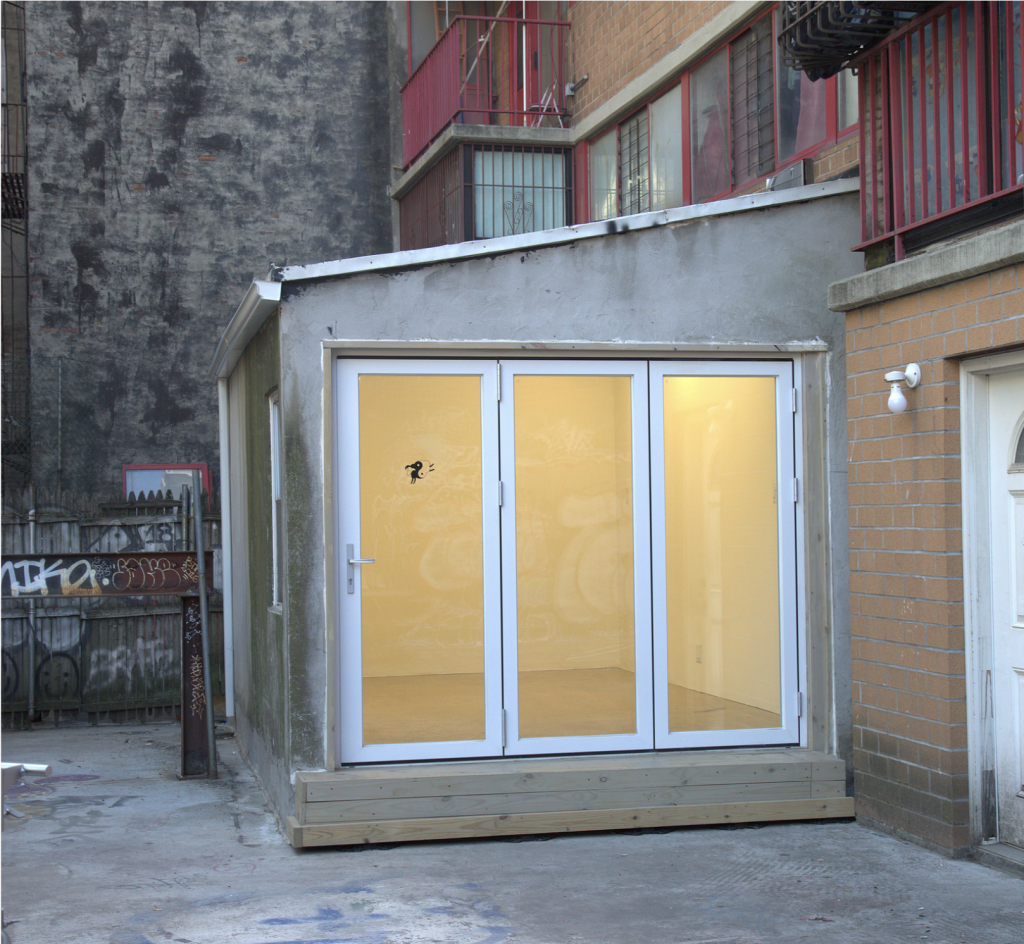
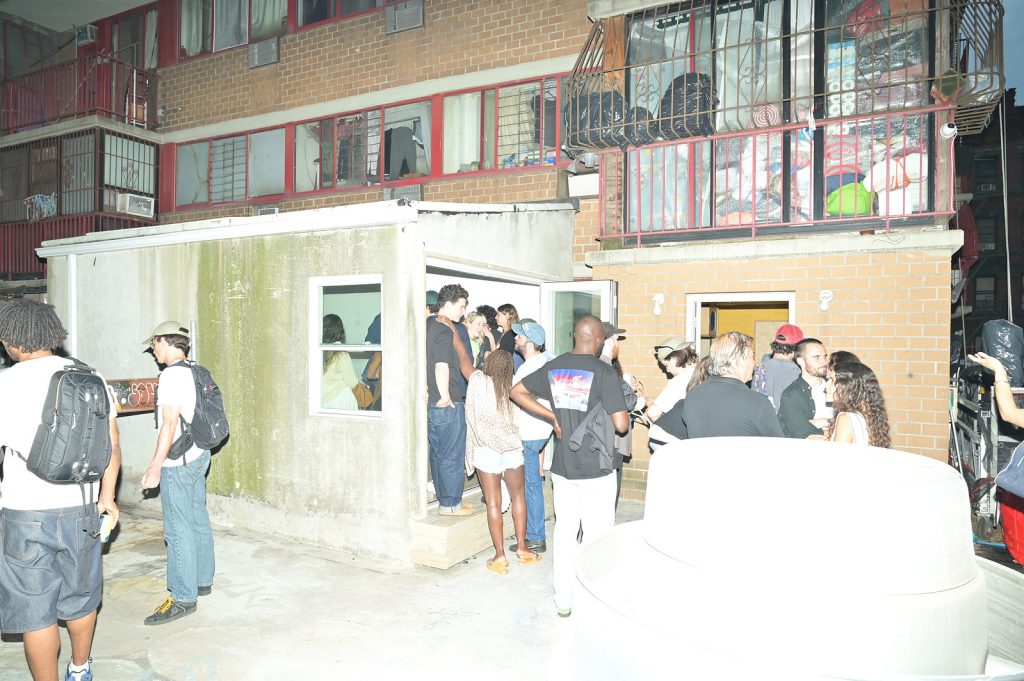
There is something of that lineage in Market Gallery, the Chinatown project founded by Adam Zhu. “Market Gallery is a gallery staged in a shed on my rooftop,” he says. Accessed by walking through his apartment and onto the roof, the space sits above Market Street and has become one of the more distinctive small galleries in downtown New York. That unusual route is part of the point.
“It’s not like I’ve had the doors open to what you might consider the establishment of the art world,” he says. “There’s a difficult space for the middle ground right now. You have your blue-chip galleries and your small galleries, and creating space for artists to express themselves without the pressures of the market is not so easy to come by.”
New York City might feel endless, but despite having a similar-sized population, it actually covers half the size of London. Different cities, different densities, but close enough to make the pressure on space in New York easy to feel. Zhu feels it too. “Space is hard to come by in Manhattan,” he says, “so I knew I needed to take advantage of it.”
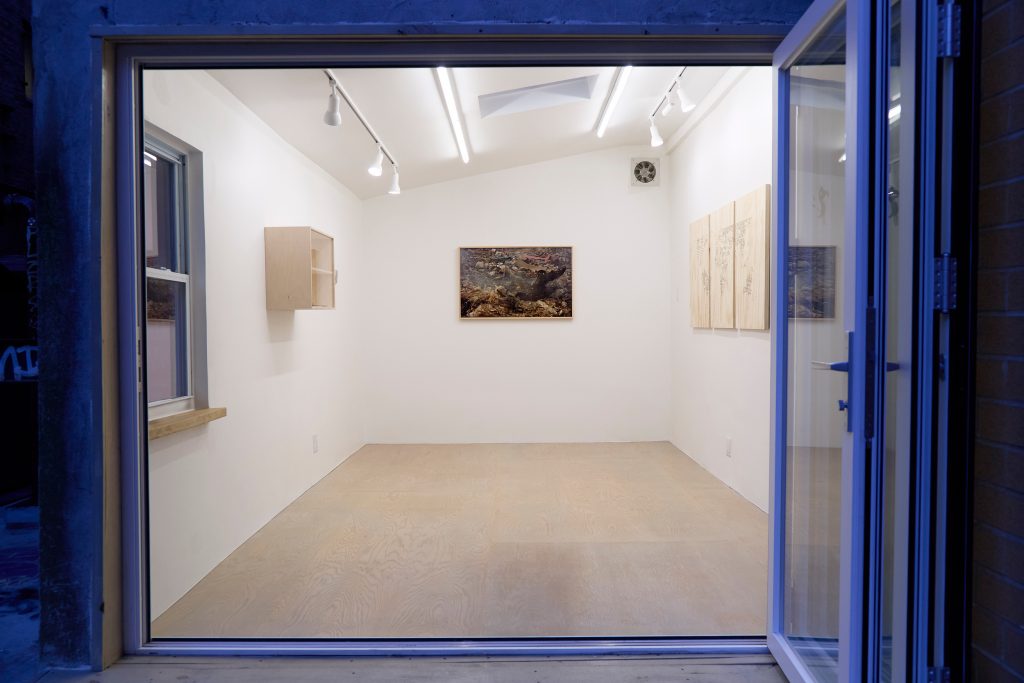
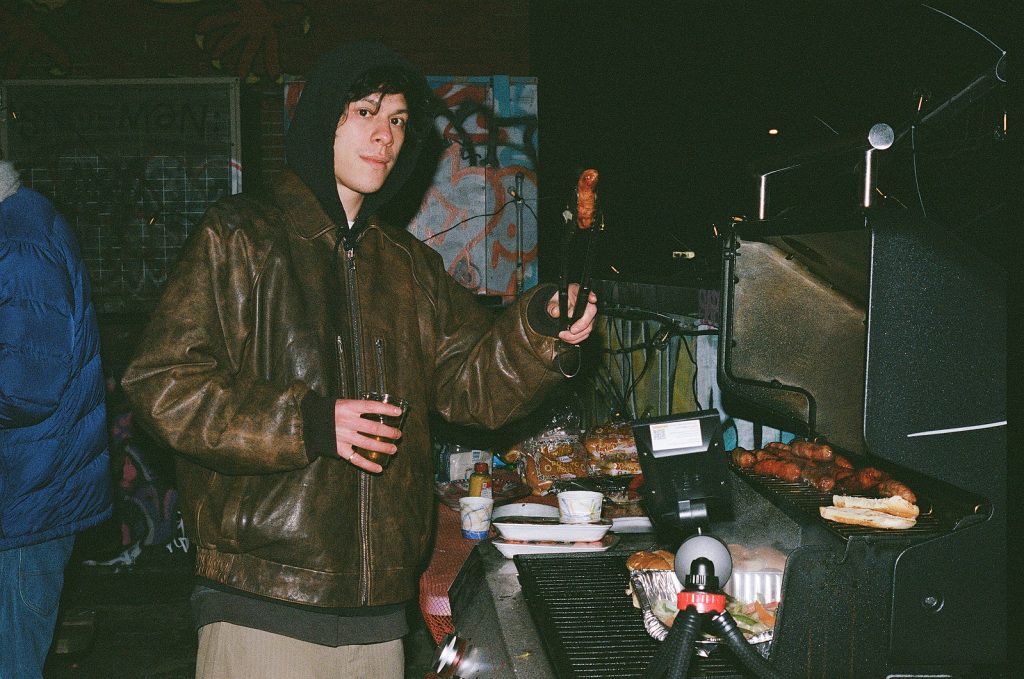
That sense of resourcefulness runs through the whole project, but so does the quality that comes from that intimacy. The shed is not being presented as some charmingly ramshackle anti-space. Zhu renovated it properly: white walls, wood floor, a real gallery built from what was available rather than delayed until something bigger or more official came along. Artists including Andrew Kass, Rachel Simon, Lorenzo Amos and Marcus Jahmal have all helped define what the space can do, often whilst Adam is grilling food for guests nearby.
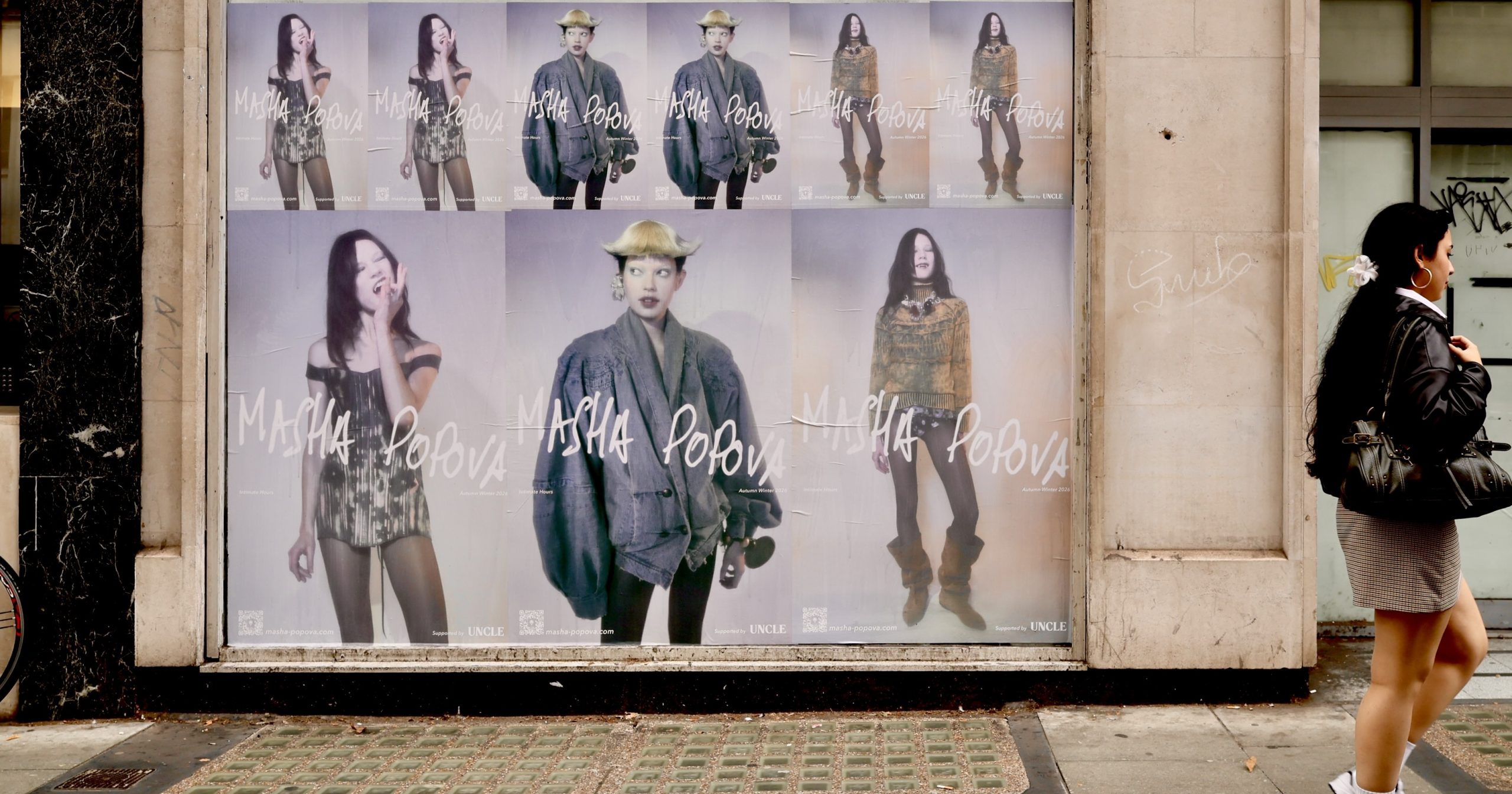
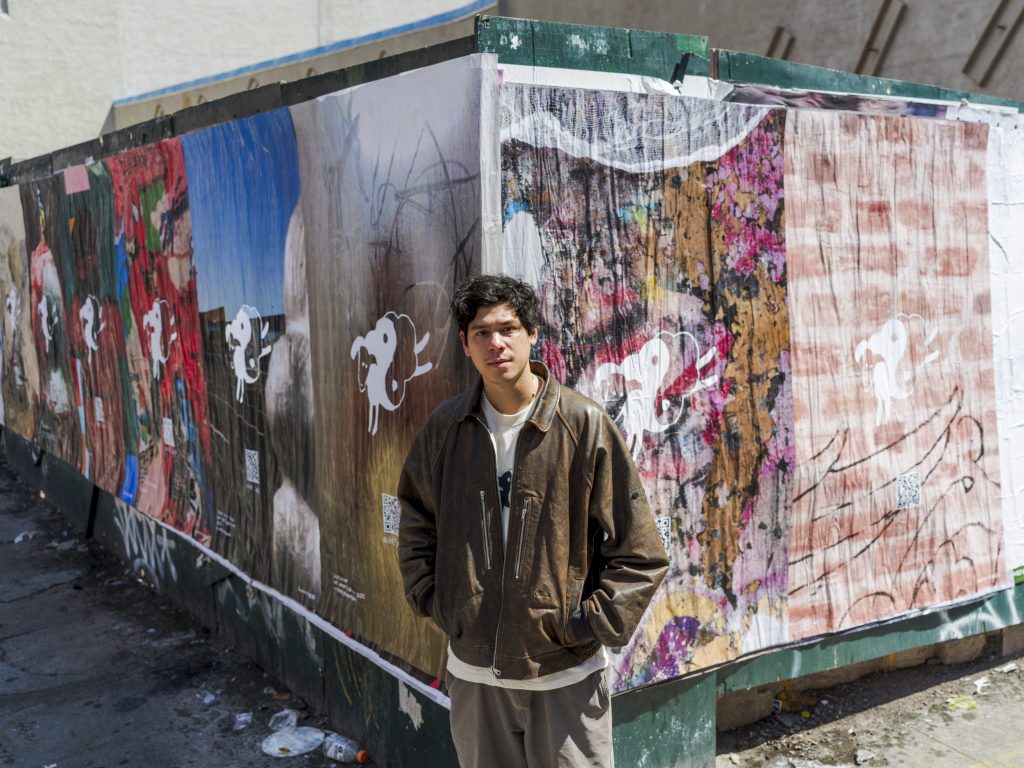
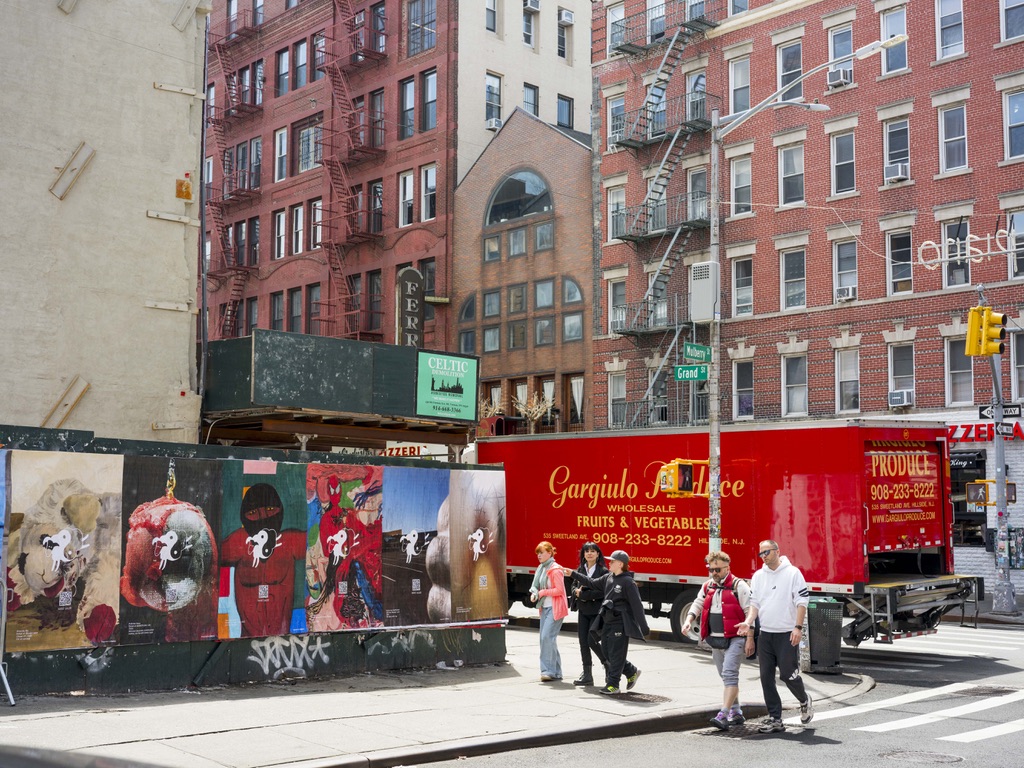
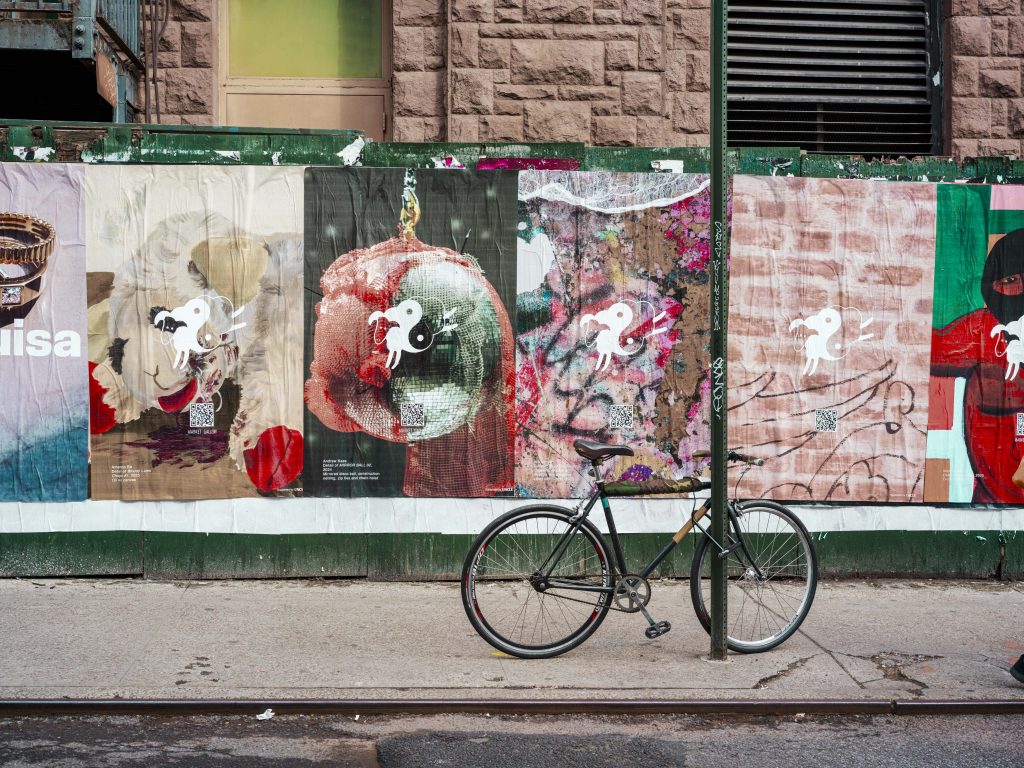
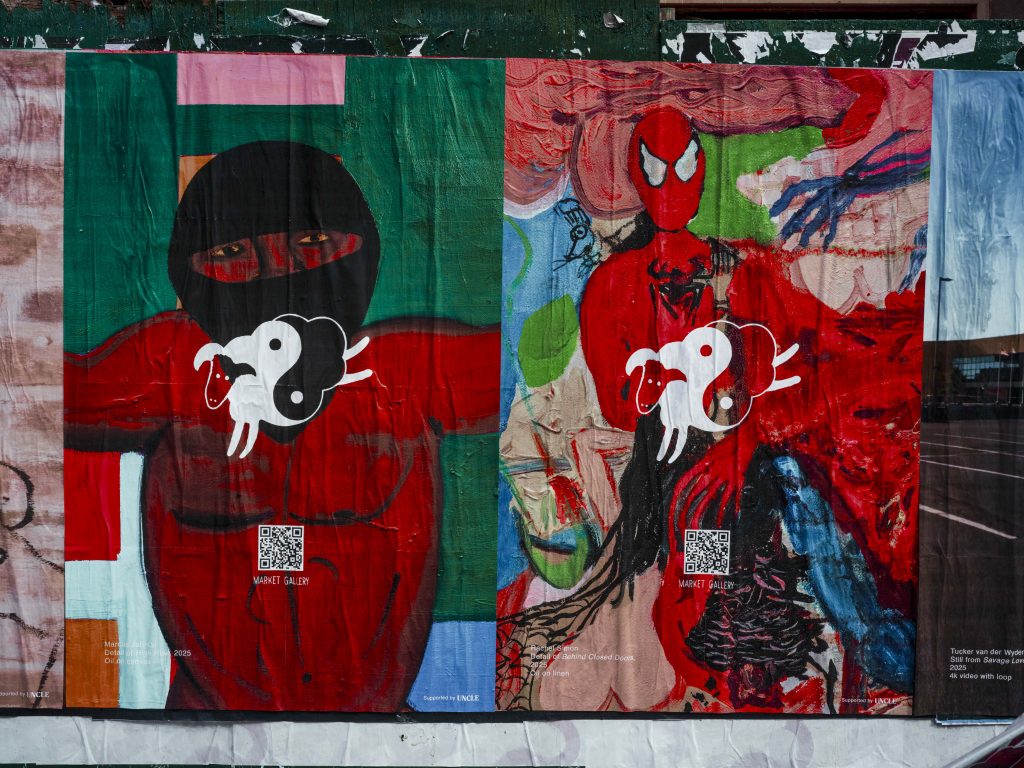
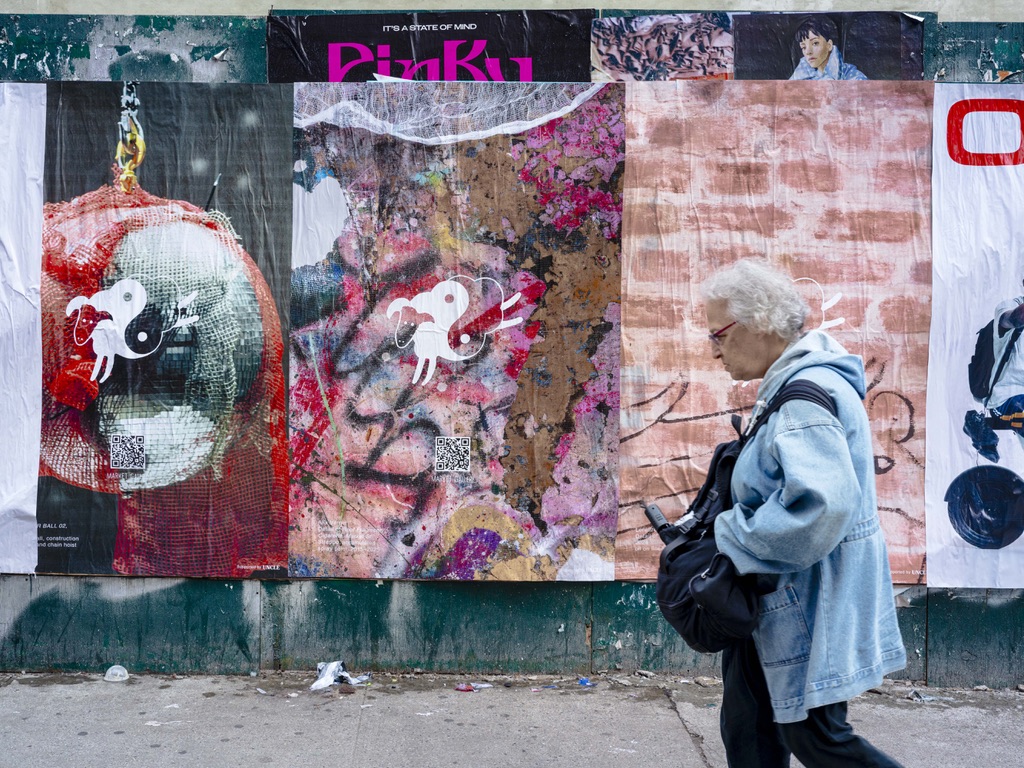
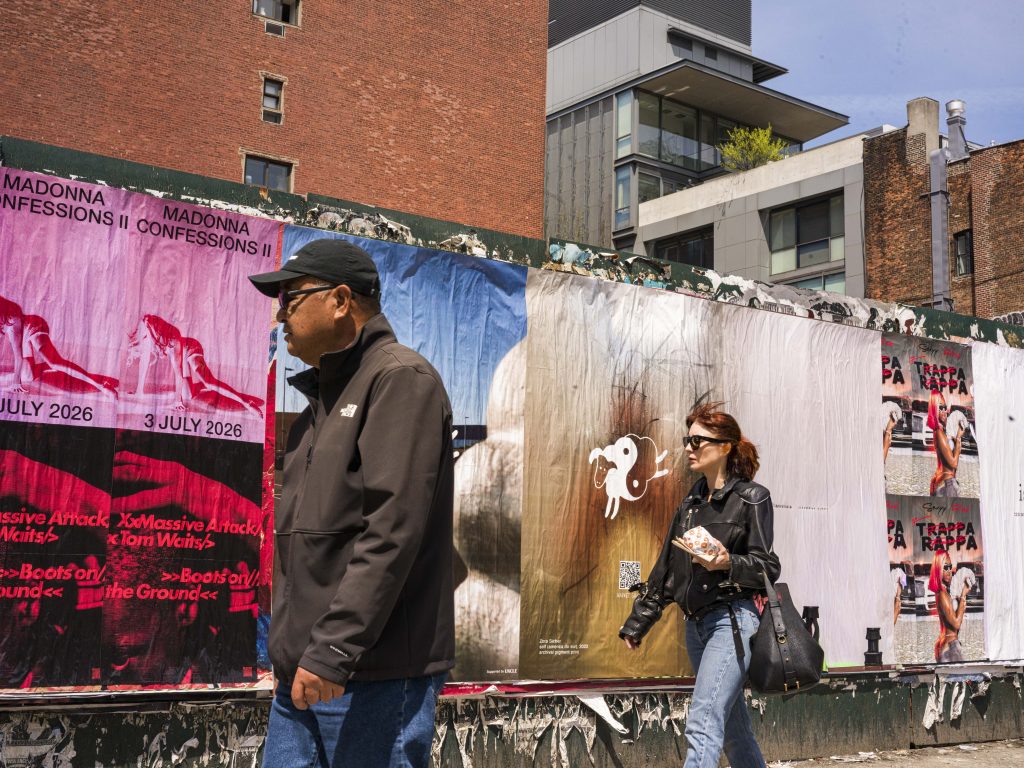
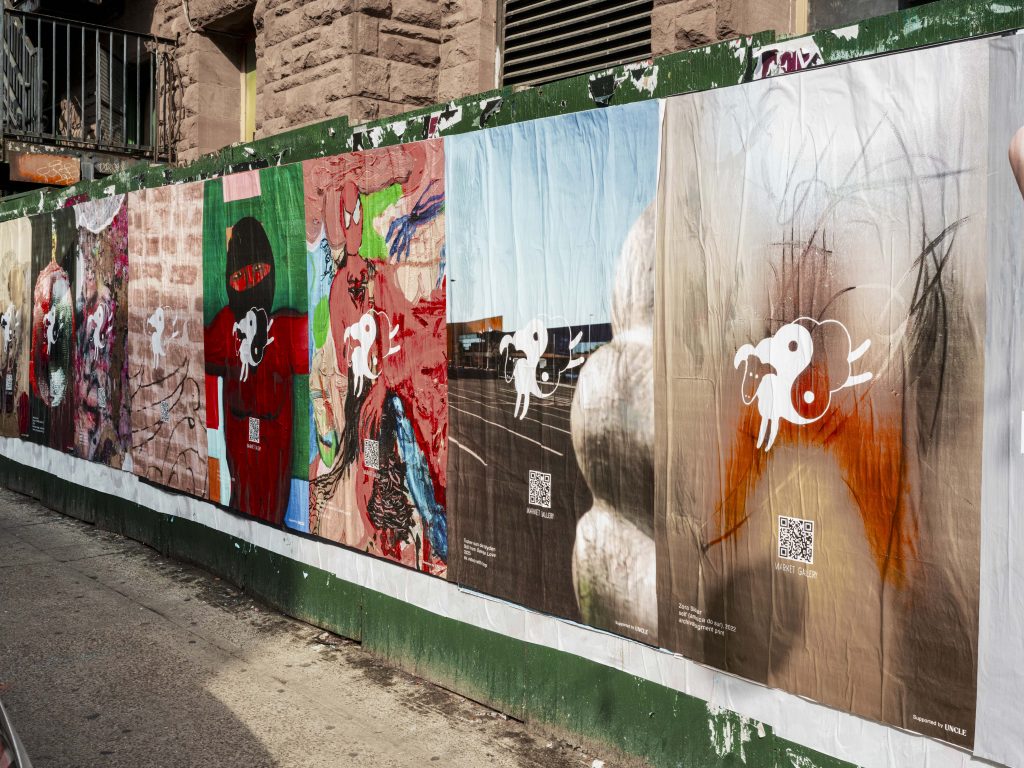
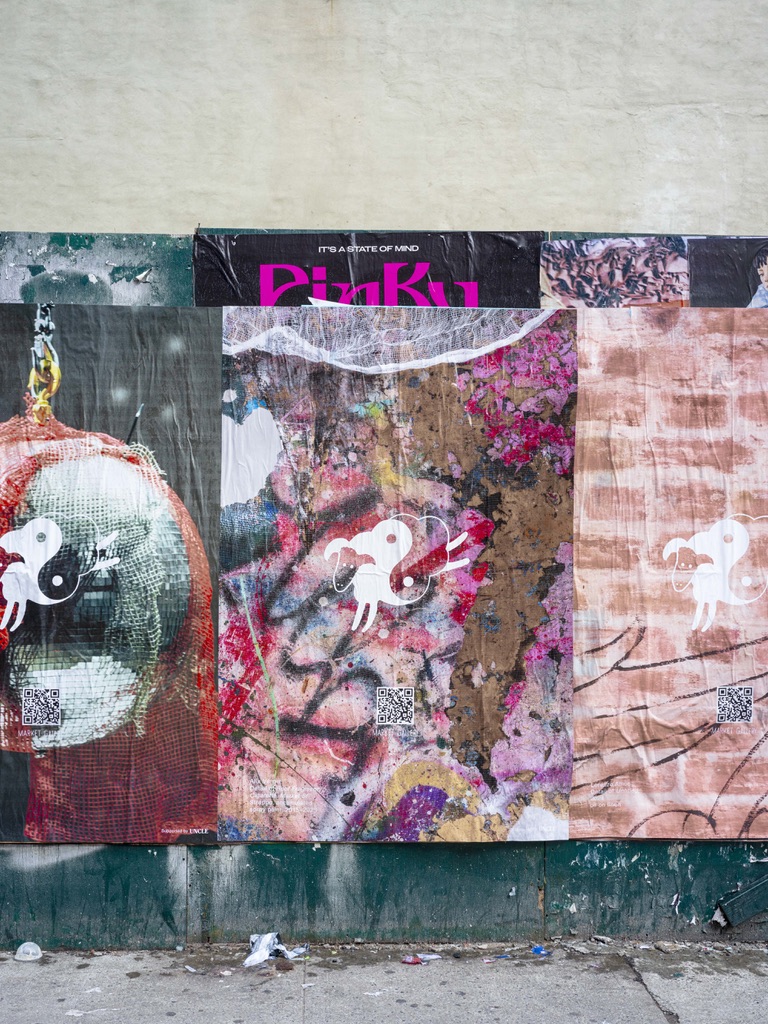
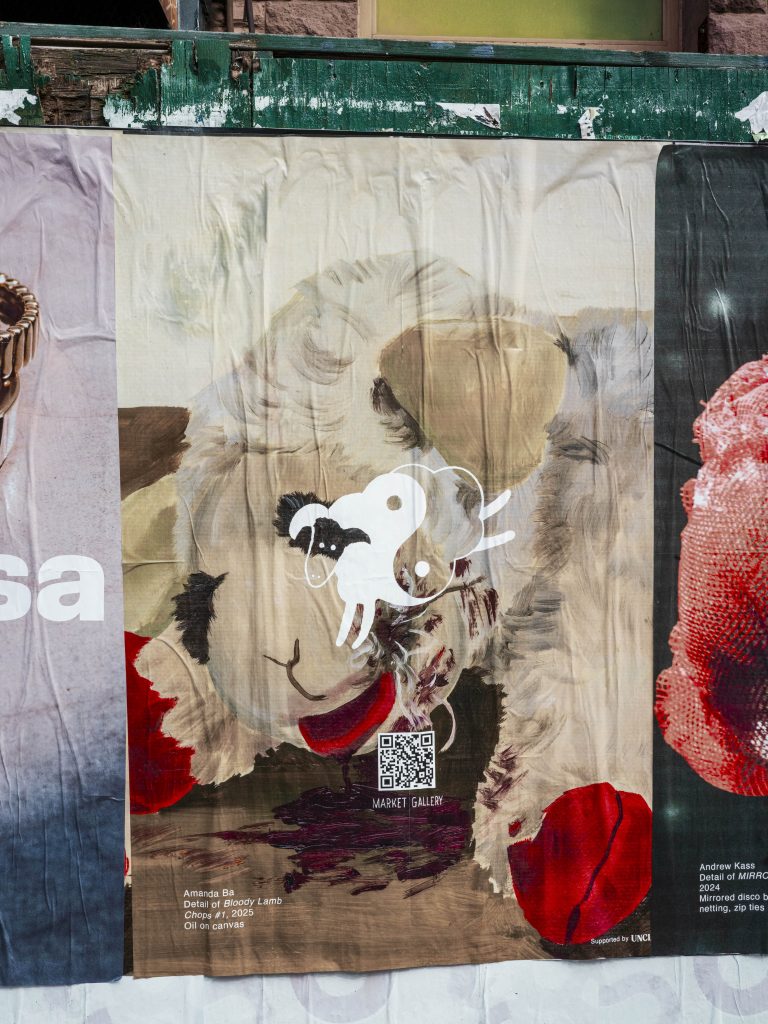
Market Gallery may be hidden above the street, but it has always been shaped by the city below it – by Chinatown, by New York, by the pressures of downtown life, and by an art world in which visibility is never evenly distributed. With UNCLE, work exhibited in the rooftop shed now comes back down onto the street, extending the gallery’s reach without losing the spirit that made it worth paying attention to in the first place.
Because sometimes the best gallery is the shed on your rooftop.





features
04.26 Market Gallery: The Chinatown Apartment Gallery in a Rooftop Shed
FIRST OFF, COULD YOU INTRODUCE MARKET GALLERY TO SOMEBODY WHO’S NEVER COME ACROSS IT BEFORE?
Adam: It’s an apartment gallery where you have to walk through my apartment to a back roof area, where there’s a shed that we’ve converted into a gallery. The space is in Chinatown and has been a creative space in my home for the last ten-plus years. In summer 2024, I decided to renovate it into a gallery. It was previously a studio, a music studio, storage — it was used for many different things over the years — and kind of got rotted out and fell apart. The recent version is the most elaborate one, where it feels like a gallery: white walls, wood floor.
HOW DID MARKET GALLERY ACTUALLY COME TO BE? WAS THERE A PARTICULAR POINT WHERE YOUR APARTMENT, THE SHED, AND YOUR WIDER CREATIVE WORLD CLICKED INTO SOMETHING THAT FELT LIKE A GALLERY RATHER THAN JUST YOUR OWN SPACE?
Adam: It kind of snowballed. It’s always been a creative space, my house, and the question of what to do with that space started more as: I have to renovate the shed or demolish it, because it’s falling apart and in disuse. My friends who were using it were in a jazz band called Onyx Collective, and they had stopped using it because they had other studio space, but also because it had become quite mouldy and the floor had caved in. I hadn’t personally used it in quite a while and came to this realisation: if I fix this up, what do I do with this space?
I’d always curated shows, and it actually isn’t the first time I’d done something like an art show using my space out there. It kind of became okay, maybe we can have gallery shows out there. It really started as something I thought could be cool for 20 people to 50 people — my friends, basically.
Once I was investing in the construction, it wasn’t until it was nearing completion that I was like, oh — this is real. For me, it was the fact that I have this beautiful space now — and space is hard to come by in Manhattan — so I knew I needed to take advantage of it. Creatively, I was at a crossroads, and I thought this was a great platform for my friends, my community, but also an extension of my practice — something to keep me creatively stimulated, working with artists.
RESOURCEFULNESS FEELS LIKE A RUNNING THEME HERE. MARKET GALLERY CAME OUT OF MAKING SOMETHING SERIOUS AND THOUGHTFUL FROM A RELATIVELY SMALL, UNCONVENTIONAL SPACE. IN NEW YORK, IS THERE PRESSURE TO MAKE EVERY BIT OF SPACE COUNT? HOW MUCH HAS THAT SHAPED THE WAY YOU THINK ABOUT BUILDING A GALLERY?
Adam: I think growing up, even the curations I’ve been a part of, a lot of the shows I’ve been a part of have been on the fringe of DIY or using space in unconventional ways. One of the first group shows I was in was in an abandoned building.
That sensibility of always being like, okay, I have access to this space — how do I use it? — is always how I’ve gone about doing stuff in the creative world. It’s not like I’ve had the doors open to what you might consider the establishment of the art world. This has always been my way of doing things, and it’s how me and my friends do things too: if we have access to a raw space, or a studio, or something, that’s when the ball gets rolling on, okay, let’s do something with this space.
I think that’s a huge part of being a New Yorker and being young and creative when you don’t necessarily have access to real gallery space. My outlook on starting this was definitely from that perspective — how can I do something in the spirit of what we’ve always done, which is just use space, but maybe elevate it a bit and give a real gallery setting within the context of something that is more on the fringe of what that traditionally means, and without the barriers that we typically see in trying to enter those spaces in the art world.
ONE OF THE STRIKING THINGS ABOUT MARKET GALLERY IS THAT IT DOESN’T FEEL OVER-PROFESSIONALISED OR OVER-SANITISED. IT ALMOST FEELS LIKE BEING INVITED INTO SOMEONE’S LIVING ROOM. HOW IMPORTANT IS THAT INTIMACY TO WHAT YOU DO?
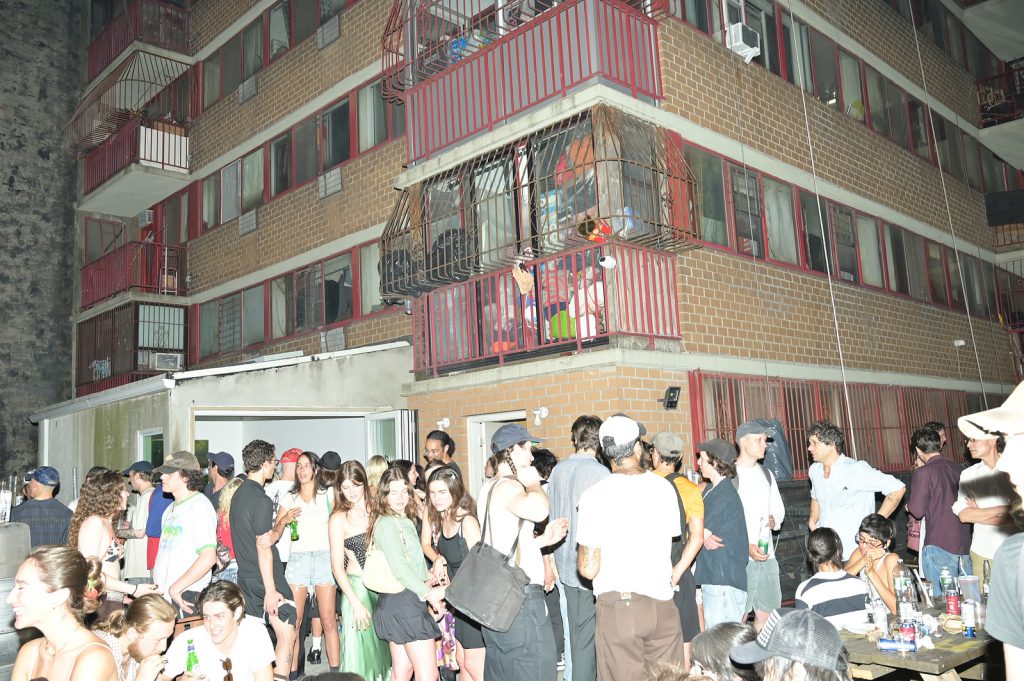
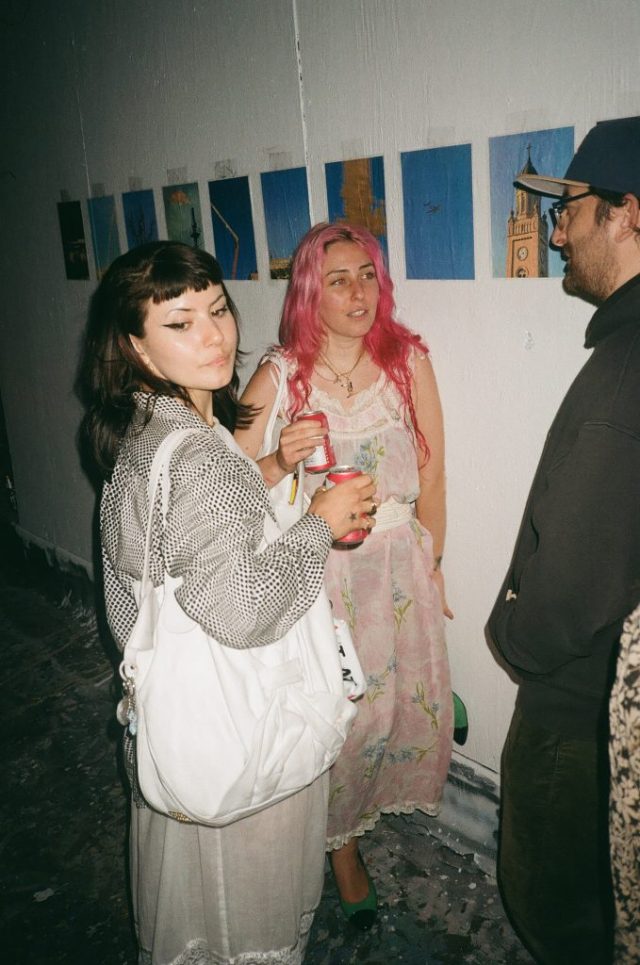
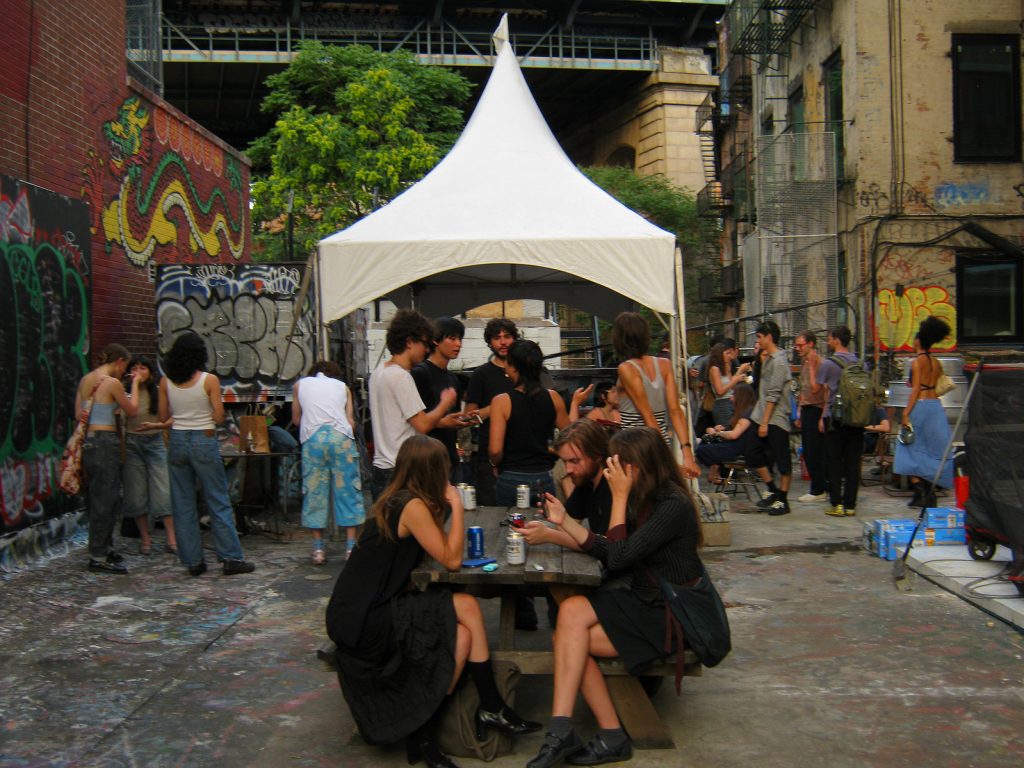
Adam: It’s basically integral to it. I always find it important to distinguish that it feels different from your typical small Chinatown gallery, because by nature the experience becomes quite a large part of what the gallery is. You have to go through my apartment, and you end up on my roof area. The gallery itself is quite small, but there’s quite a bit of space to mingle outside, so in that sense it feels more like a happening in a different way than other galleries, where you see the art and mingle under bright lights and end up on the sidewalk.
In this circumstance, you’re in my space. I’m normally cooking or grilling. It has a completely different energy than a lot of stuff I’ve been to, and I think that’s why people have gravitated to it in the way they have, and artists have as well, because it has this element of community and authenticity that is just palpable in the setting itself.
Adam: It’s an apartment gallery where you have to walk through my apartment to a back roof area, where there’s a shed that we’ve converted into a gallery. The space is in Chinatown and has been a creative space in my home for the last ten-plus years. In summer 2024, I decided to renovate it into a gallery. It was previously a studio, a music studio, storage — it was used for many different things over the years — and kind of got rotted out and fell apart. The recent version is the most elaborate one, where it feels like a gallery: white walls, wood floor.
HOW DID MARKET GALLERY ACTUALLY COME TO BE? WAS THERE A PARTICULAR POINT WHERE YOUR APARTMENT, THE SHED, AND YOUR WIDER CREATIVE WORLD CLICKED INTO SOMETHING THAT FELT LIKE A GALLERY RATHER THAN JUST YOUR OWN SPACE?
Adam: It kind of snowballed. It’s always been a creative space, my house, and the question of what to do with that space started more as: I have to renovate the shed or demolish it, because it’s falling apart and in disuse. My friends who were using it were in a jazz band called Onyx Collective, and they had stopped using it because they had other studio space, but also because it had become quite mouldy and the floor had caved in. I hadn’t personally used it in quite a while and came to this realisation: if I fix this up, what do I do with this space?
I’d always curated shows, and it actually isn’t the first time I’d done something like an art show using my space out there. It kind of became okay, maybe we can have gallery shows out there. It really started as something I thought could be cool for 20 people to 50 people — my friends, basically.
Once I was investing in the construction, it wasn’t until it was nearing completion that I was like, oh — this is real. For me, it was the fact that I have this beautiful space now — and space is hard to come by in Manhattan — so I knew I needed to take advantage of it. Creatively, I was at a crossroads, and I thought this was a great platform for my friends, my community, but also an extension of my practice — something to keep me creatively stimulated, working with artists.
RESOURCEFULNESS FEELS LIKE A RUNNING THEME HERE. MARKET GALLERY CAME OUT OF MAKING SOMETHING SERIOUS AND THOUGHTFUL FROM A RELATIVELY SMALL, UNCONVENTIONAL SPACE. IN NEW YORK, IS THERE PRESSURE TO MAKE EVERY BIT OF SPACE COUNT? HOW MUCH HAS THAT SHAPED THE WAY YOU THINK ABOUT BUILDING A GALLERY?
Adam: I think growing up, even the curations I’ve been a part of, a lot of the shows I’ve been a part of have been on the fringe of DIY or using space in unconventional ways. One of the first group shows I was in was in an abandoned building.
That sensibility of always being like, okay, I have access to this space — how do I use it? — is always how I’ve gone about doing stuff in the creative world. It’s not like I’ve had the doors open to what you might consider the establishment of the art world. This has always been my way of doing things, and it’s how me and my friends do things too: if we have access to a raw space, or a studio, or something, that’s when the ball gets rolling on, okay, let’s do something with this space.
I think that’s a huge part of being a New Yorker and being young and creative when you don’t necessarily have access to real gallery space. My outlook on starting this was definitely from that perspective — how can I do something in the spirit of what we’ve always done, which is just use space, but maybe elevate it a bit and give a real gallery setting within the context of something that is more on the fringe of what that traditionally means, and without the barriers that we typically see in trying to enter those spaces in the art world.
ONE OF THE STRIKING THINGS ABOUT MARKET GALLERY IS THAT IT DOESN’T FEEL OVER-PROFESSIONALISED OR OVER-SANITISED. IT ALMOST FEELS LIKE BEING INVITED INTO SOMEONE’S LIVING ROOM. HOW IMPORTANT IS THAT INTIMACY TO WHAT YOU DO?
Adam: It’s basically integral to it. I always find it important to distinguish that it feels different from your typical small Chinatown gallery, because by nature the experience becomes quite a large part of what the gallery is. You have to go through my apartment, and you end up on my roof area. The gallery itself is quite small, but there’s quite a bit of space to mingle outside, so in that sense it feels more like a happening in a different way than other galleries, where you see the art and mingle under bright lights and end up on the sidewalk.
In this circumstance, you’re in my space. I’m normally cooking or grilling. It has a completely different energy than a lot of stuff I’ve been to, and I think that’s why people have gravitated to it in the way they have, and artists have as well, because it has this element of community and authenticity that is just palpable in the setting itself.
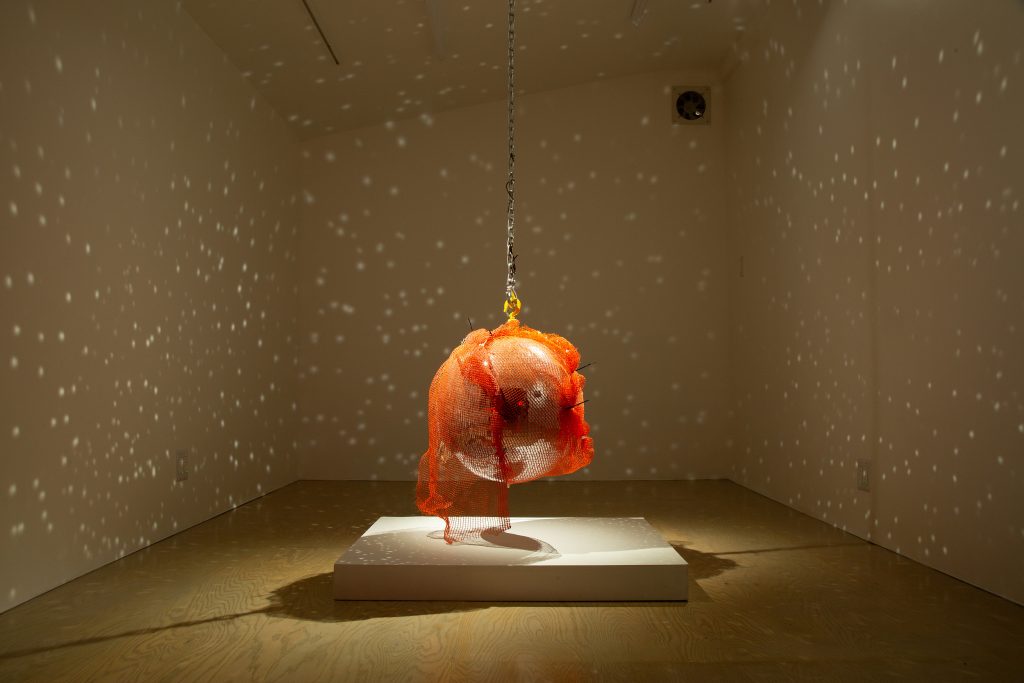
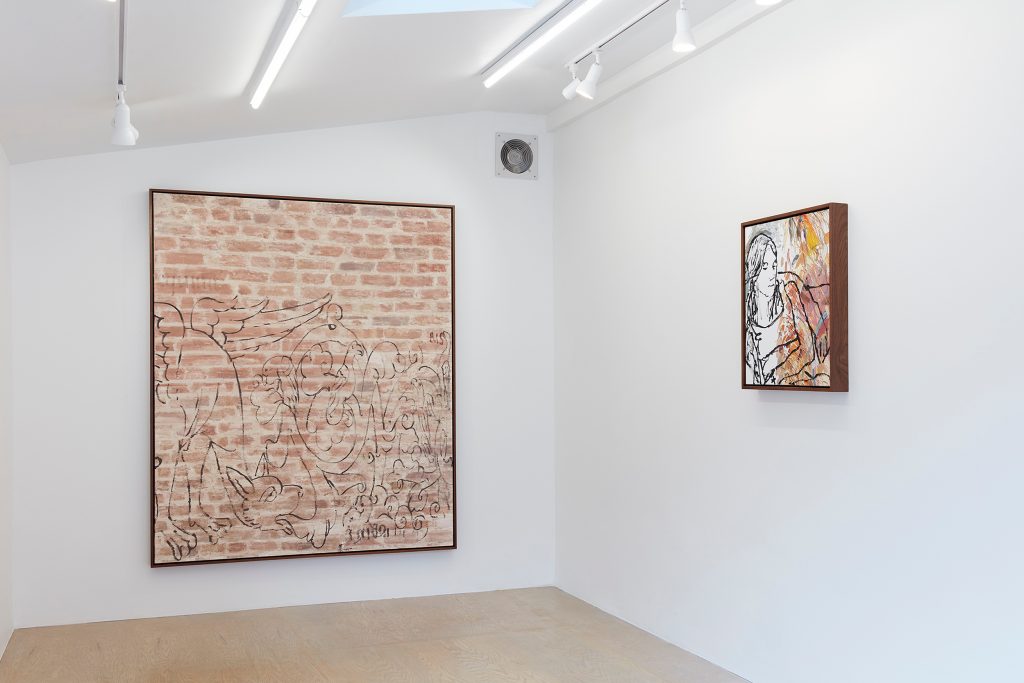
YOU’VE WORKED WITH ARTISTS THROUGH EXHIBITIONS AND RESIDENCIES. ARE THERE ANY PARTICULAR COLLABORATIONS OR SHOWS THAT FEEL ESPECIALLY IMPORTANT IN THE STORY OF MARKET GALLERY SO FAR?
Adam: Every single artist that I’ve included on the posters is an artist that we’ve done solo shows with. Although I’ve curated two other big group shows under Market Gallery, these artists are integral to the narrative because we’ve done solo shows. I could go through each one of them and their importance.
Andrew Kass was the first artist to exhibit there, but he also did the renovation that turned the shed into the gallery, so he’s actually the contractor as well as an artist. Zora Sicher is a very close friend and collaborator over the years — hers was the first winter show, and it showed me that despite the weather we could still make it work out there. We had soup and a fire going.
Every single artist has been important, and they’ve all shown me how they can utilise the space differently. Tucker did a video installation where there was a screen in the back wall that was completely seamless, so there was video and sound. Marcus Jahmal was the first to exhibit sculpture. Amanda Ba kind of reflected the ethos of the space because she showed paintings that were more personal and stylistically different than what she exhibits with bigger galleries.
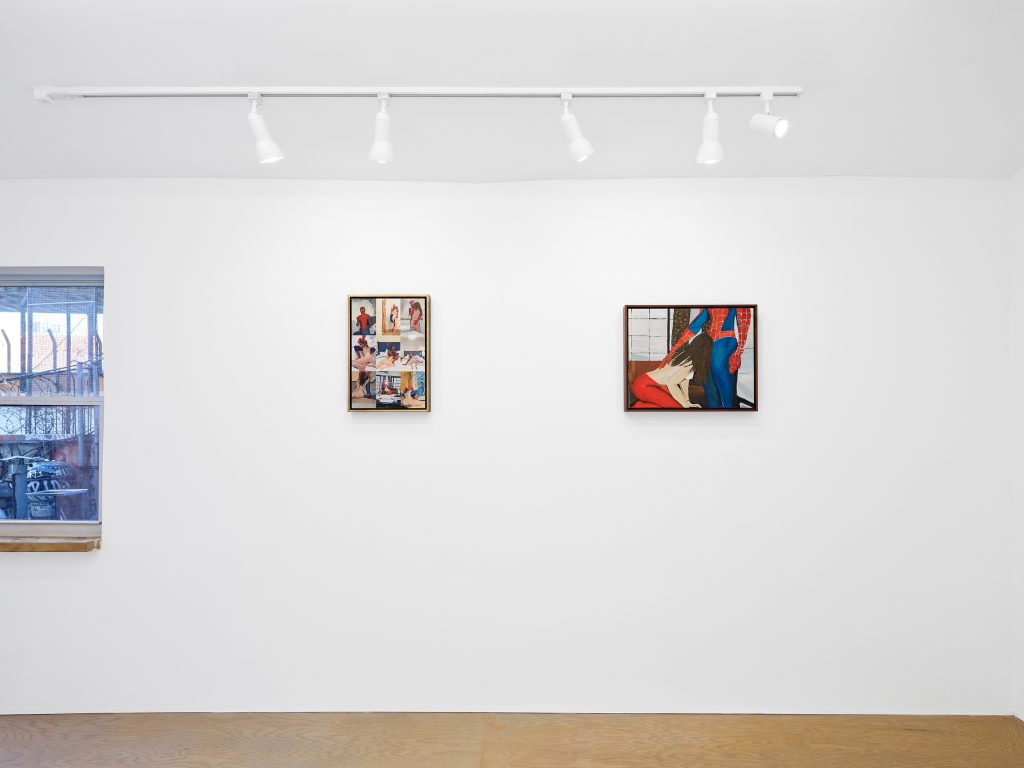
Then somebody like Alix Vernet — the source material of her work was the actual rooftop floor. After ten years of living there, the floor was caked with tags and layers of paint, and she used resin to actually lift up those layers. That was a milestone in terms of interaction with the space. Rachel Simon, who does the Spider-Man drawings and paintings, was another where I was closely involved in every aspect of the creation of that. Lorenzo is on such a meteoric rise, and is able to link his paintings to a New York lineage. Every single artist has been dear to the narrative of the space, and all of them have shown me what the possibilities are.
I’ve only done solo shows at the shed — the group shows have always been somewhere else — so the chance to work so closely and in-depth with each person has been the best experience of all of this.
IS THERE A PARTICULAR ETHOS OR INSTINCT YOU LOOK FOR IN THE ARTISTS YOU WORK WITH? NOT NECESSARILY IN TERMS OF MEDIUM OR STYLE…
Adam: Beyond my taste in artwork, of course, I’m inviting you into my home, into my space, so there’s something really personal about that. A few things have to align — not only my taste in the work, but also an organic connection. Every single person I work with, I have a personal connection with, which is of course strengthened through the show and working together, but always it’s personal.
I think that’s the through-line: there’s an organicness and a sense of a real relationship between the gallery and the artist. When people ask me, “How’s it going? Collectors, this and that,” the best litmus test of what’s working is my relationship with the artist. The other stuff is not really my forte, though I’m learning. But as an artist, the greatest metric to me of the growth of the gallery is my relationship with artists, and the artists that I respect and admire gravitating towards wanting to work with Market Gallery.
CHINATOWN FEELS CENTRAL TO THE IDENTITY OF THE PROJECT. HOW HAS BEING BASED THERE SHAPED THE ENERGY OF MARKET GALLERY? MORE BROADLY, WHAT DOES CHINATOWN MEAN TO YOU IN 2026? IT’S SUCH A MYTHOLOGISED PART OF NEW YORK, BUT ALSO A REAL NEIGHBOURHOOD UNDER PRESSURE — WHAT KEEPS IT CREATIVELY ALIVE FOR YOU?
Adam: I’ve been living in Chinatown since 2015, but I grew up in the East Village, the Lower East Side, so Chinatown has been part of my life my whole life. Being half Chinese and speaking the language and spending time here has been integral to my identity.
In the ten years I’ve lived in Chinatown, it’s changed quite drastically. My building is almost entirely Chinese still, and the fabric just a few blocks away is now what people call Dimes Square. Obviously, gentrification is felt in the area and has made its way down towards my street, which is Market Street. But there still is a real Chinese community here. The community towards my area of East Broadway is more Fujianese — it’s less touristy. It’s not like Mott Street or west of here. The area here is a deeply rooted community. It’s not just Chinese restaurants — it’s a real community of people that live here.
Adam: Every single artist that I’ve included on the posters is an artist that we’ve done solo shows with. Although I’ve curated two other big group shows under Market Gallery, these artists are integral to the narrative because we’ve done solo shows. I could go through each one of them and their importance.
Andrew Kass was the first artist to exhibit there, but he also did the renovation that turned the shed into the gallery, so he’s actually the contractor as well as an artist. Zora Sicher is a very close friend and collaborator over the years — hers was the first winter show, and it showed me that despite the weather we could still make it work out there. We had soup and a fire going.
Every single artist has been important, and they’ve all shown me how they can utilise the space differently. Tucker did a video installation where there was a screen in the back wall that was completely seamless, so there was video and sound. Marcus Jahmal was the first to exhibit sculpture. Amanda Ba kind of reflected the ethos of the space because she showed paintings that were more personal and stylistically different than what she exhibits with bigger galleries.
Then somebody like Alix Vernet — the source material of her work was the actual rooftop floor. After ten years of living there, the floor was caked with tags and layers of paint, and she used resin to actually lift up those layers. That was a milestone in terms of interaction with the space. Rachel Simon, who does the Spider-Man drawings and paintings, was another where I was closely involved in every aspect of the creation of that. Lorenzo is on such a meteoric rise, and is able to link his paintings to a New York lineage. Every single artist has been dear to the narrative of the space, and all of them have shown me what the possibilities are.
I’ve only done solo shows at the shed — the group shows have always been somewhere else — so the chance to work so closely and in-depth with each person has been the best experience of all of this.
IS THERE A PARTICULAR ETHOS OR INSTINCT YOU LOOK FOR IN THE ARTISTS YOU WORK WITH? NOT NECESSARILY IN TERMS OF MEDIUM OR STYLE…
Adam: Beyond my taste in artwork, of course, I’m inviting you into my home, into my space, so there’s something really personal about that. A few things have to align — not only my taste in the work, but also an organic connection. Every single person I work with, I have a personal connection with, which is of course strengthened through the show and working together, but always it’s personal.
I think that’s the through-line: there’s an organicness and a sense of a real relationship between the gallery and the artist. When people ask me, “How’s it going? Collectors, this and that,” the best litmus test of what’s working is my relationship with the artist. The other stuff is not really my forte, though I’m learning. But as an artist, the greatest metric to me of the growth of the gallery is my relationship with artists, and the artists that I respect and admire gravitating towards wanting to work with Market Gallery.
CHINATOWN FEELS CENTRAL TO THE IDENTITY OF THE PROJECT. HOW HAS BEING BASED THERE SHAPED THE ENERGY OF MARKET GALLERY? MORE BROADLY, WHAT DOES CHINATOWN MEAN TO YOU IN 2026? IT’S SUCH A MYTHOLOGISED PART OF NEW YORK, BUT ALSO A REAL NEIGHBOURHOOD UNDER PRESSURE — WHAT KEEPS IT CREATIVELY ALIVE FOR YOU?
Adam: I’ve been living in Chinatown since 2015, but I grew up in the East Village, the Lower East Side, so Chinatown has been part of my life my whole life. Being half Chinese and speaking the language and spending time here has been integral to my identity.
In the ten years I’ve lived in Chinatown, it’s changed quite drastically. My building is almost entirely Chinese still, and the fabric just a few blocks away is now what people call Dimes Square. Obviously, gentrification is felt in the area and has made its way down towards my street, which is Market Street. But there still is a real Chinese community here. The community towards my area of East Broadway is more Fujianese — it’s less touristy. It’s not like Mott Street or west of here. The area here is a deeply rooted community. It’s not just Chinese restaurants — it’s a real community of people that live here.
FROM YOUR PERSPECTIVE, WHAT ARE THE BIGGEST CHALLENGES IN THE CITY’S ART WORLD RIGHT NOW?
Adam: I still consider myself to be an art world outsider for the most part. I think there are a lot of barriers to what might be considered the art world here in New York, and I think Market Gallery is born out of trying to erase some of those barriers between the artists and the gallery.
In the art world at large, there’s a lot of talk about challenges, sales, all these things, and a big need for decentralisation from the establishment. There’s a difficult space for the middle ground right now — you have your blue-chip galleries and your small galleries — and creating space for artists to express themselves without the pressures of the market is not so easy to come by. That’s pretty central to the mission of Market Gallery.
AND ON THE FLIP SIDE, WHAT ARE NEW YORK’S STRENGTHS AT THE MOMENT? WHAT STILL MAKES IT WORTH MAKING WORK THERE?
Adam: New York is historically and currently one of the most special places creatively. What makes New York uniquely special is how interconnected and interactive it is — how you walk out your front door and you’re exposed to all different cultures, walks of life, and the melting pot that it is. It creates a less insular environment and allows for expression and creativity.
One of the biggest threats to that is gentrification and rising prices for everything. Artists can’t survive, really, and even big establishments are struggling, so you can only imagine how artists are doing. That’s kind of the struggle of creating in New York — how much you might have to compromise to have success commercially. But what’s great about New York is the sense of community and the creative spirit, and the resourcefulness — within those constraints, the creativity that comes from that is also incredibly special.
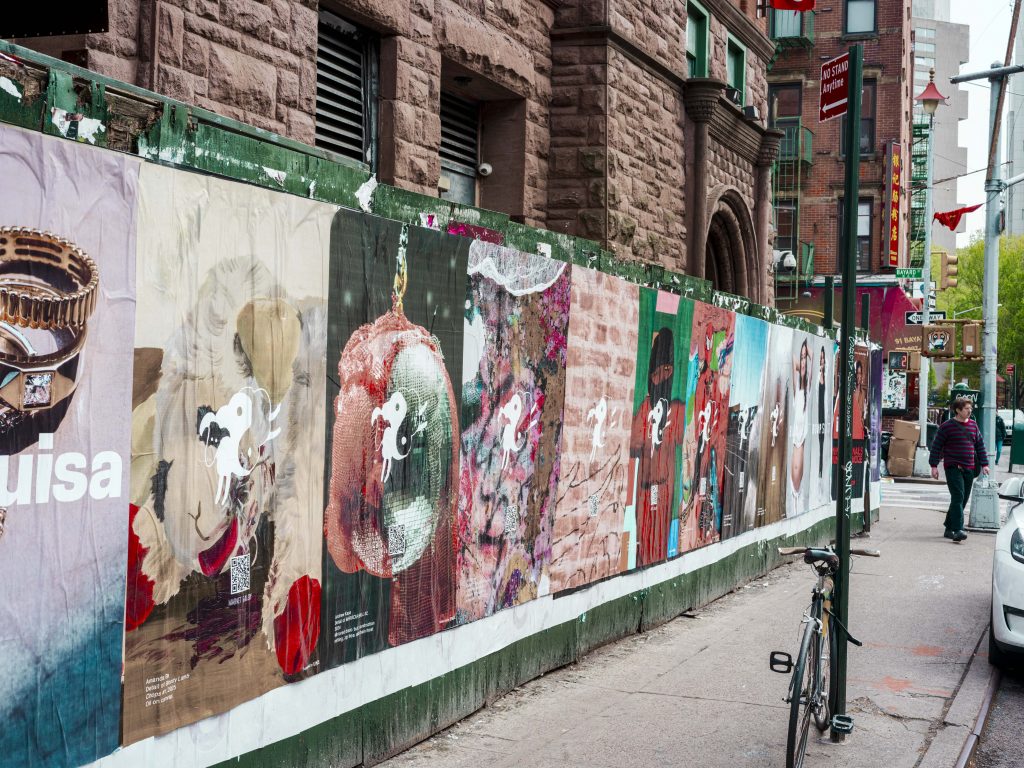
HOW DOES IT FEEL TO HAVE THE WORK OUT OF THE GALLERY AND ON THE STREET WITH THIS COLLAB?
Adam: It’s really special, and I think it reflects the ethos of the gallery very well, because the way we go about things is not like a traditional gallery. It aligns super well with the way that we have this adjacency to the street, and even street and graffiti culture, which has been part of my space since I moved there.
There’s something guerrilla about the way we do things in the first place, so this street-level visibility — especially considering we are invisible at street level, we’re not a storefront gallery — is always a special opportunity to take. Being a New Yorker, and with a lot of the artists I’ve shown being New Yorkers, that presence streetside is always something striking. It would be unconventional for a typical gallery, but it aligns well with what we’re doing at Market.
WHAT’S THE LONG-TERM VISION FOR MARKET GALLERY?
Adam: It’s a difficult one. I’ve actually been struggling with this question myself, because as it grows, I’m not sure it can, in five years, exist purely in my space or in the shed. That being said, I don’t necessarily see myself opening up a typical brick-and-mortar gallery, but you never know — maybe that is the path.
Or maybe it is continuing to grow the different aspects of it: the branding aspect, the print aspect, the remote ways of doing shows abroad or in different spaces. I’m always eager about growth outside of my apartment, and what that might look like in five years is very unclear, but I’m open to wherever this project takes me, because it’s become my sole focus basically. What’s clear is that it needs to grow past the confinement of my apartment, which it has already, but in what capacity is still unclear.
Adam: I still consider myself to be an art world outsider for the most part. I think there are a lot of barriers to what might be considered the art world here in New York, and I think Market Gallery is born out of trying to erase some of those barriers between the artists and the gallery.
In the art world at large, there’s a lot of talk about challenges, sales, all these things, and a big need for decentralisation from the establishment. There’s a difficult space for the middle ground right now — you have your blue-chip galleries and your small galleries — and creating space for artists to express themselves without the pressures of the market is not so easy to come by. That’s pretty central to the mission of Market Gallery.
AND ON THE FLIP SIDE, WHAT ARE NEW YORK’S STRENGTHS AT THE MOMENT? WHAT STILL MAKES IT WORTH MAKING WORK THERE?
Adam: New York is historically and currently one of the most special places creatively. What makes New York uniquely special is how interconnected and interactive it is — how you walk out your front door and you’re exposed to all different cultures, walks of life, and the melting pot that it is. It creates a less insular environment and allows for expression and creativity.
One of the biggest threats to that is gentrification and rising prices for everything. Artists can’t survive, really, and even big establishments are struggling, so you can only imagine how artists are doing. That’s kind of the struggle of creating in New York — how much you might have to compromise to have success commercially. But what’s great about New York is the sense of community and the creative spirit, and the resourcefulness — within those constraints, the creativity that comes from that is also incredibly special.
HOW DOES IT FEEL TO HAVE THE WORK OUT OF THE GALLERY AND ON THE STREET WITH THIS COLLAB?
Adam: It’s really special, and I think it reflects the ethos of the gallery very well, because the way we go about things is not like a traditional gallery. It aligns super well with the way that we have this adjacency to the street, and even street and graffiti culture, which has been part of my space since I moved there.
There’s something guerrilla about the way we do things in the first place, so this street-level visibility — especially considering we are invisible at street level, we’re not a storefront gallery — is always a special opportunity to take. Being a New Yorker, and with a lot of the artists I’ve shown being New Yorkers, that presence streetside is always something striking. It would be unconventional for a typical gallery, but it aligns well with what we’re doing at Market.
WHAT’S THE LONG-TERM VISION FOR MARKET GALLERY?
Adam: It’s a difficult one. I’ve actually been struggling with this question myself, because as it grows, I’m not sure it can, in five years, exist purely in my space or in the shed. That being said, I don’t necessarily see myself opening up a typical brick-and-mortar gallery, but you never know — maybe that is the path.
Or maybe it is continuing to grow the different aspects of it: the branding aspect, the print aspect, the remote ways of doing shows abroad or in different spaces. I’m always eager about growth outside of my apartment, and what that might look like in five years is very unclear, but I’m open to wherever this project takes me, because it’s become my sole focus basically. What’s clear is that it needs to grow past the confinement of my apartment, which it has already, but in what capacity is still unclear.

![“Did you go to art school?”“[Chuckling] I did not. I think if you really want to do something, you’re gonna find a way to do it!”“Did you go to art school?”](https://manfromuncle.info/wp-content/uploads/2026/10/x051D0954-D46D-48AA-8AC7-13F920D5704E_1_201_a-scaled.jpeg.pagespeed.ic.Gw1XaJSK73.jpg)