

Brands love the word community. They drop it into mission statements, scatter it across the About Us pages of their websites and buzzword it until it starts to lose all meaning.
But not every brand can point to the work. Patta can.
More than twenty years since it began as a store in Amsterdam, Patta has grown into one of the world’s most recognisable independent streetwear names, rooted in Hip-Hop and the city that raised it. Just as central to that story, though, is Suriname. A former Dutch colony that gained independence in 1975, its relationship with the Netherlands is not distant history but living memory, carried through migration, family ties, food, football, language and outlook. A major wave of Surinamese migration to the Netherlands followed around independence, helping shape modern Dutch life in ways that remain visible and deeply felt now.
For Patta-lifer Timothy Sabajo, that connection is inseparable. The brand’s name even comes from the Surinamese word for shoe (pata). “If we talk about Amsterdam, we talk about Suriname, and we’re talking about Hip Hop,” he says. “So that’s basically what Patta is.”
That relationship between Patta and Suriname now sits at the heart of one of the most poignant projects that the Patta Foundation has backed so far. Led by Glemiel, a 27-year-old designer and skater from Amsterdam with Surinamese roots, Skatepark Suriname is an ambitious plan to help build a permanent community skatepark in Paramaribo. In one sense, it answers a straightforward problem: a small but passionate skate scene exists there with almost no real infrastructure. In another, it points to something much bigger.
“The problem is not to build a skatepark,” Tim says. “The problem is to maintain it, to have events there and to use that skatepark as a safe space where children can evolve.” That is what gives the idea its weight. The vision is not just ramps and concrete, but a multi-use space that can hold community activity, work opportunities, roller disco and theatre too — a piece of youth infrastructure in a place where leisure often feels geared more toward tourism than local kids, and where skateboarding itself is still often seen as marginal rather than full of possibility.
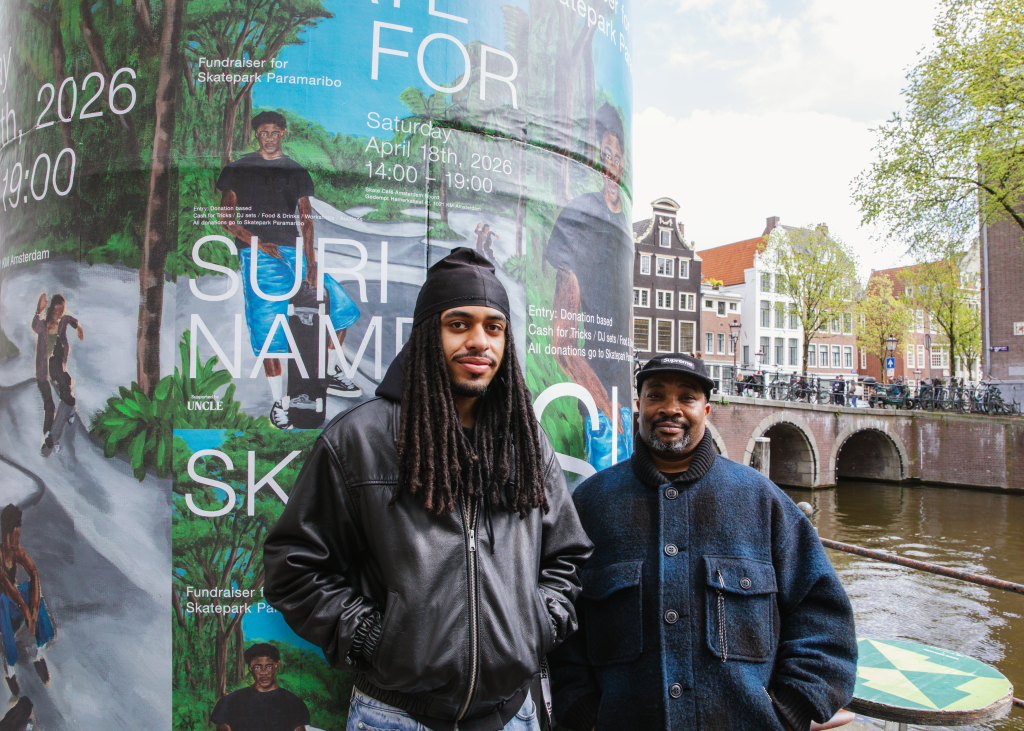
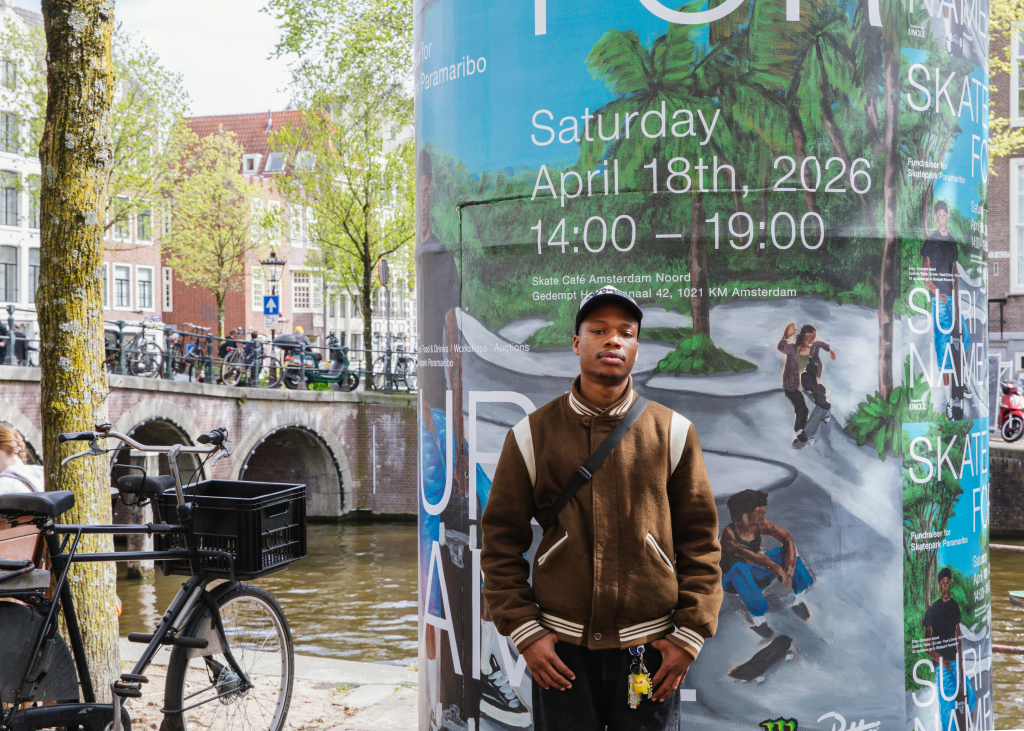
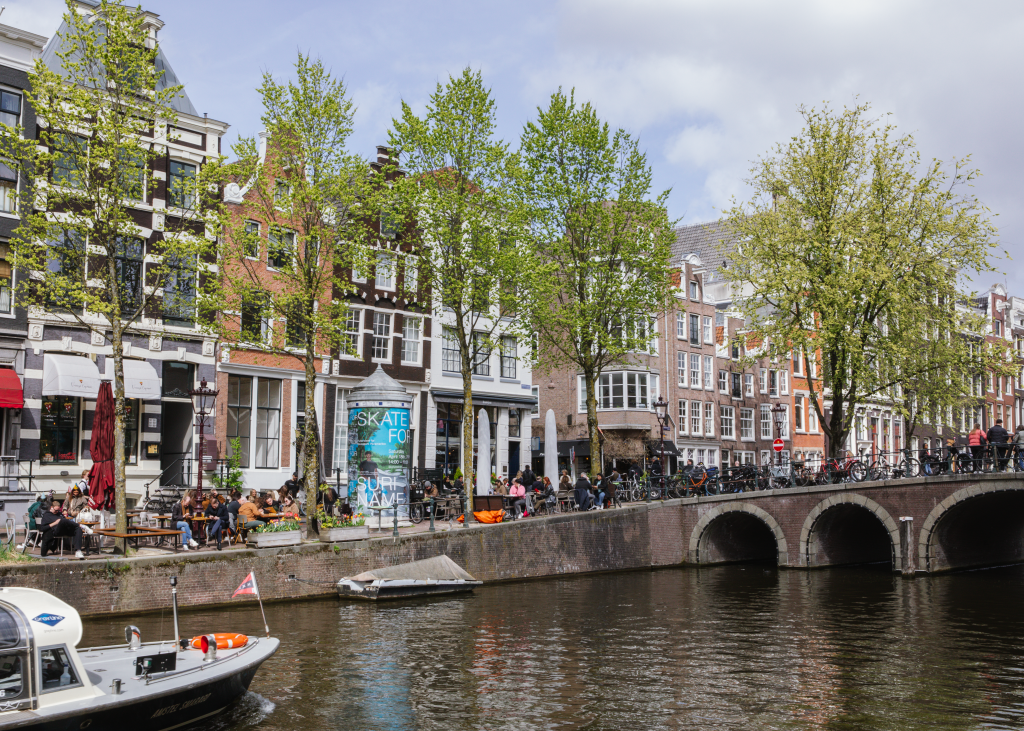
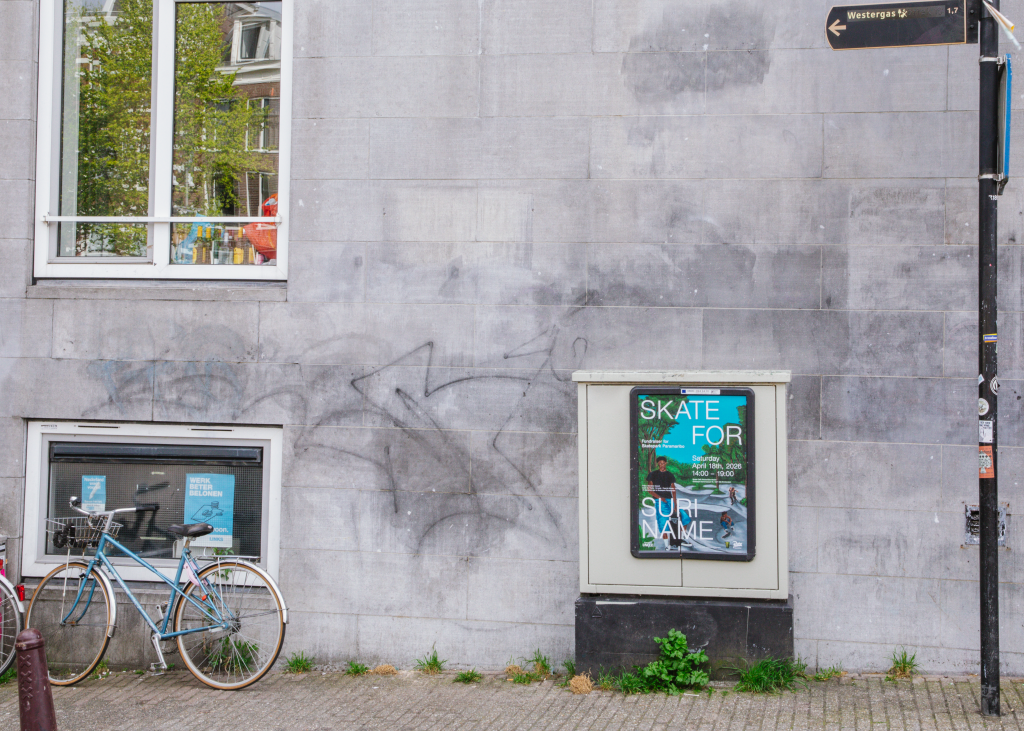
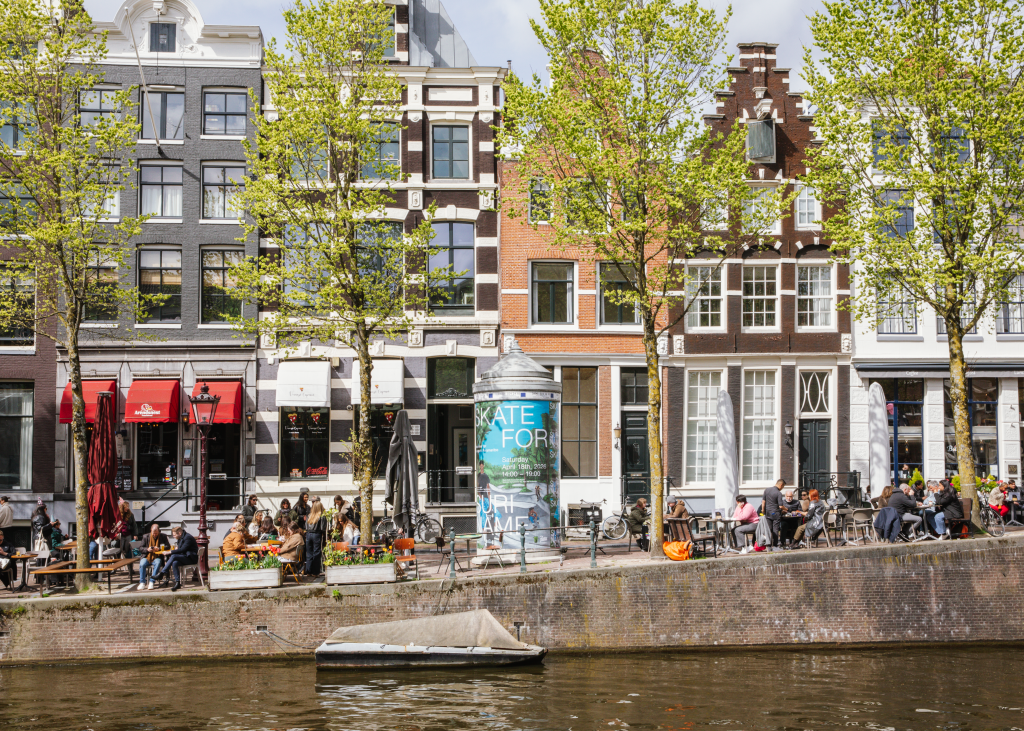
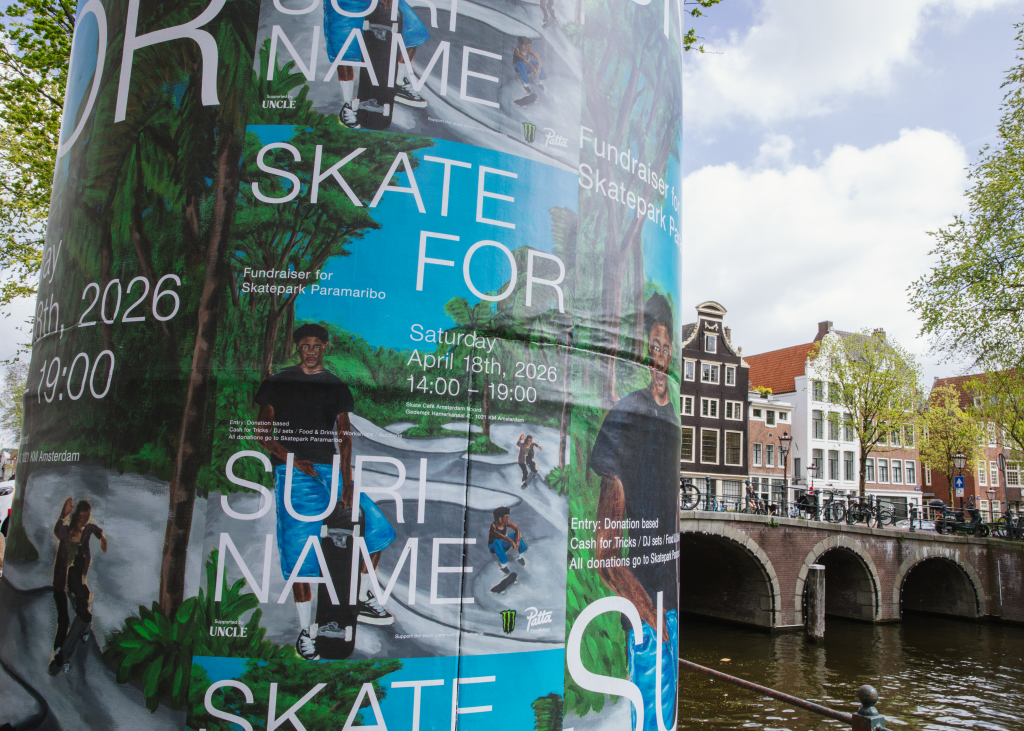
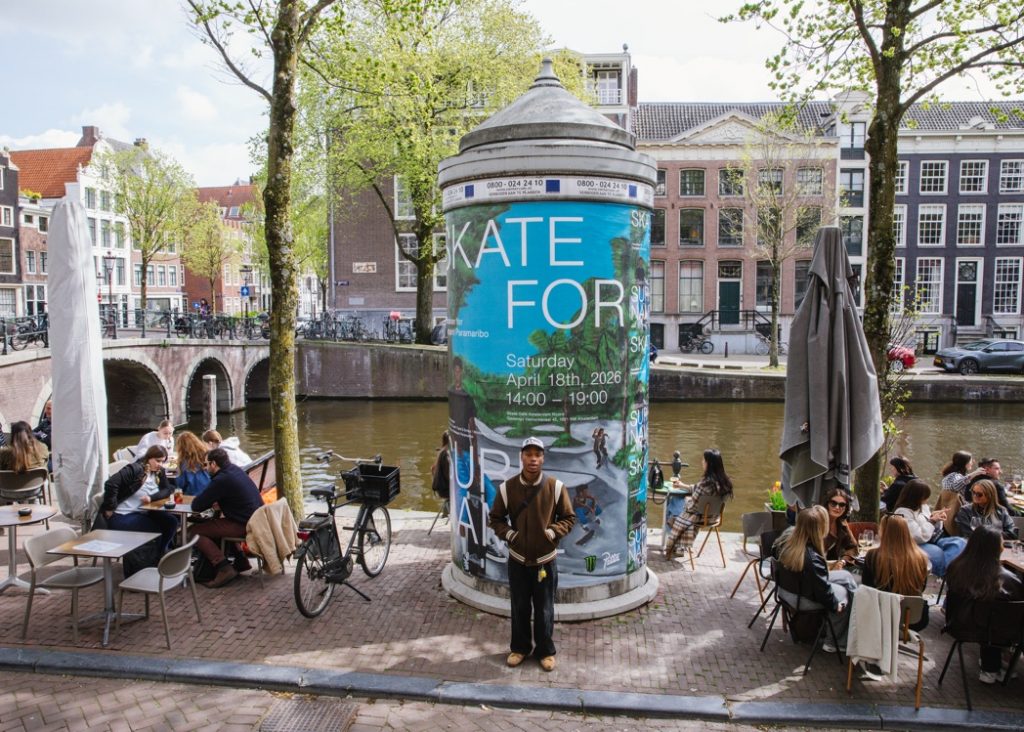
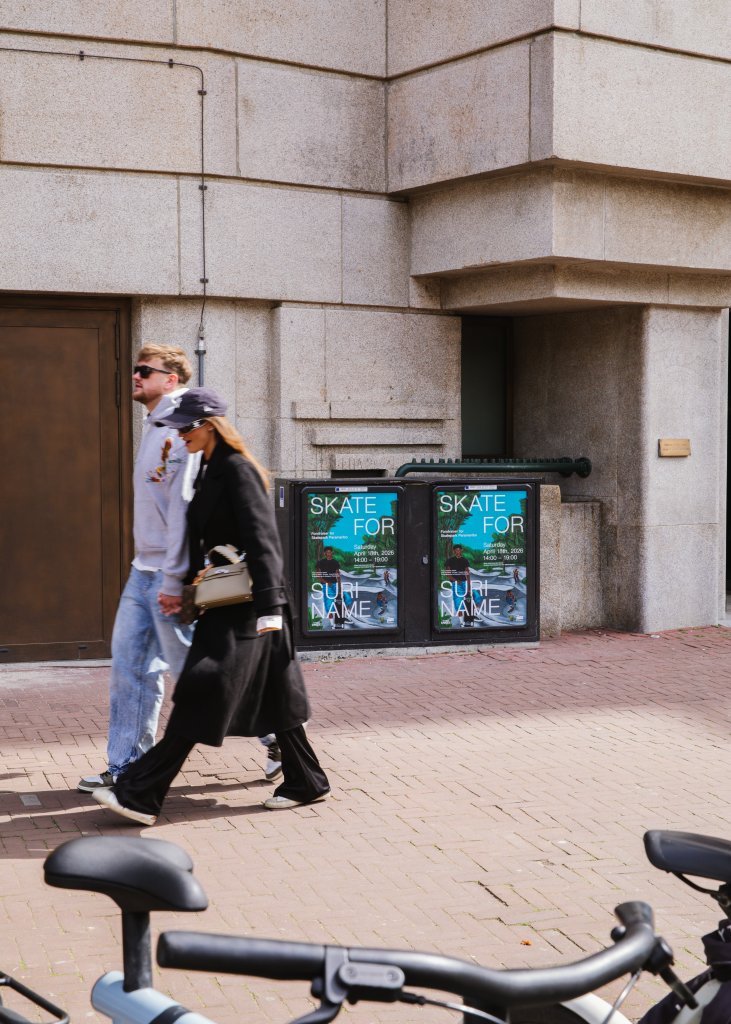
Supported publicly through a fundraiser at Amsterdam’s Skatecafé, and visually brought to life by Patta family artist Lenny Di Gennarro, whose design is on Amsterdam’s streets, Skatepark Suriname feels true to how Patta has always moved at its best. Skating may be the tool here, but the bigger idea is confidence, access, knowledge-sharing and giving young people something that feels like it is truly theirs.
Community not as branding language, but as actual practice.





features
04.26 Patta Foundation and the Push to Build a Skatepark in Suriname
STARTING WITH YOU TIM, FOR ANYONE WHO MIGHT NOT BE FAMILIAR YET, HOW WOULD YOU EXPLAIN WHAT PATTA IS AS A BRAND – AND WHERE THE FOUNDATION FITS INTO THAT WIDER STORY?
Timothy: Patta started out as a store more than 20 years ago, and from there it naturally evolved into a brand. That’s really how everything we do has grown — it’s been a natural process. We plan a lot more now than we used to, but in the beginning it was just organic growth. As the brand grew, we also started thinking more seriously about the values we’ve always stood on — things like “got love for all” and “each one teach one”. That’s where a lot of the wider community work came from. First it was the running team, then the cycling team, then the Academy, which gives young people opportunities to develop. The foundation sits within that same story. It’s another way for us to give back, and to support people who already have a strong idea and want to make something happen in their own community.
LENNY AND GLEMIEL, AS YOUNG PEOPLE IN AMSTERDAM, HOW DID YOU FIRST INTERACT WITH PATTA?
Lenny: I’ve always been close to Patta, partly because Edson (Patta co-founder) is my uncle, so it was never something that felt distant to me. I was always in and out of the store when I was younger. People there would even help me with school presentations, so I spent a lot of time around it. I’ve basically seen the brand grow from close up, and now it’s nice to see younger kids coming into the store in that same way and building their own connection to it. It feels like that energy has just kept going.
Glemiel: The first time I really clocked Patta was in the film Dope (2015). I’d seen it around before, through family and friends, but that made it click in a different way. I was really into American films, so seeing Patta there made me think, hang on, there’s a real link here. Then I started looking into the brand more, and I realised it wasn’t just that it had Surinamese roots — there was also something in the names, in the story, that made it feel close to me. It felt like something to look up to. Not in an idol way exactly, but in the sense of seeing something that felt connected to where I come from and thinking, yeah, this means something.
HOW DOES THAT MENTORING SIDE OF THE PATTA FOUNDATION ACTUALLY WORK IN PRACTICE? IS IT SOMETHING FORMAL THAT YOU APPLY FOR, OR IS IT MORE ABOUT HAVING ELDERS AROUND YOU THAT YOU CAN GO TO WITH AN IDEA AND ASK FOR GUIDANCE?
Glemiel: It felt very natural, to be honest. Patta is really… if you’ve ever been to the headquarters, it just feels like home, even if it’s your first time there. Everybody is really nice, and it has that family feeling. I started through the Patta Academy, and when I graduated, I already knew I wanted to do something for Suriname. Every time I was there, I wanted to skate, but there was nowhere proper to do it. So in my head the link made sense straight away: Patta is a Surinamese brand, so it should almost have its own skatepark there. When I came back from Suriname, I brought the idea in, spoke to people about it, and then sent Tim an email. From there, it grew quite naturally. Since then, Tim has kind of become my mentor through the whole process, and he’s helped me a lot.
BEFORE WE GET INTO THE SKATEPARK ITSELF, SURINAME IS OBVIOUSLY CENTRAL TO PATTA’S STORY. FOR A LOT OF OUR READERS IN THE UK, COULD YOU EXPLAIN THE CULTURAL IMPORTANCE OF SURINAME TO THE BRAND — AND MAYBE THE WIDER EXCHANGE BETWEEN SURINAME AND AMSTERDAM TOO?
Timothy: For us, Suriname is where we’re from. My parents were born there, and my partner was born there. Me and my brother were born in Amsterdam, but Suriname is deep in our hearts. And it’s not just an Amsterdam thing either — Surinamese culture runs through Dutch life more broadly, whether that’s Rotterdam, Den Haag or Eindhoven. To put it bluntly, without Surinamese people, the food here would be tasteless. My mum always says that when she first came over, there weren’t even showers in the way we’d understand them — people were still going to bath houses once a week in the 1970s — so Surinamese people changed hygiene, changed food, and then of course football as well. You look at Gullit, Rijkaard, Davids, Seedorf, Kluivert — we could keep going. That influence is huge. For us, when we talk about Amsterdam, we talk about Suriname, and we talk about hip hop. That’s basically what Patta is. Suriname is one big part of it because, for us, it’s home.
Lenny: I’ve got Surinamese roots as well, so I grew up around Surinamese culture. It’s probably in my work subconsciously more than anything — when I start making something or trying to come up with an idea, that’s often one of the first places my mind goes.
Glemiel: For me, it’s simple — I actually want to live there. I told Tim that already. The only thing missing for me, honestly, is a skatepark. The whole country barely has one, and the one that is there is tiny, while the Netherlands has hundreds. But beyond skating, there’s a lot in Suriname that feels familiar to me. There are loads of things in common with Amsterdam and with Dutch-Surinamese life more broadly, so the connection has always felt natural. That’s why this project made sense to me straight away.
Timothy: Patta started out as a store more than 20 years ago, and from there it naturally evolved into a brand. That’s really how everything we do has grown — it’s been a natural process. We plan a lot more now than we used to, but in the beginning it was just organic growth. As the brand grew, we also started thinking more seriously about the values we’ve always stood on — things like “got love for all” and “each one teach one”. That’s where a lot of the wider community work came from. First it was the running team, then the cycling team, then the Academy, which gives young people opportunities to develop. The foundation sits within that same story. It’s another way for us to give back, and to support people who already have a strong idea and want to make something happen in their own community.
LENNY AND GLEMIEL, AS YOUNG PEOPLE IN AMSTERDAM, HOW DID YOU FIRST INTERACT WITH PATTA?
Lenny: I’ve always been close to Patta, partly because Edson (Patta co-founder) is my uncle, so it was never something that felt distant to me. I was always in and out of the store when I was younger. People there would even help me with school presentations, so I spent a lot of time around it. I’ve basically seen the brand grow from close up, and now it’s nice to see younger kids coming into the store in that same way and building their own connection to it. It feels like that energy has just kept going.
Glemiel: The first time I really clocked Patta was in the film Dope (2015). I’d seen it around before, through family and friends, but that made it click in a different way. I was really into American films, so seeing Patta there made me think, hang on, there’s a real link here. Then I started looking into the brand more, and I realised it wasn’t just that it had Surinamese roots — there was also something in the names, in the story, that made it feel close to me. It felt like something to look up to. Not in an idol way exactly, but in the sense of seeing something that felt connected to where I come from and thinking, yeah, this means something.
HOW DOES THAT MENTORING SIDE OF THE PATTA FOUNDATION ACTUALLY WORK IN PRACTICE? IS IT SOMETHING FORMAL THAT YOU APPLY FOR, OR IS IT MORE ABOUT HAVING ELDERS AROUND YOU THAT YOU CAN GO TO WITH AN IDEA AND ASK FOR GUIDANCE?
Glemiel: It felt very natural, to be honest. Patta is really… if you’ve ever been to the headquarters, it just feels like home, even if it’s your first time there. Everybody is really nice, and it has that family feeling. I started through the Patta Academy, and when I graduated, I already knew I wanted to do something for Suriname. Every time I was there, I wanted to skate, but there was nowhere proper to do it. So in my head the link made sense straight away: Patta is a Surinamese brand, so it should almost have its own skatepark there. When I came back from Suriname, I brought the idea in, spoke to people about it, and then sent Tim an email. From there, it grew quite naturally. Since then, Tim has kind of become my mentor through the whole process, and he’s helped me a lot.
BEFORE WE GET INTO THE SKATEPARK ITSELF, SURINAME IS OBVIOUSLY CENTRAL TO PATTA’S STORY. FOR A LOT OF OUR READERS IN THE UK, COULD YOU EXPLAIN THE CULTURAL IMPORTANCE OF SURINAME TO THE BRAND — AND MAYBE THE WIDER EXCHANGE BETWEEN SURINAME AND AMSTERDAM TOO?
Timothy: For us, Suriname is where we’re from. My parents were born there, and my partner was born there. Me and my brother were born in Amsterdam, but Suriname is deep in our hearts. And it’s not just an Amsterdam thing either — Surinamese culture runs through Dutch life more broadly, whether that’s Rotterdam, Den Haag or Eindhoven. To put it bluntly, without Surinamese people, the food here would be tasteless. My mum always says that when she first came over, there weren’t even showers in the way we’d understand them — people were still going to bath houses once a week in the 1970s — so Surinamese people changed hygiene, changed food, and then of course football as well. You look at Gullit, Rijkaard, Davids, Seedorf, Kluivert — we could keep going. That influence is huge. For us, when we talk about Amsterdam, we talk about Suriname, and we talk about hip hop. That’s basically what Patta is. Suriname is one big part of it because, for us, it’s home.
Lenny: I’ve got Surinamese roots as well, so I grew up around Surinamese culture. It’s probably in my work subconsciously more than anything — when I start making something or trying to come up with an idea, that’s often one of the first places my mind goes.
Glemiel: For me, it’s simple — I actually want to live there. I told Tim that already. The only thing missing for me, honestly, is a skatepark. The whole country barely has one, and the one that is there is tiny, while the Netherlands has hundreds. But beyond skating, there’s a lot in Suriname that feels familiar to me. There are loads of things in common with Amsterdam and with Dutch-Surinamese life more broadly, so the connection has always felt natural. That’s why this project made sense to me straight away.
WHAT IS SKATE CULTURE IN SURINAME LIKE AT THE MOMENT? IS THERE ALREADY A SCENE THERE THAT JUST DOESN’T HAVE THE INFRASTRUCTURE, OR ARE YOU REALLY HAVING TO BUILD THIS FROM THE GROUND UP?
Glemiel: There’s basically nothing there in terms of infrastructure, but what struck me when I first saw people skating in Suriname was how free they were with it. They can make almost anything into a skate spot. I was actually kind of jealous of that. They were skating rough concrete and doing heel flips on surfaces where I was trying to do the same thing and couldn’t even make it work. So they’ve got their own way of skating already, but at the same time they were all saying the same thing: we don’t have a skatepark. There’s one spot up north, but it’s like a 30-minute drive away. So there are street skaters there, definitely, but it’s still very small.
Timothy: The scene is tiny, really. Suriname has a population of around 600,000 people, and the country is huge — most of it is forest — so when you narrow that down to the young people living where there actually is infrastructure, then narrow it down again to the kids who might want to skate, and again to the ones who can actually get a board, you’re talking about very small numbers. There’s one organisation there, SOS, and that gives you an idea of the scale. So what Glemiel is doing is really helping kick off a skating community.
WHAT IS IT ABOUT SKATEBOARDING THAT MAKES IT IMPORTANT FOR SURINAME TO HAVE A SPACE LIKE THIS? WHAT CAN SKATING OFFER BEYOND JUST THE ACT OF SKATING ITSELF?
Glemiel: For me, the main thing is that it becomes a real possibility. Right now, it isn’t even that. Parents can be very strict in Suriname, and if you’re just out in the street on a skateboard while traffic is moving crazy, it doesn’t feel safe or realistic. You need a proper place to practise, and because that doesn’t exist, I understand why a lot of people don’t even look at skating as an option yet.
Timothy: In Suriname, people often think in terms of what a young person can obviously become — a footballer, a boxer, something with a clear path. Skateboarding doesn’t read like that yet. For a lot of people, it just looks like kids wasting time or disturbing the neighbourhood. But skating gives you much more than that. It’s healthy, it uses your whole body, it builds confidence, and it creates community. If we can create a safe space for it and put events and structure around it, then hopefully people will start to see skaters differently too.
AND THE PLAN ISN’T JUST TO BUILD THE SPACE, BUT TO CREATE WORK AROUND IT TOO — FROM EVENTS TO THE DAY-TO-DAY RUNNING OF IT. WHY IS THAT PART OF THE PROJECT IMPORTANT?
Timothy: Getting local people involved in new things, and in new ways, is a big part of it. Glemiel is bringing skating, but the Patta Foundation is also bringing organisational skills and a different perspective on how something like this can run. For us, it’s not about coming in from Europe and telling people what to do. We don’t want to impose anything. We just want to show another way of doing things, and if people can see that it works, then we can build it together. That’s also why it matters to bring Dutch-Surinamese kids and Surinamese kids together through this — so they can learn from each other. Skating is really just the tool. It could be another sport, it could be something else entirely, but sport is a way of bringing people together. Around that, you have the canteen, the events side, the day-to-day energy of the place, and all of that creates opportunities for people to work and be involved. If it grows in the right way, more people can get hired, but even at the first stage it’s about showing kids that you can build something for yourselves, in your own city, and not just for tourists.
AND TO SPEAK ABOUT THE EVENT ITSELF, WHAT EXACTLY IS HAPPENING AT THE FUNDRAISER IN AMSTERDAM?
Glemiel: It’s centred around Tricks for Cash. We’re going to have auctions, workshops, a few DJs, and a talk as well. So it’s not just one thing — it’s more like a full day built around raising money for the project in different ways.
Timothy: There’ll be a short talk about what we’re doing in Suriname, DJs throughout the day, and an auction with contributions from people in the skate world. Piet Parra is giving a board and something extra, a few other skaters are donating things too, and we’re auctioning one of Lenny’s paintings as well. It’s free entry, but people can donate whatever they want to the cause, and then Monster, our head sponsor, will match whatever we raise. So really, we’re trying to raise as much money as possible in every way we can and hopefully get the ball rolling properly.
Glemiel: There’s basically nothing there in terms of infrastructure, but what struck me when I first saw people skating in Suriname was how free they were with it. They can make almost anything into a skate spot. I was actually kind of jealous of that. They were skating rough concrete and doing heel flips on surfaces where I was trying to do the same thing and couldn’t even make it work. So they’ve got their own way of skating already, but at the same time they were all saying the same thing: we don’t have a skatepark. There’s one spot up north, but it’s like a 30-minute drive away. So there are street skaters there, definitely, but it’s still very small.
Timothy: The scene is tiny, really. Suriname has a population of around 600,000 people, and the country is huge — most of it is forest — so when you narrow that down to the young people living where there actually is infrastructure, then narrow it down again to the kids who might want to skate, and again to the ones who can actually get a board, you’re talking about very small numbers. There’s one organisation there, SOS, and that gives you an idea of the scale. So what Glemiel is doing is really helping kick off a skating community.
WHAT IS IT ABOUT SKATEBOARDING THAT MAKES IT IMPORTANT FOR SURINAME TO HAVE A SPACE LIKE THIS? WHAT CAN SKATING OFFER BEYOND JUST THE ACT OF SKATING ITSELF?
Glemiel: For me, the main thing is that it becomes a real possibility. Right now, it isn’t even that. Parents can be very strict in Suriname, and if you’re just out in the street on a skateboard while traffic is moving crazy, it doesn’t feel safe or realistic. You need a proper place to practise, and because that doesn’t exist, I understand why a lot of people don’t even look at skating as an option yet.
Timothy: In Suriname, people often think in terms of what a young person can obviously become — a footballer, a boxer, something with a clear path. Skateboarding doesn’t read like that yet. For a lot of people, it just looks like kids wasting time or disturbing the neighbourhood. But skating gives you much more than that. It’s healthy, it uses your whole body, it builds confidence, and it creates community. If we can create a safe space for it and put events and structure around it, then hopefully people will start to see skaters differently too.
AND THE PLAN ISN’T JUST TO BUILD THE SPACE, BUT TO CREATE WORK AROUND IT TOO — FROM EVENTS TO THE DAY-TO-DAY RUNNING OF IT. WHY IS THAT PART OF THE PROJECT IMPORTANT?
Timothy: Getting local people involved in new things, and in new ways, is a big part of it. Glemiel is bringing skating, but the Patta Foundation is also bringing organisational skills and a different perspective on how something like this can run. For us, it’s not about coming in from Europe and telling people what to do. We don’t want to impose anything. We just want to show another way of doing things, and if people can see that it works, then we can build it together. That’s also why it matters to bring Dutch-Surinamese kids and Surinamese kids together through this — so they can learn from each other. Skating is really just the tool. It could be another sport, it could be something else entirely, but sport is a way of bringing people together. Around that, you have the canteen, the events side, the day-to-day energy of the place, and all of that creates opportunities for people to work and be involved. If it grows in the right way, more people can get hired, but even at the first stage it’s about showing kids that you can build something for yourselves, in your own city, and not just for tourists.
AND TO SPEAK ABOUT THE EVENT ITSELF, WHAT EXACTLY IS HAPPENING AT THE FUNDRAISER IN AMSTERDAM?
Glemiel: It’s centred around Tricks for Cash. We’re going to have auctions, workshops, a few DJs, and a talk as well. So it’s not just one thing — it’s more like a full day built around raising money for the project in different ways.
Timothy: There’ll be a short talk about what we’re doing in Suriname, DJs throughout the day, and an auction with contributions from people in the skate world. Piet Parra is giving a board and something extra, a few other skaters are donating things too, and we’re auctioning one of Lenny’s paintings as well. It’s free entry, but people can donate whatever they want to the cause, and then Monster, our head sponsor, will match whatever we raise. So really, we’re trying to raise as much money as possible in every way we can and hopefully get the ball rolling properly.
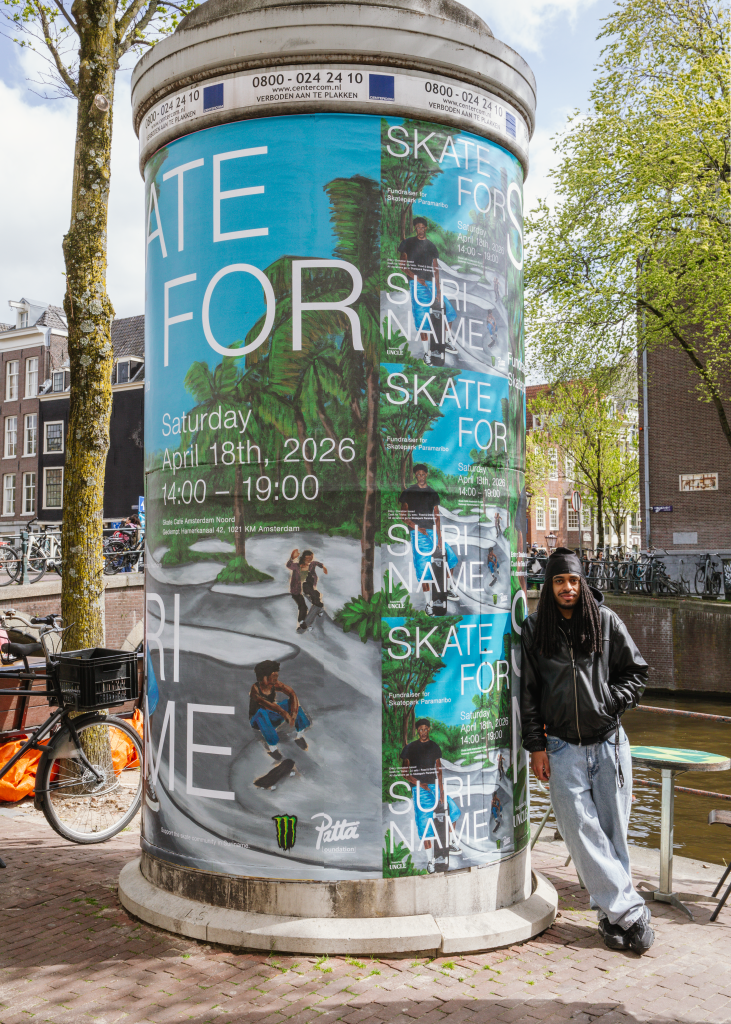
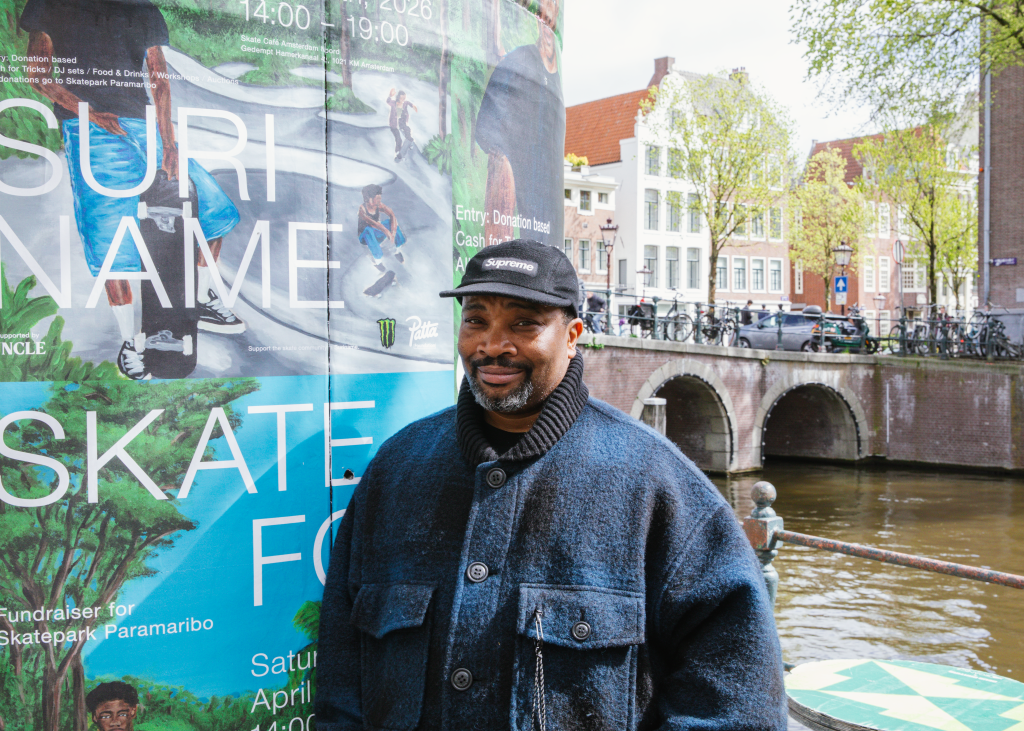
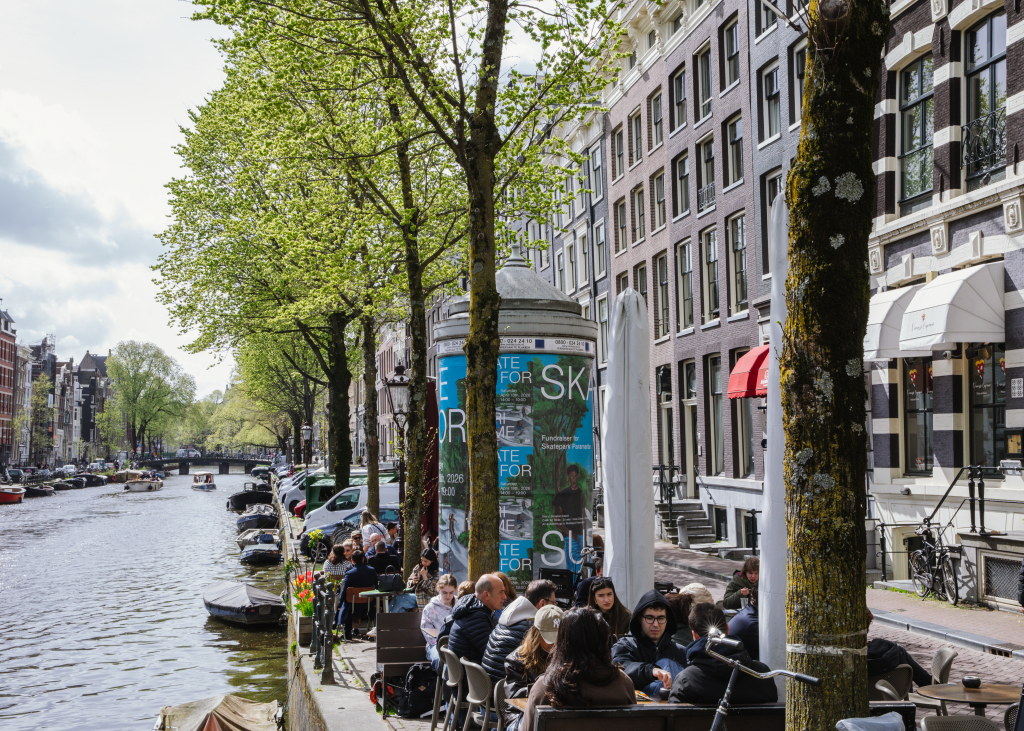
AND LENNY, YOU’VE CREATED THE ARTWORK FOR THE CAMPAIGN. HOW DOES IT FEEL KNOWING THAT WORK IS GOING TO BE PLASTERED ACROSS AMSTERDAM — TAKEN OFF A SCREEN AND PUT BACK INTO THE CITY?
Lenny: I hope it catches people’s eyes, really. I hope it makes people come to the fundraiser and helps us raise enough money to make the project into something properly great. I’ve been to Skatecafé a couple of times myself, and it’s one of those places where even if you don’t really skate, it’s still fun to be there. So I just hope that, when this all comes to life in Suriname, kids there get to enjoy that feeling too.
THE FUNDRAISER IS TAKING PLACE AT SKATECAFÉ IN AMSTERDAM. IS THAT VENUE A GOOD EXAMPLE OF WHAT A SKATE SPACE CAN BECOME WHEN IT’S DONE RIGHT — SOMETHING BIGGER THAN JUST A PLACE TO SKATE?
Timothy: It’s a great example. They’re very active, and it’s really community-based. The people who started it are community-minded, and you can see that in the kids who come through it too — some of them grow up, leave, start their own things, and still carry that same spirit with them. It’s very much for the people. This is my second fundraiser there, and after this I’m doing a third one there that has nothing to do with skateboarding, and even then they’re fully on board. They’re just very supportive. And for the kids, it really works as a safe space. Any skate kid goes there, but even people who don’t skate still want to be there. I think they’ve genuinely succeeded in creating something bigger than just a skatepark.
PATTA HAS GROWN INTO AN INTERNATIONALLY KNOWN BRAND, AND YET IT STILL FEELS CLOSELY TIED TO THE COMMUNITY IT CAME OUT OF. HOW IMPORTANT HAS IT BEEN TO HOLD ON TO THAT SPIRIT AS THE COMPANY HAS GROWN — AND IS THAT EASY TO DO?
Timothy: It’s not easy, but it’s simple. A lot of it just comes down to saying no. As long as you can keep saying no, you can stay focused on your own path. Of course there will always be a point where you have to say yes to certain things, but right now we can still say no to a lot, and that means we can move in our own direction. At the same time, having things like the Academy and the Foundation really helps. They allow the company to be more business-focused, because the giving-back side has its own structure. In the end, the company has to make money, but the Foundation and the Academy are there as non-profit organisations to support communities and make good projects happen. We probably could shout a lot more about that work, but that’s never really been the point. We’re not trying to put ourselves in the picture or prove we’ve got a good heart. Most of the time, we’re just providing space, support or funding — it’s the people doing the projects who deserve the credit. I think we’ve found a good balance where the business can keep growing, while the Foundation and Academy can focus on giving back in a genuine way.
FINALLY, FOR ANYONE READING THIS AND WANTING TO SUPPORT THE PROJECT, WHAT’S THE BEST WAY FOR PEOPLE TO GET INVOLVED?
Timothy: The main thing right now is supporting the fundraiser and keeping an eye out for what comes next. We will have a GoFundMe page and the wider support around that, so once everything is properly live, people will be able to donate directly and follow the next steps of the project from there. And of course, we’d love to thank UNCLE for the support as well — we really appreciate it.
Lenny: I hope it catches people’s eyes, really. I hope it makes people come to the fundraiser and helps us raise enough money to make the project into something properly great. I’ve been to Skatecafé a couple of times myself, and it’s one of those places where even if you don’t really skate, it’s still fun to be there. So I just hope that, when this all comes to life in Suriname, kids there get to enjoy that feeling too.
THE FUNDRAISER IS TAKING PLACE AT SKATECAFÉ IN AMSTERDAM. IS THAT VENUE A GOOD EXAMPLE OF WHAT A SKATE SPACE CAN BECOME WHEN IT’S DONE RIGHT — SOMETHING BIGGER THAN JUST A PLACE TO SKATE?
Timothy: It’s a great example. They’re very active, and it’s really community-based. The people who started it are community-minded, and you can see that in the kids who come through it too — some of them grow up, leave, start their own things, and still carry that same spirit with them. It’s very much for the people. This is my second fundraiser there, and after this I’m doing a third one there that has nothing to do with skateboarding, and even then they’re fully on board. They’re just very supportive. And for the kids, it really works as a safe space. Any skate kid goes there, but even people who don’t skate still want to be there. I think they’ve genuinely succeeded in creating something bigger than just a skatepark.
PATTA HAS GROWN INTO AN INTERNATIONALLY KNOWN BRAND, AND YET IT STILL FEELS CLOSELY TIED TO THE COMMUNITY IT CAME OUT OF. HOW IMPORTANT HAS IT BEEN TO HOLD ON TO THAT SPIRIT AS THE COMPANY HAS GROWN — AND IS THAT EASY TO DO?
Timothy: It’s not easy, but it’s simple. A lot of it just comes down to saying no. As long as you can keep saying no, you can stay focused on your own path. Of course there will always be a point where you have to say yes to certain things, but right now we can still say no to a lot, and that means we can move in our own direction. At the same time, having things like the Academy and the Foundation really helps. They allow the company to be more business-focused, because the giving-back side has its own structure. In the end, the company has to make money, but the Foundation and the Academy are there as non-profit organisations to support communities and make good projects happen. We probably could shout a lot more about that work, but that’s never really been the point. We’re not trying to put ourselves in the picture or prove we’ve got a good heart. Most of the time, we’re just providing space, support or funding — it’s the people doing the projects who deserve the credit. I think we’ve found a good balance where the business can keep growing, while the Foundation and Academy can focus on giving back in a genuine way.
FINALLY, FOR ANYONE READING THIS AND WANTING TO SUPPORT THE PROJECT, WHAT’S THE BEST WAY FOR PEOPLE TO GET INVOLVED?
Timothy: The main thing right now is supporting the fundraiser and keeping an eye out for what comes next. We will have a GoFundMe page and the wider support around that, so once everything is properly live, people will be able to donate directly and follow the next steps of the project from there. And of course, we’d love to thank UNCLE for the support as well — we really appreciate it.